
Luca Calarailli is a seasoned expert in construction and urban design, known for his deep understanding of how architectural trends intersect with the evolving needs of modern communities. With a career spanning large-scale residential projects and innovative tech integrations in building, he brings a unique perspective to the shifting housing landscape in Georgia. In this conversation, we explore the rise of “Build-to-Rent” communities, the economic drivers behind high-quality rental housing in Gwinnett County, and the strategic expansion of major developers across the Sunbelt.
The metro Atlanta area is witnessing a significant shift toward Build-to-Rent communities, particularly in Gwinnett County. What do you think is fueling this demand for 151-unit developments like Harmon Cedar Run, and why is this specific location northeast of Lawrenceville so strategic?
The momentum we are seeing in Gwinnett County is a direct response to a very powerful combination of rapid economic development and an exceptionally strong job market. When you look at the 151-unit footprint of Harmon Cedar Run, its proximity to the Gwinnett County Airport and Ga. Highway 316 makes it an ideal hub for professionals who need mobility but desire the space of a suburban home. This specific project marks a milestone as the developer’s first Harmon-branded venture in the region, signaling that the “rent-by-choice” lifestyle is no longer a niche market but a primary housing solution. People are drawn to the stability of a managed community where they can enjoy 1,200 Fendley Trace’s accessibility without the immediate burdens of a mortgage in a high-interest environment. It’s a reflection of a maturing market where high-quality housing is in short supply despite the influx of new residents.
When examining the floor plans and pricing, such as the townhomes starting at $2,545 and the standalone houses at $3,025, how do these spaces bridge the gap between traditional apartment living and homeownership?
These properties are designed to offer the physical experience of a traditional home, providing residents with substantial square footage that you simply cannot find in a standard mid-rise apartment. For instance, the two-story townhomes offer three bedrooms and two and a half bathrooms within 1,663 square feet, while the standalone houses expand that comfort to 2,210 square feet. Every single unit includes a two-car garage, which is a massive psychological and functional upgrade for a renter who is used to shared parking decks or street spots. By offering these three and four-bedroom options strictly for rent, the developer is targeting a demographic that values the privacy of a backyard and the quiet of a residential street. It creates a sense of “home” that feels permanent and high-end, even if the resident isn’t holding the deed.
The inclusion of specific amenities like EV outlets in every garage and pickleball courts suggests a very intentional lifestyle design. How are these modern features changing the expectations of what a rental community should provide?
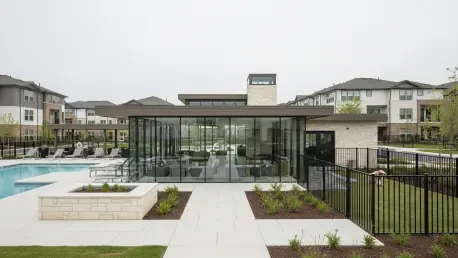
The standard for rental living has been raised significantly, and developers are now competing on lifestyle perks that were once reserved for luxury country clubs. At Harmon Cedar Run, the communal amenities—ranging from a large swimming pool and a playground to dedicated pet spaces—create a village-like atmosphere that fosters social connection. The addition of EV outlets in every garage is a particularly forward-thinking move, acknowledging the shift toward sustainable transportation and the tech-heavy lifestyle of Atlanta’s workforce. Including a basketball court and pickleball courts also taps into current fitness trends, ensuring that the 151 families living here have immediate access to recreation just steps from their front doors. It’s about creating a frictionless living experience where the “work-play-live” balance is built directly into the site plan.
Crescent Communities is currently working on everything from a two-tower project in Buckhead to the redevelopment of North DeKalb Mall. How does this Lawrenceville project fit into their broader regional strategy and their expansion into other high-growth markets?
This project is a vital piece of a much larger puzzle, as the developer is aggressively targeting “key growth markets” across the Sunbelt and the West, including states like Texas, Colorado, and Florida. In metro Atlanta specifically, they are diversifying their portfolio to capture different segments of the market, from upscale mid-rises in Midtown to the more recent transformation of the Lumberyard Office Lofts in Blandtown. By moving into Lawrenceville, Covington, and Stockbridge, they are following the path of suburban expansion where land is available for larger-scale, family-oriented developments. Their involvement in the 78-acre North DeKalb Mall redevelopment and the upcoming Buckhead towers shows they are not just building houses, but are deeply invested in the long-term urban fabric of the entire region. This Lawrenceville site is a proof of concept for their Harmon brand, showing that the high demand for rental townhomes is a trend with incredible staying power.
What is your forecast for the Build-to-Rent sector in metro Atlanta over the next few years?
The forecast for this sector remains incredibly hot, much like the late-spring temperatures in Georgia that show no signs of cooling off. We are likely to see a continued surge in projects that blend the convenience of professional property management with the architectural dignity of a single-family neighborhood. As the Northwest Trail segment of the Beltline and other transit-linked developments come online, the appetite for high-quality, flexible housing will only intensify. Developers will increasingly look toward suburban nodes that offer proximity to major highways and economic centers, similar to the Highway 316 corridor. I expect to see even more innovation in how these communities are integrated into their surroundings, focusing on walkability and sustainable infrastructure to meet the demands of the next generation of renters.