
The global construction landscape is undergoing a fundamental transformation as architects and engineers increasingly pivot away from traditional, high-density materials toward cellular concrete solutions that promise both structural integrity and unprecedented environmental efficiency. This specialized material, characterized by a lightweight and porous internal architecture, has transitioned from a niche building alternative to a cornerstone of modern urban development. By introducing a stable foam or air-void system into a cement-based slurry, manufacturers have successfully engineered a product that retains the durability of conventional concrete while shedding a significant portion of its mass. As metropolitan areas worldwide grapple with the dual challenges of rapid urbanization and the urgent need to lower carbon emissions, cellular concrete has emerged as a versatile answer, facilitating faster construction timelines and superior insulation. The current state of the industry reflects a sophisticated synergy between material science and economic pragmatism, where the long-term operational savings of energy-efficient buildings are prioritized over legacy construction methods that rely on heavy, carbon-intensive resources.
Economic Trajectory: Reaching the Four Billion Dollar Milestone
The financial landscape of the cellular concrete industry is currently defined by a steady and robust expansion that mirrors the broader global recovery of the construction sector. As of the previous year, the market established a valuation of USD 2.35 billion, a figure that has served as a launchpad for the significant growth witnessed throughout 2026. Experts indicate that the market has already climbed to approximately USD 2.49 billion, setting a clear course toward a projected valuation of USD 4.03 billion by the year 2034. This growth is underpinned by a compound annual growth rate of 6.19% over the forecast period, signaling that cellular concrete is no longer merely an experimental material but a primary choice for high-stakes infrastructure and residential projects. This upward momentum is not just a reflection of increased building volume; it represents a fundamental shift in how developers allocate capital toward materials that offer long-term financial viability through reduced labor requirements and lower shipping costs associated with lightweight products.
Financial analysts specializing in the construction materials sector point to the material’s inherent thermal insulation properties as a primary driver for this sustained economic performance. In an era where energy costs remain volatile and climate control regulations become increasingly stringent, the ability of cellular concrete to lower the operational expenses of a building provides a compelling value proposition for long-term investors. High-performance commercial structures and residential complexes that utilize these advanced concrete mixtures often see a significant reduction in heating and cooling demands, which in turn enhances the asset’s overall market value. This economic reality has led to a surge in private equity investment in manufacturing facilities, particularly those capable of producing high-precision aerated blocks and panels. The convergence of regulatory pressure to reduce carbon footprints and the clear financial benefits of energy efficiency ensures that the cellular concrete market remains one of the most resilient segments within the global building materials industry.
Sustainability and Structural Advantages: Rethinking the Built Environment
A primary theme dominating current industry discourse is the global transition toward sustainable and green building solutions that prioritize the reduction of a structure’s total environmental impact. There is a clear consensus among urban planners that the demand for lightweight materials is being propelled by environmental regulations and a collective desire to minimize the carbon footprint of the entire construction lifecycle. Cellular concrete’s exceptionally low density provides its most significant competitive advantage in this regard, as it allows for a dramatic reduction in the dead load of a building. By decreasing the weight that a structure must support, engineers can design more efficient and less resource-intensive foundations, which subsequently reduces the amount of steel and conventional high-density concrete required for structural support. This cascading efficiency is particularly critical in high-rise residential and commercial developments located in seismically active regions, where a reduction in mass directly correlates with improved safety and structural resilience during earthquake events.
Beyond its structural benefits, cellular concrete serves as a sophisticated thermal barrier due to the presence of millions of microscopic air cells that inhibit the transfer of heat. This property distinguishes it from traditional masonry and conventional concrete, which often require extensive additional insulation layers to meet modern building codes. The inorganic composition of cellular concrete also renders it highly fire-resistant, providing an essential safety margin that is increasingly sought after by insurance companies and municipal fire safety boards. Unlike synthetic insulation materials that may release toxic fumes when exposed to high temperatures, cellular concrete remains stable and non-combustible. This combination of thermal efficiency, fire safety, and reduced structural weight makes it an ideal material for the densification of modern cities, where buildings must be closer together and taller than ever before. As the industry moves further into 2026, the adoption of these mixtures is becoming a standard requirement for developers looking to achieve high-tier green building certifications.
Urban Infrastructure: Bridging the Gap in Public Works
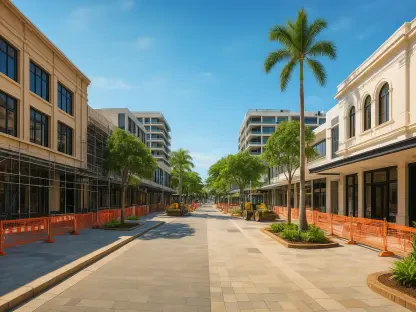
The industry is currently witnessing a massive influx of demand from the public sector as governments worldwide accelerate their investments in smart city frameworks and infrastructure modernization. These large-scale public works projects prioritize materials that are easy to install, durable, and highly compatible with the complex utility systems found in modern metropolitan areas. Cellular concrete is uniquely suited for specialized civil engineering tasks such as void filling, trench backfilling, and the stabilization of bridge approaches. Its exceptional flowability allows it to be pumped over long distances and into hard-to-reach underground areas, making it indispensable for the rehabilitation of aging urban utility networks. This specific functionality is essential for the transportation and utility modernization programs currently underway across North America and Asia, where traditional excavation and filling methods are often too disruptive or expensive for high-traffic environments.
In the geotechnical sector, foam concrete has become the preferred choice for soil stabilization and the filling of abandoned underground structures, such as decommissioned sewers or old fuel tanks. The self-leveling characteristics of the material ensure that even the most irregular voids are completely filled, preventing future ground subsidence and ensuring the long-term integrity of the surface infrastructure. Engineers prize foam concrete for its ability to provide a stable, load-bearing base without adding excessive weight to underlying soil layers that may be prone to compression. This versatility ensures that cellular concrete remains a staple in urban maintenance and expansion projects, particularly where existing structures must be reinforced without the need for extensive demolition. The ability to customize the density of the mix on-site further enhances its utility, allowing contractors to adapt to varying terrain and soil conditions in real-time, thereby reducing delays and improving the precision of the final installation.
Material Categorization: The Synergy of Aerated and Foam Solutions
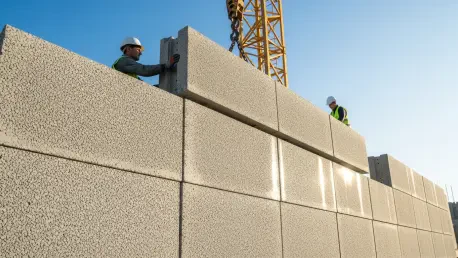
The market is currently divided into two primary product categories: Aerated Concrete and Foam Concrete, each serving distinct roles within the construction ecosystem. Holding approximately 57% of the total market share, aerated concrete—most notably Autoclaved Aerated Concrete or AAC—dominates the production of prefabricated blocks, lintels, and floor panels. Because these components are manufactured in highly controlled factory environments, they offer a level of dimensional accuracy and consistent quality that is difficult to replicate with traditional on-site pouring. The trend toward modular and prefabricated construction has kept aerated concrete at the forefront of the residential and commercial wall-building sectors. This manufacturing approach allows for rapid on-site assembly with minimal waste, appealing to contractors who are facing pressure to complete projects faster while maintaining strict quality standards. The precision of AAC blocks also reduces the need for thick layers of plaster or mortar, further streamlining the finishing process and reducing material costs.
Foam concrete accounts for roughly 43% of the market share and is frequently produced directly at the construction site using specialized foaming generators and mixing equipment. Its primary application involves large-volume civil engineering projects where the material is used as a lightweight fill for highway embankments, airport runway sub-bases, and tunnel backfilling. The ability to adjust the density of the foam mix on-site provides engineers with the flexibility needed to address specific structural requirements that may change as the project progresses. Unlike prefabricated aerated products, foam concrete is a liquid slurry that can be cast into any shape or pumped into subterranean cavities, making it the more versatile choice for infrastructure projects that require high volume and adaptability. While aerated concrete remains the standard for vertical construction and insulation panels, foam concrete is the workhorse of the horizontal infrastructure and geotechnical sectors, ensuring that both categories play a vital role in the overall market expansion toward 2034.
Geopolitical Influence: Regional Dominance and Local Demand
The Asia-Pacific region currently stands as the dominant force in the global cellular concrete industry, commanding a 41% market share. This leadership is largely driven by the unprecedented scale of urban residential development and highway expansion in China, which alone accounts for 39% of the regional market. Japan also contributes significantly to this dominance, representing 25% of regional activity, with a specific focus on seismic resilience and the reinforcement of buildings in geologically active environments. The rapid pace of urbanization in this part of the world has created a continuous need for materials that can be deployed quickly and provide high performance in densely populated areas. Furthermore, regional governments have introduced various incentives for green building materials, which has encouraged local manufacturers to scale up production and invest in new technologies that improve the carbon capture capabilities of their concrete mixtures.
In contrast, the North American market, led primarily by the United States, holds a 34% market share and is characterized by its heavy utilization in large-scale civil engineering and transportation projects. The focus in the U.S. is largely on infrastructure rehabilitation, where foam concrete is used as a lightweight fill for bridge abutments and highway embankments to prevent settlement on soft or unstable soils. Meanwhile, the European market, making up 29% of the global share, is defined by some of the world’s most stringent energy-efficiency laws and building regulations. Germany remains a pioneer in this regard, with high demand driven by advanced construction techniques that integrate aerated concrete into high-performance, low-energy housing. The United Kingdom also makes extensive use of cellular concrete for urban redevelopment and specialized flood prevention infrastructure. The remaining portion of the global market is distributed across Latin America, the Middle East, and Africa, where the material is increasingly used for thermal insulation in extreme heat or as a solution for rapid-assembly affordable housing.
Sector Specificity: Residential Trends and Industrial Applications
The residential sector remains the largest end-use segment for cellular concrete, accounting for 32% of total application volume globally. This dominance is fueled by a worldwide trend toward affordable housing and the growing popularity of prefabricated modular homes that can be assembled in a fraction of the time required for traditional brick-and-mortar structures. Within this sector, cellular concrete is the material of choice for wall panels, floor leveling, and roof insulation due to its lightweight nature and superior acoustic properties. As housing shortages persist in major metropolitan hubs, the ability to rapidly construct high-quality, energy-efficient apartments is a significant tailwind for manufacturers. The material’s ease of handling also allows for a reduction in the number of workers needed on-site, which helps builders manage the rising costs of labor while still meeting the high demand for new residential units.
Large-scale commercial developments, including shopping malls, office complexes, and mixed-use buildings, account for another 26% of the market. These projects utilize cellular concrete primarily to meet rigorous fire safety standards and to reduce the total structural load on the building’s frame. By lowering the weight of the floors and walls, developers can realize substantial savings in the costs associated with the foundation and the primary structural steel or concrete frame. The infrastructure and industrial sectors make up the remaining 42% of the market, representing the fastest-growing area for foam concrete applications. Industrial facilities, such as factories and warehouses, use the material for specialized flooring and pipe insulation, as its ability to dampen vibrations is highly beneficial for supporting heavy machinery. Tunnels and airport runways also rely on the material’s unique combination of high compressive strength and low density to ensure long-term durability under extreme conditions, further solidifying its status as a critical industrial resource.
Technical Frontiers: Overcoming Challenges Through Innovation
Despite the optimistic growth projections for the next decade, the cellular concrete market faces certain hurdles related to high initial equipment costs and the necessity for specialized labor. The machinery required to produce high-quality, consistent cellular concrete—such as high-shear mixers and precision foaming agents—can represent a significant upfront investment for smaller contracting firms. Additionally, the chemistry of the foaming agents requires a high degree of technical expertise to ensure that the air voids remain stable throughout the pouring and curing process. Variations in local humidity or ambient temperature can affect the stability of the foam, necessitating rigorous on-site monitoring and adjustment. To address these challenges, the industry has seen an influx of automated mixing systems that utilize sensors and digital quality-monitoring technologies to reduce the margin of human error. These technical advances are making the material more reliable and easier to deploy across diverse climates and complex construction sites.
There is also a growing opportunity to incorporate industrial by-products, such as fly ash from power plants or recycled glass aggregates, into the cellular concrete mix to further enhance its environmental credentials. This move toward a circular economy appeals to environmentally conscious investors and helps manufacturers lower their raw material costs while adhering to stricter sustainability mandates. Modern “Smart Concrete” mixtures are being developed that integrate carbon-capture technology directly into the curing process, effectively turning buildings into carbon sinks. These innovations, combined with the development of mobile production units that can manufacture foam concrete on-site in remote locations, are expanding the material’s reach into new markets. As the industry continues to refine these technologies, the barrier to entry is gradually lowering, allowing more contractors to adopt cellular concrete as their primary building material. The focus on automation and waste reduction is not only solving the problems of specialized labor but is also making the production process more profitable and sustainable in the long term.
Strategic Outlook: Implementation and Practical Considerations
The transition toward a global market dominated by cellular concrete solutions was finalized through a strategic shift in building regulations and a renewed focus on material life-cycle costs. Stakeholders across the construction industry recognized that the initial investment in specialized equipment and training was mitigated by the substantial long-term gains in building efficiency and structural safety. For contractors and developers looking to maintain a competitive edge, the adoption of automated foaming systems and the integration of recycled materials into the concrete slurry became essential practices. This evolution underscored the importance of technical proficiency, as the successful deployment of lightweight concrete required a precise understanding of chemical interactions and site-specific environmental factors. By embracing these complexities, the industry moved away from traditional high-density methods and established a new standard for urban infrastructure that prioritized both performance and sustainability.
Moving forward, the primary focus for industry participants shifted toward the standardization of mix designs and the widespread implementation of digital monitoring tools to ensure consistency across international projects. The historical challenges regarding specialized labor were largely addressed through the development of intuitive, software-driven machinery that allowed for real-time adjustments on the construction site. This technological leap enabled the rapid expansion of cellular concrete into emerging markets, where the need for rapid, affordable housing was most acute. As the market approached the 2034 valuation of $4 billion, the focus remained on refining carbon-neutral manufacturing processes and expanding the use of prefabricated aerated panels in modular skyscraper construction. The industry successfully demonstrated that lightweight materials could provide the necessary durability for the world’s most demanding environments, ensuring that cellular concrete remained a central pillar of the global construction strategy for decades to come.