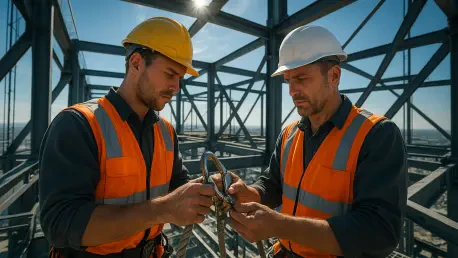

An investigation into a fifth-story fall in Nanaimo revealed that a worker’s lifeline anchor was improperly positioned, creating a swing fall hazard that could have been prevented with adequate supervision. This incident reminds us that despite decades of safety standards, the construction industry struggles with implementation on the ground. While safety protocols are documented in corporate handbooks, the translation of these rules into daily site behavior remains remarkably inconsistent. The gap between theoretical compliance and actual practice often widens under the pressure of tight deadlines, leaving workers at the mercy of minor oversights with lethal consequences indeed. It is no longer enough to merely mandate equipment usage; the industry must address why seasoned professionals occasionally bypass critical checks. This failure points toward a deeper cultural issue regarding the site safety.
Gaps
Rules
The primary challenge in construction safety today is the false sense of security provided by bureaucratic compliance. Many firms believe that having a certified safety officer and a signed stack of permits equates to a secure site, yet accidents often occur on projects that appeared perfect on paper. This paradox exists because safety documentation is frequently treated as a clerical task rather than a dynamic assessment of shifting environmental risks. On many sites, the morning toolbox talk becomes a repetitive ritual that workers eventually tune out, failing to address the specific hazards of that particular day’s tasks. When safety becomes a checkbox exercise, the actual mechanical risks, such as improper anchor points, go unnoticed by eyes that have grown accustomed to seeing them daily. This normalization of deviance occurs when small shortcuts are taken without immediate negative results, leading the workforce to believe that the rules are just suggestions.
Pace
Economic pressures in the current year continue to exert an invisible but heavy toll on the safety margins of modern construction projects. As developers push for faster delivery to mitigate costs, the resulting high-pressure production cycles often compress the time allocated for equipment inspection and walkthroughs. Supervisors find themselves caught between the conflicting demands of meeting production quotas and ensuring every worker is tethered correctly to anchors. In such environments, the message sent to the crew is that productivity is the ultimate metric of success, which can lead to a culture where speaking up about a hazard is seen as an unwelcome delay. This tension creates a landscape where safety is viewed as a hurdle to overcome rather than a foundational requirement. To break this cycle, the industry must re-evaluate how project timelines are constructed, ensuring that safety milestones are given equal weight to structural completion.
Fixes
Tech
Technological advancements in 2026 offer a promising path toward eliminating human error in fall protection and equipment monitoring. The adoption of smart wearables, which can detect when a worker is at an elevated height without a locked carabiner, provides a feedback loop that traditional supervision cannot match. These devices are being integrated with site-wide telemetry systems that alert site managers to unsafe behaviors in real-time, allowing for intervention before an incident occurs rather than an investigation afterward. Also, the use of automated drone inspections allows for the verification of anchor points on high-rise structures that are difficult for human supervisors to reach frequently. By utilizing these digital tools, companies can create a persistent safety perimeter that operates independently of fatigue. The shift toward data-driven safety management ensures that risk is quantified and addressed based on site conditions.
Habits
Addressing the persistent failures in site safety required a fundamental shift in how accountability was handled within the organizational hierarchy. Industry leaders moved beyond blaming individual workers for accidents and instead analyzed the systemic failures that allowed those errors to happen. They implemented peer-to-peer mentoring programs that empowered junior workers to stop work without fear of retribution when they observed an unmanaged hazard. This cultural evolution transformed safety from a top-down mandate into a shared responsibility that permeated every level of the workforce. Companies also invested in immersive simulation training that allowed laborers to experience the consequences of a swing fall in a controlled environment, which proved more effective than traditional lectures. By prioritizing these behavioral interventions, the industry began to see a decline in preventable falls as proactive hazard elimination finally became the daily standard.