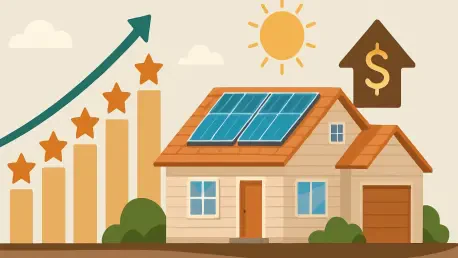

The relationship between a home’s star rating and solar sizing determines whether generated power covers household needs or is wasted on preventable thermal loss. While many property owners view rooftop photovoltaic systems as the primary solution for escalating utility costs, the structural efficiency of the building itself remains the most significant variable in determining the actual return on investment. In the current landscape of 2026, where residential energy standards have shifted toward a more holistic approach, understanding the Nationwide House Energy Rating Scheme is no longer optional for those seeking true energy independence. A property with a low thermal rating essentially functions as a leaky vessel; no matter how much energy is poured in via solar generation, the lack of adequate insulation and poor sealing allows that energy—and the money spent to generate it—to dissipate into the atmosphere. This disconnect between generation and retention is why two identical solar arrays can yield vastly different financial outcomes for neighboring households. As the Australian housing market continues to integrate these performance metrics into property valuations, the synergy between a high star rating and a right-sized solar system has become the gold standard for long-term financial sustainability and domestic comfort.
1. Strategic Matching: The Foundation of Thermal Performance
The primary mechanism of the Nationwide House Energy Rating Scheme involves a sophisticated analysis of a building’s thermal envelope, which includes the walls, roof, windows, and floors. This rating, measured on a scale from zero to ten stars, provides a standardized estimate of the energy required to heat and cool a home to a comfortable temperature. In 2026, the transition to a seven-star minimum for new constructions has highlighted the massive disparity in energy requirements compared to older housing stock. A seven-star home is designed to require approximately 20 to 25 percent less energy for thermal regulation than a six-star home, and significantly less than the three-star average of dwellings built in previous decades. This reduction in baseline demand directly influences the sizing of a solar installation. When a house naturally maintains its temperature, the solar energy produced during the day is not entirely consumed by high-draw climate control systems. Instead, that power becomes available for other high-value uses, such as charging electric vehicles or operating energy-intensive kitchen appliances, thereby accelerating the timeline for the system to pay for itself.
Strategic matching requires homeowners to look beyond the total kilowatt-hour production of their panels and focus on the timing of their consumption. A home with poor thermal performance often experiences sharp peaks in energy demand during the late afternoon and early evening—the exact time when solar production begins to decline. This mismatch forces the household to draw expensive power from the grid despite having a large solar array. In contrast, a high-rated NatHERS property flattens these demand peaks by retaining the cool air from the morning or the warmth from the previous day. This stability allows the solar system to operate more efficiently within the household’s energy ecosystem. For those living in existing structures with lower ratings, the initial step toward a better return on investment is often an professional assessment of where the thermal envelope is failing. By identifying these gaps, a resident can adjust their solar strategy to account for current leaks or, ideally, repair the leaks before finalizing the solar system design. This ensures that every watt generated serves a productive purpose rather than merely compensating for structural inefficiency.
2. Building Shell Restoration: Optimizing the Exterior Envelope
The most cost-effective path to maximizing solar returns often involves physical interventions within the building’s exterior shell. Before investing in additional panels, prioritizing upgrades such as high-quality ceiling insulation and comprehensive draught sealing can dramatically lower the total energy load. In many older Australian residences, gaps around doors, windows, and floorboards account for a significant portion of heat loss during winter and heat gain during summer. Sealing these apertures creates a more controlled internal environment, which reduces the frequency and intensity with which air conditioning units must operate. When these mechanical systems run less often, the solar energy that would have been diverted to them is instead preserved for other household functions or exported to the grid for a feed-in tariff. This shift in energy distribution effectively increases the value of every square inch of the solar array. Furthermore, modern insulation materials available in 2026 offer superior thermal resistance, allowing even modest upgrades to have a measurable impact on the NatHERS performance of an older structure.
Beyond insulation and sealing, the strategic use of shading and window glazing plays a pivotal role in protecting the investment atmosphere. Installing external blinds or planting deciduous trees can prevent the sun from striking glass surfaces during the peak heat of the day, which is especially critical in northern and western orientations. For those undergoing renovations, upgrading to double or triple-glazed windows with low-emissivity coatings can transform the thermal profile of a room. These improvements to the building shell serve as a passive form of energy storage; they keep the home at a stable temperature without requiring any active power consumption. When the shell is optimized, the household’s reliance on the solar system for thermal comfort diminishes, allowing the solar investment to be redirected toward eliminating the costs of all other electrical needs. This approach changes the financial calculation of solar ROI from one of “survival” against high bills to one of “surplus,” where the homeowner can reliably predict their energy costs and even generate a modest income through grid exports.
3. Advanced Electrification: Shifting Demand to Peak Production
Transitioning toward smart electrification is a vital component of aligning a home’s NatHERS rating with its solar potential. The goal is to move significant energy-consuming tasks into the hours when solar production is at its peak, typically between 10:00 AM and 3:00 PM. One of the most effective ways to achieve this is by replacing aging gas or standard electric resistive water heaters with high-efficiency heat pump systems. A modern heat pump can be programmed to run exclusively during the day, utilizing the free energy from the solar panels to heat water that is then stored in an insulated tank for evening use. This effectively turns the hot water system into a thermal battery. Because heat pumps are far more efficient than traditional heaters, they require less energy to achieve the same result, ensuring that the solar array is not overtaxed. This strategy is particularly beneficial for homes with mid-range star ratings, as it manages one of the largest contributors to the daily energy load without requiring expensive structural changes to the house itself.
In addition to water heating, the adoption of smart appliances and automated energy management systems allows for a more granular control of household power consumption. In 2026, many appliances come equipped with integrated timers or can be connected to central home automation hubs that monitor real-time solar generation. Dishwashers, washing machines, and pool pumps can be scheduled to operate sequentially during peak sunlight hours, ensuring that the household maximizes its “self-consumption” of solar power. Self-consumption is the most profitable way to use solar energy because it avoids the need to purchase power at retail rates, which are significantly higher than the credits received for exporting power back to the grid. For a household with a high NatHERS rating, where the background demand for heating and cooling is already low, these smart electrification steps can result in a situation where the home is nearly entirely powered by its own rooftop generation for the majority of the year. This level of efficiency not only improves the ROI of the solar hardware but also contributes to the overall resilience of the local energy network.
4. Capacity Calculations: Sizing Systems for Modern Consumption
One of the most frequent errors made by homeowners is sizing a solar system based on historical utility bills that reflect an inefficient lifestyle or a poorly rated home. If a resident plans to improve their home’s thermal shell or transition to more efficient appliances, their future energy needs will be significantly lower than their past consumption. Calculating solar capacity must therefore be a forward-looking exercise. In 2026, professional installers utilize sophisticated modeling software that accounts for planned efficiency upgrades and the introduction of new technologies like electric vehicles. A system that is oversized for a high-efficiency home may lead to excessive grid exports at low feed-in rates, extending the payback period unnecessarily. Conversely, a system that is too small will fail to cover the baseline needs, leaving the homeowner vulnerable to high peak-time charges from the grid. The ideal approach involves determining the “post-upgrade” energy profile of the home and then selecting a solar capacity that meets that specific target with a modest margin for seasonal variation.
Furthermore, the calculation of solar capacity must account for the specific climate zone and orientation of the property as defined in the NatHERS assessment. A home in a southern climate may require a different solar configuration than one in the north to account for shorter winter days and higher heating demands. The orientation of the solar panels should also be considered in relation to the home’s thermal behavior; for instance, west-facing panels might be more beneficial for a home that struggles with late-afternoon heat gain, as they provide power exactly when the cooling system is most likely to be engaged. For residents planning to add an electric vehicle in the 2026-2028 timeframe, the capacity calculation should include the estimated daily charging requirements. By integrating these variables into a single data-driven model, homeowners can ensure that they are not buying more technology than they need, nor are they leaving potential savings on the table. This precision in sizing is what ultimately secures a high return on investment, as it aligns the capital expenditure of the solar installation with the actual thermal reality of the dwelling.
5. Storage and Incentives: Maximizing Utility through Battery Integration
Evaluating battery storage has become an essential step for Australians looking to bridge the gap between daytime solar production and evening energy consumption. While the thermal rating of a home determines how much energy is needed, a battery determines when that energy can be used. For many households, the most expensive electricity usage occurs after sunset when families return home and engage in high-energy activities. If the home’s NatHERS rating is low, the evening energy draw for heating or cooling can be substantial, quickly exhausting a standard battery. However, in a well-insulated seven-star home, the evening thermal load is minimal, allowing a battery to easily power lights, electronics, and small appliances throughout the night. This synergy means that homeowners with higher-rated properties can often achieve full energy independence with a smaller, less expensive battery than those in inefficient homes. In the current market, the ROI of a battery is increasingly tied to its ability to eliminate peak-period grid reliance rather than just providing backup power during outages.
Navigating the landscape of government incentives is equally important when considering the financial viability of energy storage. In 2026, various state and federal programs continue to offer support for battery integration, though the focus has shifted toward virtual power plants and grid-stabilization incentives. For example, programs like the Peak Demand Reduction Scheme in New South Wales or various regional battery rebates provide upfront discounts or ongoing credits for households that allow their batteries to be utilized during periods of high grid stress. Homeowners should verify if their property and chosen equipment qualify for these local incentives, as they can significantly reduce the initial capital outlay and shorten the payback period. It is also wise to check the specific requirements of these programs, as some may necessitate the use of certain accredited installers or specific “smart” battery technologies. By combining these financial incentives with a high-efficiency building shell, the economic argument for residential energy storage becomes much more compelling, turning a modern home into a sophisticated micro-generator that benefits both the owner and the broader community.
6. Professional Consultation: Navigating Contractor Estimates and Data
Before finalizing a contract for a solar installation, it is imperative to engage in a detailed consultation with an accredited professional who understands the nuances of home energy ratings. A reputable installer should not merely look at a single power bill and suggest a standard 6.6kW system; instead, they should conduct a thorough analysis of the property’s actual power usage patterns and its structural efficiency. Homeowners should ask specific questions regarding how the proposed system size was determined and whether it accounts for planned improvements to insulation or shading. If an installer cannot explain the data behind their projections, it may be an indication that the system is being sold as a generic product rather than a tailored solution. The integration of NatHERS data into solar quotes is becoming a standard practice among top-tier contractors in 2026, as it provides a much more accurate baseline for calculating the expected self-consumption and grid export ratios.
Moreover, requesting that all financial projections be provided in writing is a critical step in protecting the investment. These projections should clearly outline the assumptions being made regarding future electricity prices, feed-in rates, and the degradation of the solar panels over time. A professional estimate should also distinguish between the financial return provided by the solar panels and the return provided by a battery, as these are distinct components with different payback schedules. Residents should also inquire about long-term maintenance costs and the specifics of the warranties provided for both the hardware and the labor. Understanding the “Whole of Home” energy score can further assist in this process, as it provides a comprehensive view of how the various systems—thermal, electrical, and renewable—interact with one another. By demanding transparency and data-driven insights from installers, homeowners can avoid the pitfalls of unrealistic savings claims and ensure that their solar project is a sound financial decision based on the physical reality of their residence.
7. Final Considerations: Achieving Long-Term Energy Autonomy
The evolution of the Australian energy market through 2026 has demonstrated that the most successful residential investments are those that prioritize a holistic view of building performance. It was observed that homeowners who addressed their thermal star rating in conjunction with their solar installation achieved significantly faster payback periods and higher overall satisfaction. The historical practice of treating energy generation and energy efficiency as separate silos proved to be inefficient and costly. In contrast, the integration of high-performance building shells with right-sized solar arrays and smart storage solutions created a new benchmark for domestic autonomy. These systems were not just about saving money; they were about creating resilient living environments that remained comfortable and functional regardless of grid fluctuations or extreme weather events. The data from recent years indicated that properties with a verified seven-star rating and a coordinated solar strategy maintained higher resale values, reflecting the market’s growing preference for low-operating-cost homes.
Moving forward, the path to energy independence requires a commitment to ongoing management and a willingness to adapt to new technologies. It was found that the most effective next steps for property owners involved the continuous monitoring of their energy data to identify further opportunities for optimization. As the industry moved toward 2027 and beyond, the role of the “passive house” principles became increasingly influential, even in renovations of existing stock. For those ready to take action, the solution was not found in a single product, but in the intelligent combination of structural integrity and renewable generation. By starting with a professional NatHERS assessment and following a structured plan for shell improvements, electrification, and solar integration, residents successfully transformed their homes into high-performing assets. This strategic approach ensured that the relationship between a home’s star rating and its solar ROI remained a positive one, delivering lasting financial and environmental benefits for decades to come.