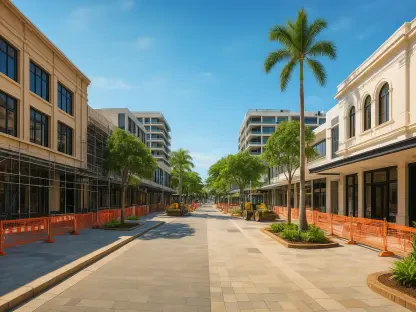

Julius Berger’s regional leadership advocates for a pre-construction engagement model that prioritizes the identification of potential infrastructure conflicts before work commences. This strategic realignment represents a significant departure from traditional municipal management in Lagos, where utility services and transportation networks historically operated in isolation. As the city navigates its rapid 2026 expansion, the intersection of civil engineering and hydraulic management has become a critical focal point for sustainable development. The Lagos Water Corporation and Julius Berger Nigeria PLC are now forging a partnership designed to synchronize their long-term operational objectives. By moving away from independent project cycles, these organizations are addressing the systemic technical conflicts that have previously hindered large-scale urban improvements. This shift aims to safeguard existing public assets while ensuring that the infrastructure supporting the city’s population remains resilient against the physical demands of intensive construction and high-density urban living.
Synchronizing Technical Standards and Asset Protection
A primary driver for this collaborative framework is the recurring challenge of underground utility damage during road expansion. In previous years, major arterial projects often encountered existing water mains that were not accounted for in initial surveys, leading to catastrophic bursts that disrupted service for thousands of residents. These incidents did not only represent a financial burden for the state in terms of emergency repairs but also delayed transport projects, inflating total costs and logistical complexity. By integrating their technical standards, engineers from both agencies can now design road beds and drainage systems that accommodate the specific depth and pressure requirements of large-diameter water pipes. This synchronized planning ensures that once a road is paved, it will not need to be excavated shortly after to fix a leaking main. Such foresight is essential for maintaining the structural integrity of the newly constructed surfaces and preventing the premature degradation of the city’s expanding network of modern highways.
From a real estate perspective, the integration of road and water infrastructure serves as a major catalyst for property value appreciation and investor confidence. Developers are increasingly seeking locations where the infrastructure is planned as a cohesive unit, reducing the risk of future service interruptions or the need for costly private utility installations. When a neighborhood is built with a unified approach, it provides a stable foundation for residential and commercial growth, attracting high-quality investments that drive the local economy. Investors understand that properties served by a coordinated network of roads and reliable water mains are far more likely to retain their value over time than those in areas with fragmented services. This alignment also simplifies the permitting process for new construction projects, as developers can rely on a clear and predictable infrastructure layout. By fostering a more stable and attractive environment for real estate development, the partnership is directly contributing to the economic prosperity and modernization of the region.
Streamlining Data Access and Environmental Sustainability
The transition toward a Geographic Information System (GIS) platform represents a major leap forward in managing the complexities of a megacity’s growth. This technology allows for the overlay of multiple data layers, from water pipeline depth to telecommunications cabling and road elevations, providing a holistic view of the urban landscape. When Julius Berger begins a new phase of construction, they can utilize this shared GIS database to identify potential points of intersection with Lagos Water Corporation assets months before site mobilization. Furthermore, as new infrastructure is completed in 2026, the digital records are updated in near real-time, creating a living document that evolves alongside the city. This commitment to data transparency enables more accurate risk assessments and allows for the implementation of non-invasive detection technologies. By leveraging these advanced mapping tools, the partnership can optimize the routing of new services, ensuring the expansion of the water network does not compromise efficiency.
The collaboration between the Lagos Water Corporation and Julius Berger established a vital precedent for how inter-agency cooperation successfully navigated the complexities of modern urban development. It was determined that the integration of utility and transport planning served as the most effective method for mitigating cost overruns and technical failures. To further this progress, future initiatives must focus on the formalization of these partnerships through legislative frameworks that mandate cross-departmental data sharing as a standard operating procedure. State leaders prioritized the creation of permanent technical committees tasked with overseeing the lifecycle of all major public works from the design phase through to long-term maintenance. This shift toward institutionalized synergy provided a scalable model that other burgeoning megacities adopted to manage their own rapid growth. By investing in integrated digital twins of the city’s assets, the administration ensured every future project was grounded in a holistic view of the environment, securing a more functional future.