
The shift toward “total project management” means that top-tier firms in 2026 are no longer providing simple sketches but are instead acting as comprehensive overseers of every construction detail. This evolution is particularly evident across Dubai, where the distinction between architectural integrity and interior finishes has become almost non-existent. For property owners in districts like Palm Jumeirah or Downtown, the expectation has transitioned from mere aesthetic appeal to a demand for integrated engineering that considers the harsh Middle Eastern climate alongside ultra-luxury standards. As the city continues to redefine its global standing, the most successful studios are those capable of navigating complex municipal regulations while maintaining the high-art status of their designs. Success is currently quantified by a firm’s ability to provide a frictionless journey from the initial conceptualization to the final installation. This involves a rigorous blend of artistic vision and administrative precision that ensures every luxury villa reflects a unique identity while meeting functional necessities.
Strategic Market Trends: Operational Excellence in Modern Design
Hyper-Customization: Local Production and Vertical Integration
Control over the supply chain has become the ultimate differentiator for firms looking to secure high-value contracts in the UAE. By internalizing manufacturing processes, leading studios are circumventing the global shipping delays that previously plagued the local market. For instance, Muse Interior Design has successfully established its own production facilities to create bespoke cabinetry and furniture that fit perfectly within the specific geometries of modern Dubai villas. This vertical integration allows for a degree of customization that was once impossible, as designers are no longer limited by the catalogs of third-party vendors. Instead, every texture and joint can be engineered to suit a specific architectural context, ensuring that the final product is truly one-of-a-kind. This shift toward localized production also supports regional sustainability by reducing the carbon footprint associated with importing materials while simultaneously boosting the local artisan economy and ensuring strict quality control.
Beyond the logistical benefits, hyper-customization reflects a deeper psychological shift among the city’s elite clientele. In a market where luxury is ubiquitous, the truly affluent seek exclusivity that cannot be replicated by simply purchasing expensive brands. Studios are now employing specialized craftsmen who work alongside designers to develop proprietary finishes, such as hand-applied plaster techniques or unique metal alloys for structural details. This collaborative environment ensures that the “design-and-build” model is about creating a distinctive sensory experience. This strategy has proven essential for projects in high-density luxury hubs like Jumeirah Bay, where discerning owners require interiors that feel as unique as the surrounding architecture. By maintaining a tight grip on the execution of these bespoke elements, firms can guarantee that the original artistic intent remains uncompromised by the realities of site-level construction, thus becoming the performance standard for the upper echelon of the industry.
Technological Transparency: Digital Tools and Project Oversight
Modern project management has been transformed by the implementation of proprietary digital platforms that offer unprecedented visibility into the construction process. Innovative firms like Reno are leading this charge by providing clients with mobile applications that serve as a central hub for every aspect of their project. These apps allow for real-time budget tracking, where every dirham spent is recorded and visible, effectively eliminating the traditional anxiety surrounding cost overruns in large-scale renovations. Furthermore, daily site updates—including high-resolution photos and video walkthroughs—allow international investors to monitor progress without needing to be physically present in Dubai. This level of transparency fosters a relationship of trust that is vital in a city where many property owners reside abroad for significant portions of the year. By leveraging these tech-driven tools, studios are streamlining communication and ensuring that expectations are met with mathematical precision and a clear audit trail.
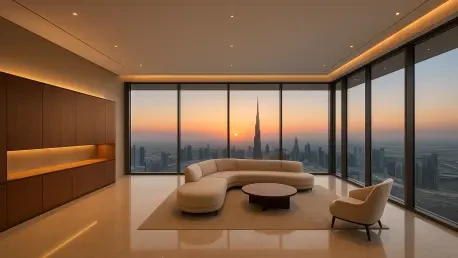
While technology handles the logistics, a stylistic transition is also underway, moving the industry away from traditional regional grandiosity toward a more restrained contemporary minimalism. This trend focuses heavily on the human experience, prioritizing the flow of natural light and the tactile quality of materials over purely ornamental displays of wealth. Modern luxury in Dubai is increasingly defined by how a space functions during daily life, leading firms to emphasize ergonomic layouts and acoustic engineering that create serene environments amidst the urban bustle. This shift does not mean a lack of richness; rather, it represents a more sophisticated use of premium materials like natural stone and sustainably sourced timber. Designers are now tasked with balancing these clean lines with the technical requirements of smart home integration, ensuring that automation systems are invisible yet fully functional. This synthesis of high-tech infrastructure and understated elegance is what characterizes the most successful projects today.
Industry Leaders: The Synergy of Heritage and Technical Innovation
The top echelon of Dubai’s design sector is currently split between legacy powerhouses and agile boutique innovators. Established giants like KCA International and Algedra continue to dominate the large-scale hospitality landscape, leveraging their experience with massive projects like the Burj Al Arab to manage complex infrastructure. Their ability to handle sprawling developments ensures that the city’s architectural landmarks maintain a cohesive identity. Meanwhile, Bishop Design continues to push boundaries in the commercial sectors, winning international acclaim for high-energy concepts. Conversely, boutique firms such as Accouter, VSHD Design, and Zen Interiors focus on the ultra-luxury residential sector, where they manage billions in assets for private clients. These studios distinguish themselves through extreme attention to detail and exclusive access to global artisanal networks. By specializing in high-end neighborhoods like Jumeirah Bay, they create trophy properties for the world’s most discerning investors.
Technical proficiency and regulatory mastery became the defining characteristics of successful firms like 4Space Interior Design and the Antonovich Group. These organizations excelled in the “build” portion of the design-and-build model, ensuring that complex smart home integrations and structural modifications were executed without compromising the artistic vision. Looking back at the evolution of the industry since the beginning of 2026, it was evident that the most successful projects were those that prioritized operational reliability over purely visual aesthetics. Property owners who sought out firms with in-house manufacturing and digital tracking systems achieved higher satisfaction rates and avoided the common pitfalls of construction delays. By adopting these rigorous standards, the industry moved toward a more professionalized ecosystem that valued transparency and technical precision. Moving forward, the focus shifted toward maintaining these high-performance standards to ensure that Dubai remains at the forefront of global architectural innovation.