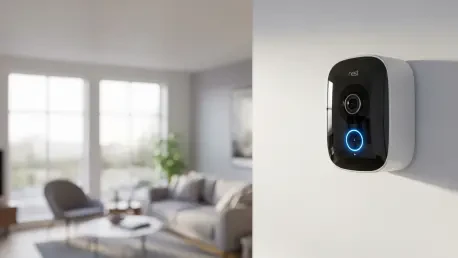

The integration of multimodal AI into home security signifies a paradigm shift where cameras no longer merely record pixels but interpret complex human environments with unprecedented nuance. For years, motion detection relied on simple changes in light or heat, often leading to a barrage of false notifications triggered by swaying trees or passing vehicles, which ultimately desensitized users to actual security threats. By embedding the Gemini large language model directly into the Nest ecosystem, Google has fundamentally altered how residential surveillance functions, moving from basic pattern matching to sophisticated semantic understanding. This transformation enables hardware to distinguish between a courier leaving a package and a neighbor stopping by to water plants, providing context that was previously impossible. As homeowners increasingly seek intelligent automation that requires minimal manual oversight, this leap in generative intelligence promises to redefine the boundary between passive monitoring and active digital assistance within the modern smart home.
Smart Integration: Enhancing Semantic Recognition and Search
The deployment of Gemini AI within Nest cameras introduces a feature known as camera search, which allows users to query their video history using natural language instead of scrolling through endless timelines. Previously, finding a specific event required significant manual effort, but the current implementation allows for specific questions such as asking if the dog was on the couch while the owners were away. This capability is powered by a multimodal architecture that processes visual data as a series of tokens, enabling the AI to recognize specific objects, temporal sequences, and even abstract concepts like littering or playing. By moving beyond simple labels like person or pet, the system provides a detailed description of activities, which it then indexes for near-instant retrieval. This level of granularity ensures that the home security system acts as a searchable visual archive of daily life, making it easier to track lost items or review specific interactions without having to watch hours of footage.
Furthermore, the integration facilitates a more sophisticated notification system that prioritizes relevance based on the specific context of the household. Instead of receiving a generic alert for every movement, the AI analyzes the scene to determine if the activity is routine or anomalous, such as recognizing a child returning from school versus an unidentified person lingering near the entrance. This contextual awareness extends to the Google Home app, where the Gemini-powered descriptions summarize events in a concise, human-readable format. For instance, a notification might read that a delivery truck arrived and the driver left a box behind the pillar, rather than simply stating that motion was detected in the driveway. This reduction in cognitive load for the user is a critical improvement, as it allows individuals to stay informed without being overwhelmed by digital noise. The shift toward meaningful summaries demonstrates a move away from raw data collection toward actionable intelligence that respects the user’s attention today.
Actionable Insights: Future Considerations and Security Protocols
The introduction of Gemini AI into the Nest camera lineup established a new benchmark for how residential security systems interacted with the physical world. It was clear that the transition from simple motion tracking to deep semantic understanding addressed the long-standing issue of notification fatigue while adding significant value through natural language search. To maximize the benefits of this technology, it became essential for users to audit their privacy settings and ensure that local processing was prioritized to protect sensitive household data. Security professionals recommended that homeowners regularly update their automation routines to reflect changing lifestyle patterns, ensuring the AI remained calibrated to the specific nuances of their environment. Looking forward, the focus turned toward cross-platform compatibility, where the insights gathered by Nest cameras could inform other smart devices in a unified, privacy-conscious ecosystem. This strategic approach ensured that the home remained a safe and responsive sanctuary.
As technology matured, developers addressed algorithmic bias and improved detection in low-light environments. Homeowners were encouraged to utilize descriptive search for periodic security audits, identifying blind spots or vulnerabilities that were previously overlooked. The implementation of granular control over data retention allowed residents to balance visual archives with personal privacy. By integrating cameras into a broader emergency response network, the system provided an added layer of safety that went beyond theft prevention to include health monitoring for vulnerable family members. This era of smart surveillance proved that AI could be a force for domestic tranquility when deployed with transparency and user-centric design. Moving into 2027 and beyond, the industry maintained a commitment to refining these models to ensure that the balance between convenience and security remained a top priority for every modern household.