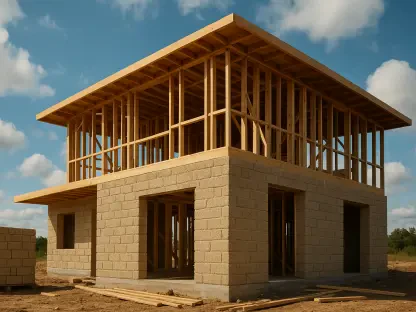

The American dream of residing in a single-family home is undergoing a fundamental transformation as the build-to-rent sector solidifies its position as a primary solution to the persistent national housing crisis. This burgeoning industry, which focuses on developing professionally managed communities of detached homes for long-term lease, has become a vital component of the modern real estate landscape. However, its trajectory was nearly derailed by the 21st Century ROAD to Housing Act, a comprehensive piece of federal legislation that initially sought to curb institutional dominance in residential markets. While the bill’s intentions were to protect first-time buyers, its early language inadvertently threatened to penalize developers who are actually expanding the housing supply. The subsequent months of 2026 have seen a remarkable shift in policy focus, as the industry successfully argued that its projects are part of the solution, not the problem. This victory marks a turning point for residential construction and regulatory clarity.
Legislative Challenges: Navigating Regulatory Hurdles
Clarifying the Impact: Regulatory Language and Its Risks
The primary hurdle for the build-to-rent industry stemmed from a critical lack of clarity in the initial drafts of the housing act circulating throughout early 2026. Lawmakers were rightfully focused on preventing massive investment firms from aggressively purchasing existing starter homes, a practice that had significantly depleted the inventory available for traditional first-time buyers. Unfortunately, the broad legal language used in those early versions failed to distinguish between predatory acquisition strategies and the productive work of developers who create entirely new housing communities. By grouping these distinct business models together, the proposed legislation threatened to impose restrictive tax penalties and zoning hurdles on projects that were intended to increase the total housing stock. Industry leaders argued that such an oversight would have frozen billions of dollars in planned construction capital, ultimately worsening the very shortage that the act intended to address.
Developers and financial partners expressed deep anxiety as they reviewed the potential implications of being classified alongside institutional buyers of existing homes. If the build-to-rent sector had been subjected to the same limitations, the resulting financial strain would have likely halted projects across high-growth regions where rental demand is highest. The ambiguity created a climate of uncertainty, making it difficult for firms to secure long-term financing for ground-up developments. This regulatory risk was particularly concerning because build-to-rent projects often involve multi-year timelines and massive upfront infrastructure costs. Without a clear exemption for new construction, the legislation risked unintended consequences that would have stifled innovation in the residential sector. The industry recognized that a passive approach was no longer an option, leading to a coordinated effort to engage with federal lawmakers and provide the necessary context to refine the bill’s restrictive definitions.
Advocacy Efforts: Shifting the Policy Narrative
In response to these existential risks, industry organizations such as the National Multifamily Housing Council launched an extensive campaign to educate policymakers on the mechanics of their industry. Their strategy centered on the concept of “net new” housing, emphasizing that build-to-rent developers do not compete with individual buyers for existing homes but instead expand the market by constructing new ones. This distinction was vital in changing the hearts and minds of legislators who had previously viewed all large-scale residential investors through a single lens. By providing detailed data-driven insights into the development process, advocates were able to show that these communities provide high-quality housing options that would not otherwise exist. This educational push was essential for demonstrating that the sector is a critical partner in meeting the federal government’s goals of increasing housing density and overall accessibility for the workforce.
The successful advocacy efforts ultimately led to a significant pivot in the narrative surrounding the 21st Century ROAD to Housing Act. Policymakers began to understand that penalizing new construction would be counterproductive to their goals of lowering housing costs. As a result, the final version of the legislation was meticulously adjusted to protect projects that contribute to the creation of additional units. This refinement ensured that the bill focused its restrictions on the bulk acquisition of existing single-family homes while actively supporting the development of purpose-built rental neighborhoods. The industry’s ability to present a unified front and offer practical solutions allowed for a more nuanced approach to regulation. This victory not only preserved the viability of current projects but also established a framework for how the sector can engage with future legislative challenges. The resulting clarity has restored confidence among investors and developers alike.
Defining the Strategic Role of Build-to-Rent
Distinguishing Models: Purpose-Built vs. Speculative Acquisitions
A key element of the industry’s success involved highlighting the fundamental differences between the build-to-rent model and traditional institutional investment practices. While some firms profit by acquiring existing houses and converting them into rentals, the build-to-rent sector focuses on developing raw or underutilized land into modern neighborhoods. These communities are designed from the ground up specifically for tenants, often featuring amenities like professional property management, landscaping, and community centers. By focusing on production rather than just acquisition, these developers are directly addressing the supply deficit that has driven up costs across the United States. This distinction proved to be the winning argument, as it aligned perfectly with the bipartisan goal of increasing the total number of homes available to Americans. The industry effectively branded itself as a builder of communities rather than a buyer of limited assets.
These purpose-built communities serve a diverse and growing demographic that seeks the benefits of a single-family home without the immediate financial burden of a mortgage. Young professionals who require extra space for home offices, as well as retirees looking for a maintenance-free lifestyle, have increasingly turned to these high-quality rental options. By offering a “third way” between traditional apartment living and homeownership, the sector provides essential flexibility in a modern economy where mobility and convenience are highly valued. This market role is distinct from speculative buying, as it prioritizes long-term asset management and resident satisfaction over short-term price appreciation. Recognizing this value, lawmakers acknowledged that the industry fills a critical gap in the housing ladder. The final bill reflected this by ensuring that the regulatory environment remains conducive to the growth of these specialized communities, fostering a healthier and more diverse residential market.
Achieving Consensus: Bipartisan Support for Market Growth
The clarity provided by the industry’s advocacy led to a rare moment of bipartisan cooperation within the halls of Congress. Lawmakers from both sides of the aisle recognized that the most effective way to make housing more affordable was to increase the supply of all types of homes. The refined version of the bill passed with overwhelming support, clearing the Senate with an 85 to 5 margin and the House of Representatives with a 358 to 32 vote. This massive consensus signaled a major shift in federal policy toward supply-side solutions and away from purely restrictive measures. Legislators emphasized that providing regulatory certainty for developers is the most efficient long-term strategy for stabilizing the market. This broad political backing has given the build-to-rent sector a powerful mandate to continue its expansion across the country, knowing that its contributions are valued by a wide spectrum of the political establishment.
This bipartisan agreement was not just about the build-to-rent sector, but about the broader recognition that the national housing shortage requires diverse solutions. By exempting new construction from the bill’s most restrictive provisions, the government sent a clear signal that it wants more building, not less. This approach has encouraged a wave of new investment as the risk of sudden, unfavorable federal intervention has diminished. The success of the 21st Century ROAD to Housing Act demonstrated that when industry experts and policymakers collaborate effectively, the result is legislation that is both effective and fair. This partnership has laid the groundwork for future reforms that could further streamline the development process and reduce the costs of building new homes. The overwhelming vote counts served as a testament to the fact that housing availability is a non-partisan issue that requires a pragmatic and inclusive approach to solve effectively and permanently.
Transitioning Toward Long-Term Housing Stability
Completing the Legislative Path: Procedures and Timelines
As the calendar moved through late June 2026, the legislation reached its final constitutional stages following its decisive passage in both chambers of Congress. After being officially presented to the President on June 29, a ten-day constitutional window began, during which the bill awaited a signature to be enacted into law. This final procedural step represented the culmination of years of effort to modernize federal housing policy and create a more predictable environment for developers. If the President chose to take no action during this period, the bill would have automatically become law, providing the sector with the final stamp of approval needed to move forward with massive, long-term capital deployments. This timeline provided a clear horizon for the industry, allowing firms to finalize their strategic plans for the remainder of 2026 and into 2027. The successful navigation of this process was a significant achievement for all stakeholders involved.
The stability provided by the enactment of this law allowed developers to proceed with confidence on projects that had been on hold during the legislative debate. With the threat of being misclassified as speculative investors removed, the sector was able to re-engage with lenders and equity partners to restart construction in key markets. This period of finalization was marked by a sense of relief across the real estate industry, as the new rules provided a clear roadmap for compliance and growth. The transition from legislative uncertainty to a defined legal framework was essential for the continued expansion of the housing supply. By successfully managing the constitutional timeline, the government demonstrated a commitment to providing the regulatory foundations necessary for private sector investment. This phase of the process ensured that the benefits of the new housing act could begin to be realized on the ground, as new communities broke ground in regions facing the most acute shortages.
Establishing a Blueprint: Lessons for Future Reform
The passage of the 21st Century ROAD to Housing Act established a robust blueprint for how federal policy could be used to foster sustainable growth in the residential sector. By choosing to target speculative practices while protecting productive development, the government provided a balanced approach that addressed public concerns without harming the economy. This legislation successfully modernized federal programs and reduced the regulatory hurdles that historically slowed down construction and increased costs for consumers. Stakeholders recognized that the success of this act was rooted in its focus on diversity and inclusivity in housing types. This comprehensive reform ensured that more Americans gained access to attainable places to live, regardless of whether they chose to rent or buy. The industry moved forward by adopting these new standards, which prioritized the rapid delivery of high-quality inventory to meet the urgent needs of the modern workforce.
Reflecting on the progress made throughout the middle of 2026, the housing act served as a cornerstone for a more resilient national real estate market. Lawmakers and industry leaders alike participated in a collaborative process that prioritized evidence-based policy over political rhetoric. This cooperative environment allowed for the creation of solutions that were both practical and impactful. Looking toward 2027 and 2028, the industry remained focused on leveraging these new regulatory certainties to further innovate in sustainable building practices and community design. The experience demonstrated that clear communication and a shared commitment to increasing supply were the most effective tools for overcoming long-standing market challenges. By establishing this precedent, the act provided a foundation for future reforms that continued to streamline the development of essential housing. The collective effort ensured that the build-to-rent sector remained a vital and protected part of the solution to the national housing crisis.