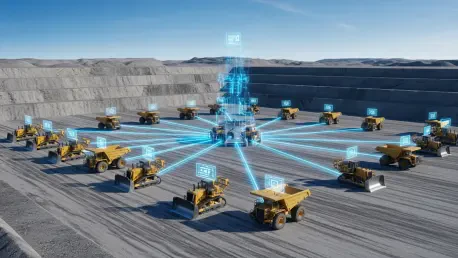

The integration of sophisticated neural networks into the rugged chassis of excavators and haulers represents a monumental shift in how industrial sectors approach productivity. Unlike digital assistants that process text in a vacuum, physical artificial intelligence must contend with the chaotic variables of a live construction site where gravity and occluded visibility are constant obstacles. This transition from basic automation to true cognitive embodiment allows machines to perceive their surroundings with human-like intuition while maintaining the relentless consistency of a computer. Currently, as of 2026, the focus has shifted from simple GPS-guided pathing toward foundation models that understand the physics of the material they interact with, whether it is shifting soil or brittle rock. This evolution is not about removing the operator from the cab but about redefining the machine as an intelligent collaborator capable of making complex tactical decisions in real time without constant human input.
Bridging the Gap Between Software and Steel
The Role of Foundation Models in Physical Environments
Foundation models have been adapted to interpret vast streams of multimodal sensor data from LiDAR and high-resolution cameras to navigate complex terrains. These models allow heavy machinery to recognize that a pile of loose gravel requires a different torque application than a solid wall of clay, an understanding that traditional rule-based systems could never master. By training on trillions of data points from both simulated environments and real-world operations, these physical AI systems have developed a generalized understanding of Newtonian physics. This means that when a machine encounters a scenario it has never seen before, it does not simply stall or trigger an error code. Instead, it utilizes its internal world model to predict the most likely outcome of its actions, effectively thinking through the physical consequences before the hydraulic actuators even begin to move. This capability reduces wear and tear significantly across fleets and increases the lifespan of hardware.
Data Processing and Fleet Communication Networks
The movement toward decentralized edge computing has further accelerated the deployment of these intelligent systems by allowing data processing to occur directly on the vehicle. This eliminates the latency issues associated with cloud connectivity, which is a critical requirement when a fifty-ton hauler needs to stop instantly to avoid an unexpected obstacle in a deep-pit mine. These onboard systems are now sophisticated enough to handle simultaneous localization and mapping while concurrently optimizing fuel consumption and cycle times. As these machines operate, they continuously refine their local models, sharing lessons learned with the rest of the fleet via mesh networks. This collective intelligence ensures that if one bulldozer discovers a more efficient way to grade a specific type of terrain, every other machine in the network immediately benefits. The result is a self-optimizing ecosystem that grows more capable every hour it remains active on a job site, regardless of the local network quality.
Optimizing Safety and Operational Standards
Predictive Analytics and Real-Time Hazard Mitigation
Safety in heavy industry has historically relied on strict protocols and human vigilance, yet human error remains the primary cause of site accidents. Physical AI addresses this vulnerability by acting as a proactive safety layer that operates beyond the limitations of human reaction speeds and fatigue. These systems utilize 360-degree situational awareness to monitor not only the machine’s immediate path but also the trajectory of other vehicles and personnel within the vicinity. In the current landscape from 2026 to 2028, these systems are expected to become mandatory for large-scale mining operations due to their efficacy in reducing workplace fatalities. By employing predictive algorithms, the AI can anticipate potential collisions seconds before they occur, taking preemptive corrective action that is smoother than an emergency manual override. This level of foresight is particularly valuable in low-visibility conditions where the margin for error is razor-thin.
Implementation Strategies and Future Integration
The integration of physical AI into heavy machinery successfully transitioned from a conceptual ambition to an essential operational requirement for modern industrial firms. Stakeholders prioritized the modernization of their data infrastructure and established robust cybersecurity frameworks to protect their autonomous fleets from external interference. Engineering teams that invested in upskilling their workforce to manage and maintain these complex neural systems saw immediate returns in safety and production metrics. It became evident that the successful deployment of these technologies required a holistic approach, combining high-quality sensory hardware with sophisticated neural architectures that can generalize across different soil types. Future considerations focused on establishing standardized communication protocols to allow cross-brand interoperability between different types of equipment. By embracing these solutions, the industry moved toward a more resilient model that minimized environmental impact.