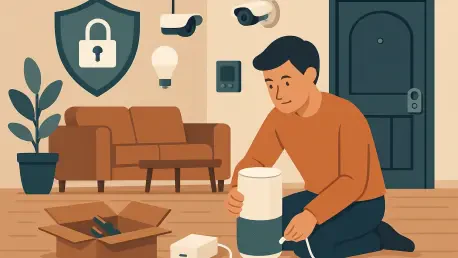

The transition of the smart home from a fragmented collection of novelty gadgets into a mission-critical residential infrastructure marks one of the most significant shifts in domestic technology over the past decade. For the modern homeowner, the primary challenge no longer involves finding devices that work, but rather architecting a system that remains functional and private even when external variables fail. This shift reflects a maturing market where consumers prioritize data sovereignty and long-term hardware reliability over the convenience of quick-setup, cloud-dependent solutions. Building a sophisticated environment requires moving past the “walled gardens” of single-brand ecosystems and embracing a more modular, open-source philosophy. By treating the smart home as a cohesive utility rather than a series of isolated toys, individuals can create a living space that anticipates needs while keeping sensitive information strictly local. The goal is to move toward an invisible infrastructure where the technology supports daily life without demanding constant attention or compromising the digital boundaries of the household. This strategic approach ensures that the investment in automation pays dividends in comfort, efficiency, and security for years to come, turning a standard house into a highly responsive and adaptive living environment. Moreover, this transformation is driven by a collective desire for greater transparency in how personal data is harvested and utilized by technology conglomerates.
Embracing Local Control for Enhanced Privacy
The fundamental requirement for a private smart home is a shift in where the primary intelligence of the house actually resides. Traditional smart homes rely heavily on cloud processing, which means that every time a sensor is triggered or a light is dimmed, that information is sent to a remote server owned by a third-party corporation. While this is convenient for initial setup, it creates a significant privacy vulnerability and introduces a point of failure that depends entirely on a stable internet connection and the longevity of the manufacturer’s business model. By transitioning to local control, homeowners reclaim their data sovereignty, ensuring that the intimate details of their daily routines are not being cataloged in a distant database. This architectural change is the only way to guarantee that a smart home remains private by design rather than by policy. Furthermore, local control provides the speed and reliability necessary for a system that residents can actually trust for critical tasks. When the brain of the home is located within the physical structure of the building, the system becomes more resilient, faster, and entirely independent of external service disruptions or corporate policy changes that could otherwise render hardware obsolete overnight.
Hardware Autonomy: The Role of Local Processing Hubs
Dedicated hardware like the Home Assistant Green has emerged as a cornerstone for those who seek to sever their reliance on massive corporate data centers for basic household functions. By utilizing a central hub with a 1.8 GHz quad-core processor and 4 GB of RAM, users can execute complex automation logic locally without ever sending a voice command or sensor trigger to a remote server. This technical autonomy provides a massive boost to privacy because it eliminates the digital paper trail that most cloud-connected devices generate by default. Instead of a third party having a detailed log of every time a door opens or a light is dimmed, that information stays within the physical walls of the home. This shift toward localized computing also addresses the growing concern regarding the “abandonware” problem, where devices become bricks if a manufacturer decides to shut down its servers. An open-source hub ensures that the software remains under the user’s control, offering a level of longevity that proprietary systems cannot match. Furthermore, the ability to integrate various protocols—from Zigbee to Bluetooth—under one roof makes it possible to choose the best hardware for the job regardless of the manufacturer, creating a more diverse and capable ecosystem that can scale with the needs of the household over many years.
System Resilience: Advantages of Local Execution
Beyond the obvious privacy benefits, the adoption of local-first hubs significantly improves the responsiveness and reliability of a smart home ecosystem during network instability. When a smart home relies on the cloud, a simple command like turning off the kitchen lights must travel from the user’s device to a router, through the internet service provider, to a corporate data center, and back again before the action occurs. This dependency creates latency and provides multiple points of failure that can render the home “dumb” during a brief internet outage. In contrast, a locally controlled system processes the command internally, resulting in near-instantaneous execution that feels much more like a traditional mechanical switch. This reliability is particularly vital for safety-oriented automations, such as water leak detection or security alerts, where every second counts and a failure to communicate could lead to significant property damage. By removing the internet from the critical path of daily operations, homeowners create a resilient environment that continues to function perfectly even if the broader web is down. This architectural choice transforms the smart home from a fragile luxury into a robust utility that provides consistent performance and peace of mind under all conditions, ensuring that essential routines never fail when they are needed most.
Integrating Convenient Hubs and Fast Connectivity
Creating a smart home that is truly helpful requires a balance between the invisible logic of local control and a visible, accessible interface for all residents. While automations should ideally happen in the background without human intervention, there are many instances where manual control or visual feedback is necessary for effective domestic management. Connectivity also plays a vital role in this balance, as a fast and stable network ensures that the various components of the home can communicate without delay. The integration of modern networking standards allows for a more fluid interaction between devices, reducing the friction that often plagues less sophisticated setups. By focusing on both the interface and the underlying network, a homeowner can create a system that is as easy to use as it is powerful. This approach ensures that the smart home remains a benefit to everyone in the household, providing clear information and reliable control points. As devices become more interconnected, the importance of a centralized “command center” and a high-performance network only grows, making these elements foundational to a successful and sustainable smart home project that serves the family effectively.
User Interface: Visual Dashboards and Management
While local control serves as the invisible backbone of a secure home, the need for a centralized visual interface remains paramount for managing daily tasks and household communication. The Amazon Echo Show 15 serves as a prime example of how a large-format touchscreen can act as a digital command center for an entire family. By mounting such a device in a high-traffic area like the kitchen, homeowners provide a transparent window into the state of the house, allowing anyone to view security camera feeds, adjust thermostats, or check communal calendars. This centralization reduces the friction associated with smart home management, as it eliminates the need to fumble with a smartphone or remember specific voice commands for every individual device. Modern visual hubs are increasingly acting as multi-functional bridges, supporting a variety of widgets that provide real-time updates on everything from energy usage to the status of appliances. This visual clarity ensures that the smart home feels accessible to all residents, regardless of their technical proficiency. It moves the technology out of the realm of the hobbyist and into the realm of practical domestic management, making the system a helpful assistant rather than a complex puzzle. Having a dedicated screen for these tasks also helps to keep the digital life of the family organized and visible.
Network Optimization: Thread and Mesh Connectivity
The underlying connectivity of these visual hubs is just as important as the screen quality, especially with the widespread adoption of the Thread networking protocol in modern devices. Thread represents a significant leap forward because it creates a self-healing mesh network where every mains-powered device acts as a router to strengthen the signal for the entire system. Incorporating a Thread Border Router within a visual hub ensures that battery-powered sensors and low-power lights can communicate with lightning speed and extreme reliability. Unlike traditional Wi-Fi, which can become congested with too many devices, or Bluetooth, which has limited range, Thread is designed specifically for the low-bandwidth, high-reliability needs of the smart home. This protocol allows devices to talk directly to one another without needing a central point of failure, meaning that if one node goes down, the rest of the network automatically reroutes data to keep everything running. This level of networking sophistication is essential for creating a responsive environment where motion sensors trigger lights without any perceptible delay. By investing in hardware that supports these modern standards, homeowners ensure their infrastructure is ready for the next generation of interconnected devices, providing a stable foundation for years of reliable operation in even the most dense digital environments.
Managing Resources with Universal Standards
Resource management has become a primary driver for smart home adoption, as homeowners look for ways to reduce energy waste and lower their monthly utility bills. By monitoring the consumption of individual appliances and creating intelligent schedules, a household can significantly decrease its environmental impact while also saving money. This requires a collection of smart plugs and sensors that can communicate with a central system to provide actionable data. However, for this to be effective at scale, the devices must be able to work together regardless of their brand or the platform being used to control them. This is where universal standards come into play, providing a common language for all devices to speak. By prioritizing interoperability, a homeowner can build a diverse system that is easy to manage and update. This approach not only makes the home more efficient but also protects the long-term value of the hardware investment. As energy prices continue to fluctuate, the ability to precisely control and monitor the home’s power usage becomes an increasingly valuable asset, making smart resource management a key component of any modern residential infrastructure that seeks to be both sustainable and cost-effective.
Resource Efficiency: Energy Monitoring Tools
One of the most tangible benefits of a modern smart home is the ability to monitor and manage energy consumption with surgical precision across all major appliances. Smart plugs equipped with energy monitoring, such as the Matter-compatible Kasa series, allow homeowners to track the real-time wattage and historical usage of individual devices. This visibility is crucial for identifying “energy vampires”—devices like game consoles or older kitchen appliances that continue to draw significant power even when they are ostensibly turned off. By using this data to create schedules that cut power to these devices during off-peak hours, a household can significantly reduce its carbon footprint and monthly utility bills simultaneously. The integration of this data into a central hub allows for advanced automations, such as turning off non-essential electronics when the home security system is armed. This proactive management of resources transforms the smart home from a convenience into a financial asset that eventually pays for its own installation costs. Furthermore, the compact design of modern smart plugs ensures that they do not block adjacent outlets, making it easy to deploy them throughout the house without sacrificing electrical accessibility or creating an unsightly mess of cables and bulky adapters.
Future-Proofing: The Matter Standard Implementation
Ensuring that these energy-monitoring tools and other smart devices remain compatible across different ecosystems is now possible thanks to the widespread implementation of the Matter standard. Matter provides a universal language that allows hardware from different manufacturers to communicate seamlessly with various controllers, whether they are from Apple, Amazon, or Google. This interoperability is a game-changer for homeowners who previously had to worry about being locked into a single “walled garden” that might not offer all the features they needed. By prioritizing Matter-compatible hardware, an individual can switch from an Android-based system to an iOS-based system—or move to a completely local Home Assistant setup—without having to replace a single smart plug or light bulb. This flexibility protects the long-term value of the smart home investment and encourages a more competitive market where hardware must win on its own merits rather than through ecosystem lock-in. As the industry moves toward a more unified future, the Matter standard ensures that the complex web of domestic automation remains easy to manage and update over the coming years. This universal compatibility is the foundation upon which a truly modular and scalable smart home is built, allowing for gradual upgrades rather than the total overhauls that were common in the early days of the industry.
Strengthening Physical Security Protocols
The most critical function of any home is to provide a safe and secure environment for its residents, and smart technology has revolutionized how this is achieved. Modern security protocols go far beyond simple alarms, offering sophisticated entry management and real-time monitoring that can be accessed from anywhere in the world. Smart locks and biometric scanners have replaced traditional mechanical keys, providing a more secure and convenient way to manage access to the property. These devices can be integrated into the broader home ecosystem, allowing for complex security routines that activate automatically when the residents leave. This synergy between digital intelligence and physical hardware provides a level of protection that was previously only available to high-end commercial properties. By implementing a multi-layered security strategy that includes both perimeter defense and internal monitoring, homeowners can enjoy significant peace of mind. This approach not only prevents unauthorized entry but also provides a detailed record of all activity, ensuring that any potential issues can be identified and addressed quickly. As security technology continues to advance, the smart home remains at the forefront of protecting the people and property that matter most, making it a vital part of any modern residential development.
Entry Security: Biometric and Digital Access
The integration of smart locks into the home’s entry points provides a level of security and convenience that traditional mechanical keys simply cannot replicate in a modern environment. Devices like the Wyze Lock Bolt utilize biometric fingerprint scanners and secure PIN codes to allow for keyless entry, effectively eliminating the risk of lost keys or unauthorized lock picking. This technology is particularly beneficial for households that need to manage access for a rotating cast of guests, cleaners, or delivery personnel, as temporary codes can be generated and revoked with a few taps on a smartphone. Unlike traditional keys, which can be easily duplicated at any hardware store, digital access codes provide a detailed audit log of who entered the house and at what time. This level of transparency offers peace of mind to homeowners, ensuring they always know the security status of their property regardless of their physical location. Modern smart locks also feature robust physical designs that meet high-security standards, combining the strength of heavy-duty metal with the intelligence of encrypted digital communication. This synergy of physical and digital protection creates a formidable barrier against unauthorized entry while making daily arrivals and departures smoother than ever before, even in adverse weather conditions or during the dark.
Integrated Protection: Security Automation Logic
Beyond the primary goal of keeping unauthorized individuals out, smart locks play a vital role in the broader automation of a home’s safety and energy routines. For instance, the act of locking the front door can trigger a sequence of events, such as arming the internal security system, turning off all non-essential lights, and lowering the thermostat to an eco-friendly setting. This holistic approach to home management ensures that security is never an afterthought or a forgotten task during a busy morning commute. Furthermore, the ability to check the status of a door remotely provides a significant psychological benefit, ending the nagging uncertainty of whether the house was properly secured before leaving. If a door was left unlocked, it can be secured instantly from a mobile app, providing a layer of protection that bridges the gap between physical reality and digital oversight. High-capacity internal storage for dozens of unique fingerprints ensures that every family member has a reliable, individualized way to enter the home without needing to remember a code. As smart locks become more sophisticated, they continue to serve as the literal gatekeepers of the smart home, blending into the background of daily life while providing a constant shield of security that adapts to the specific needs of the household throughout the day and night.
Strategies for a Resilient Infrastructure
Building a smart home that lasts for a decade or more requires a strategic approach that focuses on the underlying infrastructure rather than just the latest gadgets. This involves choosing protocols and hardware that are built for longevity and that can adapt to changing technologies. A resilient infrastructure is one that is decentralized, modular, and easy to maintain, ensuring that a single failure doesn’t bring down the entire system. By focusing on professional-grade standards and open-source solutions, a homeowner can create a system that is far more reliable than a collection of off-the-shelf consumer products. This strategy also involves careful planning of the physical installation, including power management and network coverage, to ensure that every device has a solid foundation to operate on. As the smart home becomes a more integral part of daily life, the importance of this resilience cannot be overstated. A well-designed system should work so reliably that it becomes almost invisible, supporting the residents in their daily routines without requiring constant attention or troubleshooting. This focus on infrastructure over novelty is what defines a truly mature smart home project, providing a stable and secure environment that can grow and evolve along with the people who live within it.
Professional Foundations: Moving Beyond Gadgets
Shifting the focus from individual gadgets to a cohesive residential infrastructure requires a disciplined strategy that prioritizes long-term stability over the novelty of new features. In a mature smart home, the technology should feel almost invisible, functioning with a level of reliability that matches the electrical and plumbing systems of the building. This requires moving away from proprietary, single-brand ecosystems and instead investing in open standards like Zigbee and Z-Wave, which have proven to be robust and interoperable over many years. By building a network based on these protocols, a homeowner creates a mesh of interconnected devices that can continue to communicate even if the central hub is temporarily offline. This architectural resilience is what separates a professional-grade smart home from a collection of temperamental smart speakers and bulbs. The focus must be on creating a system that is easy to maintain and troubleshoot, with clear documentation and a logical layout of sensors and controllers. As the number of connected devices in a typical household continues to grow, this structured approach becomes the only way to prevent the system from becoming a source of frustration rather than a helpful utility. By standardizing on reliable communication protocols, the home remains prepared for future expansion without the risk of technology silos.
Longevity: Building for the Next Decade
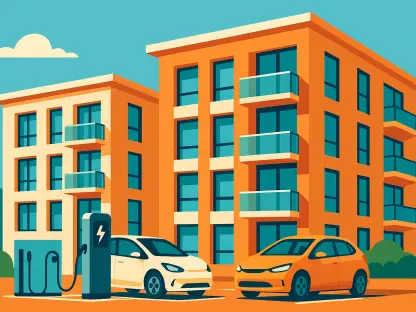
The ultimate success of a smart home is measured by how effectively it simplifies the lives of its inhabitants without requiring them to become part-time IT administrators. This means selecting hardware that is built to last and software that respects the user’s autonomy, avoiding the trap of products that rely on mandatory subscriptions or constant internet connectivity to perform basic tasks. A resilient infrastructure is one that can adapt to changing family needs, such as adding new sensors for an aging relative or integrating electric vehicle charging into the home’s energy management logic. By choosing local-first processing and universal standards today, homeowners are effectively future-proofing their property against the rapid shifts in the technology landscape. This proactive planning allows the home to evolve alongside its residents, incorporating new innovations without the need to tear out existing hardware every few years. The goal is to reach a point where the smart home is no longer a hobby but a fundamental part of the residence’s value, contributing to its safety, efficiency, and overall livability. By treating the smart home as a serious infrastructure project, individuals can enjoy the full benefits of automation with none of the typical privacy or reliability trade-offs, ensuring a high-quality domestic experience for the long term.
Actionable Outcomes: Building the Domestic Digital Foundation
The evolution of the smart home toward a model of local control and universal standards provided a clear roadmap for achieving a balance between modern convenience and individual privacy. By prioritizing hardware like local hubs and Matter-compatible sensors, the industry addressed the historical vulnerabilities of cloud-dependent ecosystems and fragmented brand silos. This strategic transition empowered homeowners to take full ownership of their data, ensuring that personal habits and security protocols remained confidential and within their physical control. The move toward resilient networking protocols like Thread and Zigbee successfully eliminated the latency and reliability issues that plagued early iterations of domestic automation. As a result, the smart home transformed from a collection of unpredictable gadgets into a reliable utility that added measurable value to the residential experience. Looking forward, the next step involved integrating these local systems with emerging decentralized energy grids to further enhance household autonomy and sustainability. By establishing this robust foundation, the modern home became a sanctuary that anticipated the needs of its residents while remaining impervious to external service disruptions. This paradigm shift also encouraged a more sustainable approach to electronic consumption, as modular and interoperable devices reduced the frequency of hardware replacements and minimized electronic waste across the global market. Homeowners finally achieved a state of domestic harmony where technology served the residents rather than the interests of data brokers or hardware manufacturers.