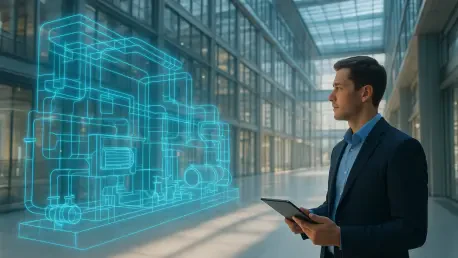

Successful early adopters have demonstrated that starting with high-impact systems like chillers and air handlers provides the necessary proof of concept for broader rollouts. This tactical entry point allows facility managers to witness immediate gains in energy efficiency and predictive maintenance without the overwhelming complexity of a full-scale deployment. By focusing on critical mechanical assets first, stakeholders can refine their data integration pipelines and validation protocols in a controlled environment. The transition from a single-asset twin to an interconnected ecosystem requires a shift in perspective from viewing buildings as static structures to seeing them as dynamic data-generating machines. As the industry moves toward 2027, the ability to replicate success across thousands of square feet hinges on the maturity of the underlying digital infrastructure. It is no longer enough to merely collect data; the challenge lies in contextualizing that information to drive decisions.
1. Establishing Interoperability through Standardized Data Models
The fundamental roadblock to scaling digital twins often resides in the disparate nature of legacy building management systems. Achieving a seamless rollout necessitates the adoption of standardized semantic data models, such as Project Haystack or the Brick Schema, which provide a common language for diverse equipment. When every sensor and valve across a portfolio follows a unified naming convention, the process of mapping physical assets to their digital counterparts becomes an automated exercise rather than a manual labor-intensive task. This standardization ensures that a thermostat in a Chicago office tower communicates the same way as one in a Singapore laboratory. Without this foundation, scaling becomes a series of one-off custom integrations that are impossible to maintain or update. By prioritizing data hygiene from the outset, organizations create a framework that supports the integration of advanced analytics across multiple sites simultaneously.
Building on this foundation of standardized data, the next phase of scaling involves integrating real-time telemetry with historical operational data to create a high-fidelity feedback loop. This integration allows the digital twin to perform complex simulations, predicting how a change in occupancy levels or external weather conditions will affect the indoor environment hours in advance. Successful implementations utilize cloud-native architectures to handle the massive influx of time-series data while ensuring low-latency responses for critical system adjustments. By leveraging secure cloud gateways, building operators maintain data integrity and security even as the number of connected endpoints grows. This approach transforms the digital twin from a passive dashboard into an active participant in the building’s lifecycle management. Consequently, the value of the twin increases as it absorbs more context, eventually becoming a tool for long-term strategic planning.
2. Driving Long-Term Value through Strategic Integration
This transition naturally leads to the necessity of automating the creation and maintenance of digital twins as the only viable path to managing large-scale real estate portfolios. As we look toward the requirements for 2027, the manual entry of asset specifications is being replaced by AI-driven discovery tools that can scan a building network and automatically generate twin templates. These sophisticated algorithms identify equipment types, relationship hierarchies, and performance parameters by analyzing traffic patterns and existing metadata. This reduces the time required for twin deployment from months to weeks, allowing for rapid expansion across diverse geographic regions. Furthermore, machine learning models continuously monitor for “twin drift,” where the digital representation begins to deviate from the actual physical state of the equipment due to modifications. By automatically correcting these discrepancies, the system ensures the virtual model remains a reliable source of truth.
The successful scaling of system digital twins required a move away from siloed pilot programs toward a comprehensive strategy that prioritized interoperability and automated maintenance. Organizations that flourished were those that invested early in robust data governance and embraced standardized schemas to facilitate cross-platform communication. They recognized that the digital twin was not a static product but a living asset that evolved alongside the physical building. By shifting the focus from mere visualization to actionable intelligence, these leaders leveraged the virtual environment to optimize energy consumption and enhance occupant comfort in real time. The transition necessitated a culture of continuous improvement, where data-driven insights informed every capital expenditure. Looking forward, the focus shifted toward integrating these twins with broader smart city initiatives and the groundwork ensured that buildings remained resilient and efficient.