
The transition from simple voice-activated lighting to a fully autonomous home ecosystem represents a fundamental shift in how residents interact with their physical environment on a daily basis. While early iterations of smart technology relied heavily on the novelty of barking commands at digital assistants, the modern landscape has moved toward a more sophisticated, passive experience that requires zero manual intervention. This evolution is particularly striking when applied to mid-century residences, such as those built in the 1940s, where the architectural bones of the past meet the cutting-edge logic of the present. Instead of a house that merely listens, homeowners are now pursuing a house that perceives. By leveraging the sensors already present in every pocket, specifically the smartphone, a residence can finally anticipate needs based on geographic proximity. This shift from active management to passive harmony effectively bridges the gap between historical charm and futuristic utility, creating an environment where the technology fades into the background, leaving behind only the convenience it provides.
Maximizing Financial Savings and Residential Security
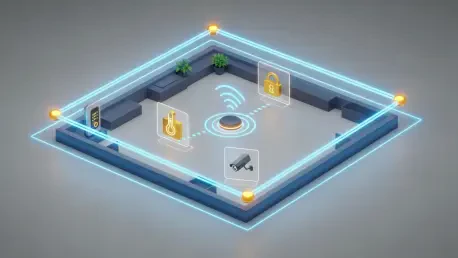
The primary driver for many homeowners entering the world of location-based automation is the tangible impact on monthly utility expenditures and overall resource management. In older structures where insulation might be less than optimal and HVAC systems are often tasked with working harder to maintain equilibrium, the concept of passive savings becomes a financial necessity rather than a luxury. By establishing a digital boundary, known as a geofence, around the property, the home’s climate control system can intelligently scale back its operations the moment the last occupant departs. This prevents the unnecessary heating or cooling of an empty structure, which has historically been one of the largest sources of energy waste in American households. As the resident approaches the home, the system recognizes the incoming signal and initiates a recovery cycle, ensuring the interior temperature reaches a precise comfort level just as the front door is unlocked, thereby balancing fiscal responsibility with uncompromising personal comfort.
Building upon this foundation of efficiency, the integration of presence sensing provides a robust layer of contextual security that traditional alarm systems simply cannot replicate. Modern smart home ecosystems have evolved to support complex “last person leaves” logic, which tracks multiple registered devices to ensure that the home only enters its high-security state when the property is truly vacant. This prevents the frustrating scenarios where a spouse or child might be left in the dark or accidentally trigger a motion sensor because another family member ran an errand. Once the final occupant crosses the geographic threshold, the system executes a comprehensive lockdown: deadbolts are engaged, external cameras transition to high-sensitivity monitoring, and internal lighting is adjusted to simulate occupancy or conserve power. This automated transition from a relaxed “home” state to a fortified “away” state offers a level of peace of mind that manual systems fail to provide, as it removes the element of human error from the security equation entirely.
Comparing Google Home and Home Assistant Ecosystems
Navigating the landscape of smart home platforms often leads to a fundamental choice between the streamlined convenience of cloud-based services and the granular control of local servers. Google Home has emerged as a dominant force in this arena, particularly with the recent integration of Gemini AI, which has significantly lowered the barrier to entry for complex automation. The platform utilizes a “fused location” service, a sophisticated method that aggregates data from Wi-Fi signals, cellular towers, and GPS coordinates to pinpoint a user’s location with remarkable accuracy. For the average homeowner, this means that setting up a geofence is as simple as drawing a circle on a digital map and selecting the desired actions. This accessibility allows individuals without a background in computer science to benefit from high-level logic, making the dream of a “robot butler” house a reality for a much broader demographic than was possible even a few years ago.
In contrast to the user-friendly nature of Google, the Home Assistant platform appeals to the power user who demands total sovereignty over their data and hardware. Home Assistant operates as a local server, meaning the logic that drives the home resides on a physical device within the residence rather than a distant corporate data center. While the learning curve is undeniably steeper—often requiring an understanding of YAML or complex logic flows—the reward is a level of customization that is essentially limitless. A resident can fine-tune how the house responds to specific family members, create intricate delays for lighting transitions, and ensure that their movement data remains private. This platform is the gold standard for those who view their smart home as a hobby or a long-term engineering project, offering a resilient alternative to cloud services that may suffer from outages or changes in corporate privacy policies that could impact the user experience.
Navigating Technical Glitches and Privacy Concerns
Despite the undeniable benefits of a location-aware residence, the technology is still subject to certain environmental and technical limitations that can occasionally disrupt the seamless experience. One of the most common issues is known as GPS drift, a phenomenon where atmospheric conditions or physical obstructions cause a smartphone to report an inaccurate location. In a smart home context, this can lead to “micro-issues” where the system momentarily believes the owner has left the premises while they are actually just sitting in a backyard dead zone, potentially triggering an accidental lockdown or turning off the air conditioning. While modern multi-band GPS and Wi-Fi positioning have mitigated much of this instability, it remains a variable that homeowners must account for when designing their automation triggers. Ensuring that the geofence radius is sufficiently large can often prevent these false positives, though it may slightly delay the activation of “welcome home” routines as the resident nears the property.
Privacy considerations represent the other major hurdle for those looking to perfect their smart home through location-based triggers. To function effectively, cloud-based systems like Google or Amazon require a constant stream of location data from the user’s mobile device, creating a digital trail of their daily movements. For the privacy-conscious individual, this trade-off between convenience and data sharing is a significant point of contention, as this information is frequently utilized for targeted advertising and consumer profiling. This reality highlights the importance of carefully managing application permissions and understanding the data policies of each hardware manufacturer. While the “robot butler” experience is incredibly seductive, it necessitates a level of digital transparency that some users find invasive. Consequently, the choice of platform often becomes a reflection of the user’s personal values regarding the balance between high-tech luxury and the sanctity of their private movement data.
Synchronizing Hardware for a Unified Experience
The ultimate success of a location-based smart home depends on the ability of disparate hardware components to function as a single, cohesive unit. Whether it is a Nest Hub acting as the central nervous system or a smart washer sending a notification to a mobile device when a cycle is complete, the goal is total synchronization across various brands and standards. The introduction of the Matter protocol has helped streamline this process, allowing devices from different manufacturers to communicate more effectively, but the logic chain still requires a master orchestrator. When the location data triggers an “arriving home” scene, the smart home ecosystem must simultaneously adjust the thermostat, disarm the security cameras, and activate entry lighting. This orchestration ensures that the house feels truly alive and responsive, transforming it from a collection of gadgets into a unified living environment that proactively supports the lifestyle of its inhabitants.
The journey toward a perfected smart home was characterized by a move away from manual control and toward a more intuitive, location-driven reality. Homeowners found that by prioritizing passive automation over vocal commands, they could eliminate the friction of daily management while realizing significant gains in energy efficiency and security. The technical challenges, including GPS accuracy and data privacy, were weighed against the profound convenience of a residence that understands when it is occupied and when it is empty. By selecting the right ecosystem and ensuring hardware interoperability, residents successfully turned older homes into modern marvels that functioned with the precision of a high-end luxury vehicle. Ultimately, the adoption of location-based technology provided a clear blueprint for the future of homeownership, where the residence acted as a silent partner in the occupant’s daily life. Moving forward, the focus shifted toward refining these triggers to be even more context-aware, ensuring that the home remained a sanctuary of effortless comfort.