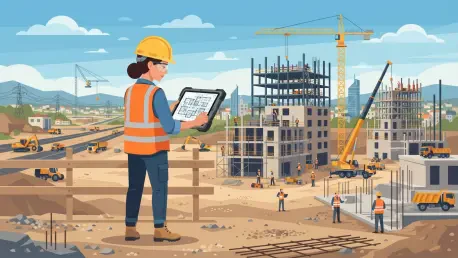

The landscape of American development has moved decisively beyond the construction of isolated structures toward the creation of interconnected, multi-functional urban environments that serve as economic catalysts. This transition, which gained significant momentum throughout 2024, reflects a broader strategy among developers and public agencies to maximize land value and social impact through large-scale capital investments and advanced digital management. By examining the massive sports districts and critical civil engineering projects currently under development, industry stakeholders can discern the patterns that are defining the modern era of infrastructure. This analysis explores how the industry is pivoting toward integrated ecosystems that prioritize long-term resilience and regional economic growth.
Understanding the Foundations of Current Construction Growth
To appreciate the current trajectory of the industry, one must analyze the foundational shifts in project financing and urban planning that occurred over the last several years. Following a period of global economic adjustments, the sector consolidated around a model of resilience, moving away from temporary solutions toward long-term regional anchors. This mega-project philosophy assumes that a single, well-placed development can rejuvenate an entire district, provided it integrates diverse uses such as residential, commercial, and recreational spaces. This background is vital for understanding why traditional delivery methods are being replaced by more collaborative, risk-sharing models.
Furthermore, the stabilization of material costs and labor availability has allowed firms to commit to more complex, multi-year timelines. This predictability encouraged public-private partnerships to take on more ambitious roles in national development. As the industry moved into 2026, the lessons learned from these early-decade strategies became the standard operating procedure for any firm looking to compete on a global stage. The focus has shifted from merely meeting code requirements to engineering environments that can withstand both economic volatility and environmental challenges, ensuring that infrastructure remains functional for decades.
The Rise of Integrated Districts and Public-Private Milestones
The Shift Toward Sports-Anchored Mixed-Use Developments
Professional sports franchises have evolved into sophisticated real estate developers, a trend perfectly encapsulated by the Kansas City Royals’ $3 billion urban hub. This 85-acre project moves beyond the concept of a traditional stadium, utilizing a team-of-teams delivery model that integrates various specialty contractors and consultants under a unified vision. With a $1.9 billion ballpark serving as the anchor, the surrounding neighborhood is being engineered to support a vibrant community year-round, featuring office spaces, retail outlets, and residential units.
The involvement of firms like Legends Global and joint ventures between Mortenson and McCownGordon highlights the necessity of collaborative expertise in such high-stakes environments. These developments are no longer just about the game day experience; they are designed as resilient economic engines that drive infrastructure improvements and long-term tax revenue well before any games are played. By prioritizing mixed-use accessibility, these districts ensure that massive capital outlays deliver consistent value to both private investors and the local public.
Enhancing Urban Connectivity Through Civil Engineering
Public infrastructure has pivoted toward reclaiming urban spaces for pedestrians and cyclists, moving away from the car-centric designs of the past. The $163 million East Side Greenway 14th Street Connector in New York City serves as a primary example of this shift, creating a seamless link between disparate park systems. By incorporating sophisticated landscaping and public amenities into functional transit links, civil engineers are improving the quality of life in dense urban centers while simultaneously addressing climate-related flood risks. Groundbreaking for the physical structure is slated for 2028, with completion expected by 2030.
Engineering Excellence: Seismic Resilience and Structural Innovation
As construction projects become more complex, the demand for specialized structural engineering has reached new heights, particularly in geographically sensitive areas. The Seattle Aquarium Ocean Pavilion, recognized with the ASCE Gold Award, represents a milestone in seismic design. Featuring a massive 30-foot-wide viewing window engineered to survive a magnitude-9.0 earthquake, the pavilion demonstrates how safety and aesthetic wonder can be integrated through advanced materials and rigorous modeling. This project sets a new benchmark for structural integrity in seismic zones, proving that complex environmental facilities can thrive in high-risk areas.
Technological Integration and Strategic Market Expansion
The aggressive digital transformation of the construction sector is currently being led by major consulting firms that are acquiring specialized technical expertise. Accenture’s acquisition of Avicado signals a major shift, as global strategy firms move into the direct management of project software like Procore and Autodesk. This convergence of high-level business strategy and on-site technical execution allows for real-time data analysis, which is critical for maintaining margins on multi-billion dollar projects. It reflects a consensus that data-driven project management is no longer optional but a core requirement for completing complex capital projects on time.
Simultaneously, major contractors are restructuring their internal hierarchies to focus on high-growth regional corridors. Balfour Beatty’s recent leadership shifts in the Southeast reflect a strategic bet on Florida and Georgia, where demand for data centers and aviation infrastructure continues to outpace national averages. By positioning experienced veterans in these key markets, firms are better equipped to navigate localized regulatory hurdles and labor shortages while capitalizing on the ongoing migration of capital to the Sun Belt. These moves suggest that the future of the industry lies at the intersection of specialized technical knowledge and strategic regional execution.
Actionable Strategies: Navigating the Construction Landscape
For stakeholders looking to thrive in this environment, adopting comprehensive digital project management tools is a prerequisite for success. These platforms provide the transparency needed to manage the diverse interests of complex delivery structures, ensuring that every subcontractor and vendor is aligned with the primary project goals. Furthermore, firms should look beyond traditional construction roles and embrace the role of an integrated partner that provides value throughout the entire lifecycle of a development, from site selection to post-occupancy maintenance.
Regional specialization also remains a key advantage, especially in markets like the Southeast where infrastructure demand is high. Stakeholders should prioritize collaborative delivery models, such as joint ventures and owner’s representative partnerships, to mitigate the risks associated with long-term, multi-billion dollar timelines. By leveraging data-driven execution and focusing on niche sectors like seismic engineering or advanced water purification, businesses can maintain a competitive edge as the scope of American infrastructure continues to expand through 2028 and beyond.
Synthesizing the Future: Lessons from the American Development Cycle
The construction landscape of 2024 established a foundation for the resilient and integrated environments that became the standard by 2026. Industry leaders prioritized regional expertise and specialized technical knowledge to overcome the logistical challenges of large-scale civil works. These efforts resulted in a more robust infrastructure network that successfully merged aesthetic public goals with private commercial interests. The shift toward sports-anchored districts and micro-mobility links demonstrated that urban development could be both profitable and public-facing.
Stakeholders successfully mitigated risk by adopting collaborative delivery models and investing heavily in seismic and environmental future-proofing. Moving forward, the focus remained on refining data-driven execution to ensure that every dollar of capital investment contributed to a sustainable urban ecosystem. This strategic pivot ensured that the industry was prepared for the complexities of the 2030 horizon, reinforcing the importance of agility in a rapidly changing global market. The transition toward integrated districts proved that the most successful projects were those that functioned as part of a larger, connected whole rather than isolated structures.