
The streets of Milan have recently served as a sprawling testament to the enduring power of creative ingenuity as more than 300,000 global participants converged at the Fiera Milano Rho and various satellite installations throughout the city. This particular iteration of Milan Design Week proved to be far more than a conventional trade fair; it acted as a sophisticated laboratory where the traditional boundaries separating functional furniture from fine art began to dissolve. The introduction of Salone Raritas, a dedicated platform for collectible design, underscored a significant shift in consumer desires toward pieces that prioritize both utility and a profound philosophical narrative. At the heart of this movement is a philosophy described as “emotive functionality,” which seeks to elevate the human experience by prioritizing sensory engagement over mere aesthetic appeal. This approach transforms the domestic environment from a simple backdrop for daily routines into a carefully curated sanctuary where every object and layout is designed to foster mental and physical well-being. As the industry grapples with the complexities of modern living, the focus has shifted toward creating spaces that are not only beautiful but also deeply resonant on an emotional level, reflecting a broader cultural shift toward intentionality in every facet of life.
The Transformation of Functional Spaces
Fluidity: The Softening of Culinary Design
The clinical and sharp-edged minimalism that has dominated kitchen design for the past decade is undergoing a significant evolution toward what industry experts call soft geometry. This trend marks a departure from rigid, utilitarian layouts in favor of organic silhouettes and modular units that allow for a non-linear flow within the home. For example, the Tangram system by Cesar utilizes curved modules that can be integrated with straight units, creating fluid kitchen islands that mirror the natural movement of the human body. This shift suggests that the kitchen is no longer a isolated workspace but a central architectural feature that harmonizes with the living area. By introducing rounded cabinet doors and soft edges, designers are breaking the visual monotony of traditional cabinetry, allowing the kitchen to feel more like a collection of sculptural furniture than a series of appliances.
Furthermore, the materials used in these new culinary spaces are shifting toward warmth and tactile richness, moving away from cold stainless steel and high-gloss synthetics. The Physis collection by Molteni&C demonstrates this by incorporating hinoki timber, a material historically prized for its natural fragrance and moisture resistance. This use of timber, paired with integrated shelving designed to display personal curiosities, successfully rebrands the kitchen as the heart of the home. By designing islands that resemble generous communal tables rather than industrial worktops, brands like Poliform are encouraging a lifestyle where cooking, working, and social interaction occur simultaneously. This blending of functions reflects a broader trend where the furniture in the kitchen is expected to provide the same level of comfort and aesthetic sophistication as a high-end living room set.
Wellness: The Residential Sanctuary
The global prioritization of self-care has fundamentally altered the role of the bathroom, transforming it from a purely functional room into a private wellness sanctuary. Modern designs are increasingly drawing inspiration from ancient bathing rituals to foster a sense of “rest and reset” within the home environment. David Chipperfield’s Tambre bathtub for Agape serves as a prime example, reinterpreting the traditional Japanese ofuro soaking tub through the use of streamlined okume plywood. These designs encourage a slower, more meditative approach to hygiene, where the act of bathing becomes a deliberate pause in a busy day. The emphasis on verticality and monolithic structures, as seen in the Alba bathtub by Paabaths, further challenges traditional bathroom ergonomics by allowing users to sit upright, facilitating a unique form of physical relaxation and accessibility.
In addition to structural changes, the integration of advanced spa technology is becoming a standard feature in high-end residential bathrooms. Professional-grade systems for steam intensity, light therapy, and aromatherapy are now being miniaturized for domestic use, as evidenced by the latest releases from Gessi. These innovations allow homeowners to customize their environment to support specific physiological needs, such as improved sleep or reduced stress. Even the traditional vanity unit is being reimagined as a high-tech wellness station, with prototypes from Grohe featuring specialized misting systems for facial care and refrigerated compartments for organic skincare products. This technological leap ensures that the bathroom is no longer just a place for preparation but a sophisticated medical and emotional retreat that supports a comprehensive wellness lifestyle.
Materiality and the New Comfort
Expressive Stone: Dramatic Marble and Stone-working
Marble has re-emerged as a dominant force in interior design, but it is being utilized with a level of boldness and expressive power that hasn’t been seen in years. Designers are moving away from subtle, safe stone selections and are instead opting for slabs with dramatic veining, high-contrast color palettes, and significant natural movement. This trend toward “expressive naturalism” is visible in the work of Giampiero Tagliaferri for Minotti, where heavy, asymmetrical concrete bases are paired with intense stones like Grigio Orobico. The juxtaposition of raw, industrial materials with the refined elegance of high-character marble creates a sense of tension and visual interest that serves as a focal point for the entire room. This approach treats the stone as a primary artistic element rather than a secondary surface material.
Technological advancements in stone-working have also allowed for more intricate and artistic applications, such as marble marquetry. The Stadium table by Hermes demonstrates this mastery by using Carrara Venato and Verde Alpi inlays to create equestrian-inspired motifs directly within the stone surface. This fusion of heritage craftsmanship and modern precision highlights the material’s versatility. Simultaneously, there is a growing emphasis on circularity within the luxury stone sector. Innovative brands are now exploring full-stone construction that incorporates recycled components, such as Lema’s use of Re-Glassing—a material derived from recycled solar panels—for table legs. This development proves that even the most traditional luxury materials can be adapted to meet contemporary environmental standards without sacrificing their inherent grandeur or structural integrity.
Tactile Escapism: Modular Seating and Psychological Comfort
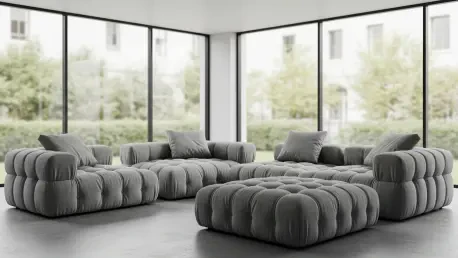
As the world outside becomes increasingly complex, the home is being repositioned as a cocoon, leading to a trend identified as tactile escapism. This movement is characterized by oversized, quilted upholstery and enveloping forms that prioritize psychological comfort and a sense of protection. The Coltre Modular Sofa by Muuto is a standout example, utilizing generous proportions and soft, cloud-like surfaces to invite users to sink into their environment. These seating systems are designed to offer a tactile refuge, using fabrics and textures that soothe the senses. By focusing on the emotional response to a piece of furniture, designers are creating environments that actively reduce anxiety and promote a feeling of security and domestic ease.
Parallel to this focus on softness is a renewed interest in grounded, low-slung living inspired by traditional Zen architecture and stone gardens. Modular systems like Time & Style’s Stone Garden encourage a lifestyle that is physically closer to the floor, reflecting a cultural desire for stability and balance. This arrangement allows for a flexible, three-dimensional layout where the furniture can be rearranged like a puzzle to suit the user’s mood. Gabriel Tan’s Soft Stone sofa for Space Furniture follows this logic, offering modules that look balanced and sculptural from every conceivable angle. This adaptability ensures that the living space can evolve alongside the needs of the inhabitants, providing a quiet and grounded atmosphere that facilitates both social connection and individual contemplation.
Responsibility and Heritage
Sustainable Standards: Material Science and Circularity
In the current design landscape, sustainability has transitioned from being an optional marketing headline to a non-negotiable foundation for all new product development. This maturity in environmental responsibility is focused on genuine material science rather than superficial greenwashing. For instance, the Aom collection by Arper utilizes lightweight expanded polypropylene and recyclable polyester elastomers instead of traditional polyurethane foam, which is notoriously difficult to process at the end of its life cycle. This shift toward “monomaterial” construction ensures that furniture can be easily disassembled and recycled, aligning with the principles of a circular economy. By reducing the overall weight and complexity of these pieces, manufacturers are also significantly lowering the carbon footprint associated with shipping and logistics.
Experimental surfaces and lighting are also benefiting from this rigorous focus on eco-friendly innovation. The Maap lamp by Flos, designed by Erwan Bouroullec, utilizes high-density polyethylene fibers stretched over a minimal metal frame to create a fabric-like diffusion of light. This material is not only durable and recyclable but also offers a unique aesthetic that sits somewhere between industrial utility and artisanal craft. Other brands are continuing to push the boundaries of recycled polymers, creating durable furniture from post-consumer waste that maintains the high-quality finish expected of luxury goods. These developments indicate that the industry is successfully decoupling luxury from waste, proving that high-end design can be both aesthetically uncompromising and environmentally restorative.
Archival Revival: Reinterpreting the Masters
A significant portion of the current design dialogue is centered on the revival of archival masterpieces, where brands look to the past to provide a sense of continuity and enduring quality. This “archival revival” is not merely about nostalgia; it is about re-engineering classic designs to meet modern technical and environmental standards. Tacchini’s reintroduction of the 1974 Basilan chair by Afra and Tobia Scarpa illustrates this perfectly, replacing the original rattan with contemporary leather strips to enhance durability while maintaining the modular integrity of the piece. By revisiting these iconic designs, manufacturers are offering consumers a connection to design history that feels grounded and authentic in an era characterized by rapid technological change and fleeting trends.
The celebration of mid-century visions continues with brands like Vitra and Poltrona Frau, who are bringing long-lost or underappreciated designs to a new generation. The reissue of Verner Panton’s 1958 Cone Chair and the realization of Gio Ponti’s 1956 “Oro” floor lamp demonstrate how 21st-century technology can breathe new life into historical concepts. These pieces are now updated with high-efficiency LED components and sustainable internal fillings that were unavailable at the time of their original conception. This fusion of historical heritage and modern functionality creates a bridge between eras, providing a sense of permanence and craftsmanship. For the consumer, these reissues represent a safe and sophisticated investment, offering a timeless aesthetic that has already proven its cultural value over decades of shifting tastes.
Integrating Modern Trends into the Domestic Landscape
The recent exhibitions and launches in Milan have clearly demonstrated that the future of interior design is moving toward a more nuanced and human-centric model. Designers and homeowners should now prioritize emotive functionality by selecting pieces that offer sensory engagement and psychological comfort rather than just following visual trends. To implement these insights, it is recommended to focus on “soft geometry” when renovating culinary or communal spaces, opting for curved edges and natural materials like timber to foster a more social and less clinical environment. Building a “wellness sanctuary” in the bathroom can be achieved by integrating technology that supports daily rituals, such as steam control or specialized lighting, effectively turning routine hygiene into a restorative experience. Furthermore, the shift toward expressive natural materials suggests that investing in a single, bold piece of stone furniture can provide a timeless focal point that grounds the entire aesthetic of a home.
Sustainability must remain a primary consideration for any new acquisition, with a focus on products that utilize circular design principles and monomaterial construction. Looking toward archival reissues is a practical way to ensure long-term value, as these pieces offer a proven aesthetic that transcends temporary fashions while benefiting from modern manufacturing improvements. The industry has effectively set a new benchmark where the domestic landscape is expected to be smarter, softer, and more environmentally responsible. By embracing these trends, the home becomes a carefully curated environment that not only reflects personal taste but actively supports physical health and emotional well-being. Ultimately, the lessons learned from this year’s design showcases emphasize that the most successful interiors are those that balance high-tech innovation with a deep respect for natural materials and historical heritage. Moving forward, the focus will likely remain on how these disparate elements can be synthesized to create spaces that feel both cutting-edge and profoundly human.