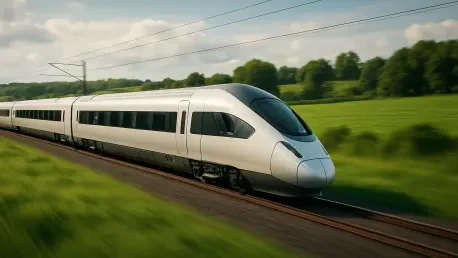

The rhythmic clatter of steel wheels on the historic S-Line is shifting from a slow-motion freight crawl to a high-velocity symphony of modern American travel. This evolution gained massive momentum as the U.S. Department of Transportation officially obligated $550 million to catalyze the development of a critical rail link between Raleigh and Richmond. This commitment serves as the backbone for a transit transformation that promises to redefine how the Southeast moves.
By moving beyond a “freight-first” mentality, the project prioritizes high-speed passenger connectivity across state lines. The vision of a 110 mph rail link is no longer a distant dream but a concrete plan aimed at transforming the Raleigh-to-Richmond commute into a swift, efficient experience. This obligation represents a major step in a broader strategy to modernize regional infrastructure through the final years of the decade.
A Ninety-Minute Leap Forward for Southeast Transit
The federal obligation of $550 million serves as the vital fuel for the S-Line corridor, marking a definitive departure from the traditional freight-dominated landscape. This injection of capital ensures that the vision of a high-speed passenger link moves from blueprints to reality, prioritizing commuters over cargo. It signals a shift in national priorities, placing heavy emphasis on reducing regional travel times to boost productivity.
With the ability to reach speeds of 110 mph, this rail link is poised to transform the transit experience for thousands of daily travelers. By cutting significant time from the journey, the rail line becomes a competitive alternative to regional air travel and highway congestion. This investment is not just about moving trains; it is about creating a more connected and mobile society.
Revitalizing the S-Line: From Freight Relic to Modern Corridor
Transitioning the former CSX right-of-way into a state-owned passenger asset represents a tectonic shift in rail management. This strategic acquisition allows North Carolina and Virginia to dictate the pace of development rather than waiting for gaps in freight schedules. The $1.1 billion federal investment, strengthened by a 20% match from Amtrak and the NCDOT, ensures the project remains financially resilient.
This funding is part of a broader movement often described as a “Golden Age of Rail” in the United States. By investing in dedicated passenger corridors, the government is addressing decades of underfunding while creating a template for future high-speed initiatives. This modernization effort reflects a growing national consensus on the necessity of high-capacity, low-emission transportation alternatives.
Engineering Efficiency: Speed, Reliability, and Safety Improvements
Slashing ninety minutes off the travel time between two state capitals is a feat of engineering that requires total corridor separation. By decoupling passenger traffic from slow-moving freight trains, the S-Line can maintain the high reliability and safety standards expected of modern transit. This isolation of tracks is the primary driver behind the significant reduction in systemic delays and congestion.
Moreover, the project works in perfect synergy with the Piedmont Corridor. Current efforts to double tracks and remove grade crossings between Raleigh and Charlotte create a seamless transit experience across the state. These technical improvements ensure that as trains move north toward Richmond, they maintain a consistent velocity that keeps the entire regional network on schedule.
Beyond the Tracks: Economic Growth and Transit-Oriented Development
The impact of the S-Line reaches far beyond the tracks themselves, acting as a catalyst for transit-oriented development. By establishing “Community Mobility Hubs” in towns like Wake Forest and Henderson, the project is transforming local economies and urban landscapes. These hubs are designed to serve as central nervous systems for local travel, bringing new life to historic downtown areas.
These stations focus on integrating multimodal transportation by offering secure bicycle parking, enhanced pedestrian access, and last-mile connectivity solutions. The 95-mile corridor serves as a sustainable backbone for growth, allowing smaller municipalities to benefit from the economic gravity of larger urban centers. This approach ensures that the rail link is an engine for regional prosperity.
A Blueprint for Multi-State Infrastructure Collaboration
The success of the S-Line relied upon a collaborative framework between North Carolina and Virginia that redefined inter-state infrastructure planning. By working together to acquire right-of-way and coordinate federal grant applications, these states established a blueprint for future high-speed rail projects nationwide. This partnership demonstrated that regional cooperation could overcome the traditional hurdles of large-scale transit implementation.
Looking ahead, the strategy of leveraging federal obligations created a sustainable foundation for long-term network expansion. The focus shifted toward ensuring that these corridors remained adaptable to emerging technologies and increasing ridership demands. By prioritizing connectivity and local integration, the project secured a legacy of efficiency and environmental stewardship for the entire Mid-Atlantic region.