
The shift toward energy efficiency is driven by strict environmental regulations and the escalating costs of heating and cooling modern residential spaces. In the 2026 architectural landscape, the building envelope is no longer viewed as a passive shell but as a high-performance system that must mitigate environmental stressors while maximizing occupant comfort. Recent data from industry analysts suggests that windows and doors contribute to nearly 30% of total energy loss in residential structures, placing the spotlight on frame materials and their inherent physical properties. While aluminum has long been favored for its structural integrity and sleek profile, its high thermal conductivity has historically posed a significant challenge for green building standards. The decision to implement either traditional non-thermal frames or advanced thermal break technology now serves as a critical junction for developers aiming to balance immediate budgetary constraints with the long-term operational costs of climate control. As sustainability mandates become more localized and stringent, the technical nuances between these two systems have moved from the realm of specialized engineering into the center of mainstream construction discourse.
Material Dynamics: The Thermal Conductivity Challenge
Aluminum has established itself as the backbone of modern fenestration due to a unique combination of physical attributes that few other materials can replicate at scale. Its exceptional strength-to-weight ratio allows for the creation of incredibly thin profiles that can support massive, heavy panes of glass, catering to the current architectural trend of maximizing natural light and unobstructed views. Furthermore, aluminum’s natural resistance to corrosion and environmental degradation ensures that it maintains structural performance in coastal or high-pollution environments where wood or vinyl might fail prematurely. These characteristics make it a staple for high-rise residential projects and modern custom homes where durability and aesthetic minimalism are paramount. However, the very atomic structure that provides this strength also facilitates the rapid movement of electrons, making aluminum an excellent conductor of heat. This property, while beneficial in electronics or cookware, is a distinct disadvantage in window frames where the goal is to isolate the interior environment from exterior temperature fluctuations.
The fundamental issue with non-thermal aluminum frames lies in the concept of thermal bridging, where the metal provides an uninterrupted path for energy transfer between the outside and the inside of a building. In a standard non-thermal configuration, the aluminum frame consists of a single, continuous extrusion that spans the entire depth of the wall opening. During the winter months, the warmth of the interior living space is absorbed by the inner face of the frame and quickly conducted through the metal to be dissipated into the cold exterior air. Conversely, during the intense heat of summer, the frame acts as a radiator, drawing solar energy from the outside and pumping it directly into the air-conditioned interior. This constant, bi-directional energy leak forces heating, ventilation, and air conditioning systems to operate at higher capacities for longer durations. The resulting strain not only inflates utility bills but also accelerates the mechanical wear on HVAC components, leading to higher maintenance costs and a shorter equipment lifespan for the property owner.
Technical Innovation: Mechanisms of the Thermal Barrier
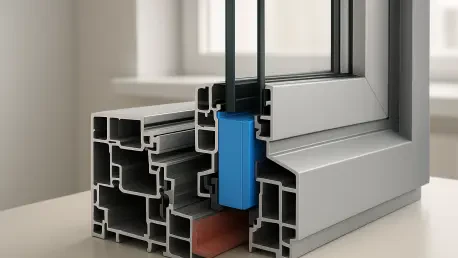
To mitigate the inherent thermal conductivity of aluminum without compromising its structural benefits, engineers developed the thermal break system, which functions as a physical interruption in the conductive path. This technology involves splitting the aluminum profile into two separate interior and exterior sections and then joining them back together using a material with low thermal conductivity. The most common method in high-performance windows involves the use of structural polyamide strips, often reinforced with fiberglass to match the expansion and contraction rates of the surrounding metal. These strips are mechanically crimped into specifically designed tracks in the aluminum extrusions, creating a composite profile that acts as a single structural unit while remaining thermally bifurcated. Because the polyamide strip has a thermal conductivity rate several hundred times lower than that of aluminum, it effectively blocks the flow of energy through the frame, creating a robust barrier that maintains the temperature differential between the interior and exterior environments.
An alternative engineering approach used in the industry is the poured-and-debridged polyurethane method, which offers a different set of manufacturing advantages while achieving similar thermal goals. In this process, a liquid insulating resin is poured into a dedicated channel within the aluminum frame extrusion and allowed to harden into a dense, structural plastic. Once the resin is fully cured, the bottom of the metal channel is mechanically removed, a process known as debridging, which leaves the polyurethane as the only physical connection between the two halves of the frame. This method is particularly effective for complex profiles and offers excellent shear strength, ensuring that the window maintains its shape under heavy wind loads. Both the polyamide and polyurethane systems represent a significant leap over non-thermal designs by transforming the window frame from a heat-leaking bridge into a high-resistance component of the building’s insulation layer. This stabilization of the frame’s internal temperature provides the necessary foundation for all subsequent energy efficiency improvements in the glazing system.
Quantifying Efficiency: U-Factors and Thermal Performance
The primary metric used to evaluate the effectiveness of these window systems is the U-factor, which measures the rate of non-solar heat transfer through a material or assembly. In the context of 2026 building codes, the U-factor has become the definitive benchmark for determining if a fenestration product meets local energy compliance. Non-thermal aluminum windows typically exhibit high U-factors, often ranging from 1.0 to 1.3 BTU/hr·sq ft·°F, which indicates a very low resistance to heat flow and poor overall insulation. These values are increasingly incompatible with modern energy targets, as they represent a significant vulnerability in the building envelope. In contrast, when an aluminum frame is equipped with a high-quality thermal break and paired with modern insulated glass units, the U-factor can be reduced to between 0.35 and 0.50. This improvement represents a more than 50% increase in thermal resistance, directly translating to lower energy consumption and a more sustainable footprint for the residential structure.
Beyond the U-factor, the thermal break also plays a significant role in managing the Solar Heat Gain Coefficient, particularly in regions that experience high levels of direct sunlight. While glass coatings like low-emissivity films are responsible for reflecting much of the solar radiation, the frame itself can become a secondary heat source if it is not thermally isolated. In a non-thermal system, the aluminum frame can reach temperatures well above the ambient outdoor air when exposed to direct sun, effectively becoming a radiant heater that warms the interior air by convection. A thermal break prevents this solar-soaked exterior half of the frame from transferring its heat to the interior side, ensuring that the cooling system does not have to fight against the window frames themselves. This synergy between the glass and the thermally broken frame creates a holistic barrier that manages both conductive and radiant heat, allowing for large architectural glass features that do not compromise the building’s overall thermodynamic stability.
Environmental Stability: Condensation and Occupant Comfort
One of the most critical functional roles of the thermal break is the prevention of condensation, which serves as a major threat to both building longevity and indoor air quality. In cold climates, the interior surface of a non-thermal aluminum frame can drop below the dew point of the indoor air, causing moisture to liquefy on the metal surface. This constant presence of water is not merely an aesthetic nuisance; it often leads to the degradation of surrounding building materials, including the rotting of wooden sills, the staining of drywall, and the failure of interior paint finishes. More importantly, the damp environment created by condensation on metal frames is a primary breeding ground for mold and mildew. These biological contaminants can trigger respiratory issues and allergies for occupants, creating a health hazard that is often difficult and expensive to remediate. By maintaining the interior frame surface at a temperature much closer to the indoor ambient air, a thermal break effectively eliminates the “cold spot” where condensation occurs, protecting the structural integrity of the home.
In addition to preventing moisture damage, thermal break technology significantly enhances the daily comfort of the people living or working within the building. Traditional metal windows often create a “drafty” sensation, which is frequently caused by convection currents rather than actual air leaks. When the interior surface of a window is significantly colder than the room air, the air directly in contact with the window cools down, becomes denser, and sinks toward the floor, creating a cycle of moving air that feels like a cold draft. This phenomenon often renders the space near windows uncomfortable during the winter, effectively reducing the usable square footage of a room. A thermally broken window maintains a more uniform radiant temperature across its entire surface, which stops these convection cycles and allows furniture to be placed right up against the glass without sacrificing comfort. This improvement in the thermal environment is a key factor in modern residential design, as it ensures that the interior remains cozy and habitable regardless of the weather conditions outside.
Financial Considerations: Life-Cycle Value and Aesthetic Flexibility
When analyzing the economic impact of window selection, it is essential to look beyond the initial purchase price and consider the total life-cycle cost of the building components. Non-thermal aluminum windows are frequently marketed as a budget-friendly option because they involve a simpler manufacturing process and lower material costs. However, this upfront saving is almost always a false economy when viewed over a five to ten-year horizon. The increased energy costs associated with non-thermal frames can add thousands of dollars to utility bills over the life of the windows, quickly surpassing the initial price difference of a thermal break system. Furthermore, as energy efficiency ratings become a standard part of property appraisals in 2026, homes equipped with high-performance, thermally broken windows typically command higher resale values. Prospective buyers are increasingly savvy about operational costs and are willing to pay a premium for structures that promise lower overhead and superior environmental control.
A significant but often overlooked advantage of thermal break systems is the aesthetic flexibility they provide to architects and homeowners through dual-finish options. Because the interior and exterior halves of the frame are physically separate pieces joined by a thermal strip, they can be finished in different colors or textures before assembly. This allows a building to have a dark, modern bronze or charcoal finish on the exterior to match the architectural facade while maintaining a bright white or clear-coat finish on the interior to complement the home’s interior design. In a non-thermal system, the entire frame must be the same color, forcing a compromise between the exterior curb appeal and the interior decor. This dual-color capability, combined with the slim profiles inherent to aluminum, provides a level of creative freedom that is not possible with single-extrusion systems. By choosing thermal break technology, developers can satisfy demanding aesthetic requirements without sacrificing the high-performance metrics required by modern environmental standards.
Industry Standards: Compliance and Structural Integrity
The reliability of thermal break windows is governed by rigorous industry standards, primarily those established by the American Architectural Manufacturers Association and the Fenestration and Glazing Industry Alliance. To achieve certification, these window systems must undergo exhaustive testing that simulates extreme environmental conditions, ensuring that the thermal break does not introduce a point of mechanical failure. One of the most important tests involves air infiltration, which measures the volume of air that leaks through the window seals and joints under pressure. High-performance thermally broken windows are engineered with multi-point locking systems and high-grade gaskets that work in tandem with the frame to achieve near-zero air leakage. This is a critical component of the building envelope, as even a thermally broken frame will lose its effectiveness if cold air is allowed to bypass the insulation through poor seals or structural gaps.
Structural integrity is another focal point of industry certification, particularly concerning the bond between the aluminum and the thermal barrier material. There is often a misconception that adding a plastic strip to a metal frame weakens the window, but modern engineering has proven the opposite. High-quality thermal break designs are tested for water penetration resistance and structural wind-load capacity, ensuring they can withstand the pressure of a major storm without bowing or leaking. In coastal regions, this technology is further evolved into hurricane-impact storm windows, where the thermal break is reinforced to handle the kinetic energy of flying debris. In these specialized applications, the frame must maintain its structural bond even after the glass has been impacted and cracked. The synthesis of thermal efficiency and extreme structural resilience allows these windows to serve as a vital protective shield for the home, proving that advanced energy-saving technology can go hand-in-hand with the highest levels of physical security and durability.
Final Synthesis: Strategic Implementation and Future-Proofing
The comprehensive analysis of window technology demonstrated that the transition toward thermal break systems was a necessary evolution in response to modern building requirements. While non-thermal aluminum windows served a purpose in an era of lower energy costs and less stringent building codes, they ultimately failed to provide the insulation and moisture management required for high-performance residential spaces. The engineering community recognized that the physical drawbacks of aluminum conductivity could only be solved through a structural interruption of the thermal path. By implementing polyamide or polyurethane barriers, manufacturers successfully combined the unmatched strength of aluminum with the thermal resistance of high-end polymers. This hybrid approach allowed for the continued use of expansive glass surfaces in architecture without the catastrophic energy losses that were once associated with large-scale window installations.
In the final assessment, the industry reached a consensus that the long-term benefits of thermal break technology far outweighed the initial capital investment. Decision-makers who prioritized these advanced systems realized significant returns through reduced HVAC operational costs, improved occupant health, and increased property longevity. The move toward these systems also provided architects with the aesthetic flexibility needed to meet diverse design goals while remaining compliant with the latest environmental regulations. As the building industry moved forward, the integration of thermal breaks became a standard practice, reflecting a broader commitment to sustainable and resilient construction. For those looking to optimize a residential building envelope, the choice of thermally broken aluminum windows represented a definitive step toward creating a space that was both technologically advanced and prepared for the climate challenges of the coming decades.