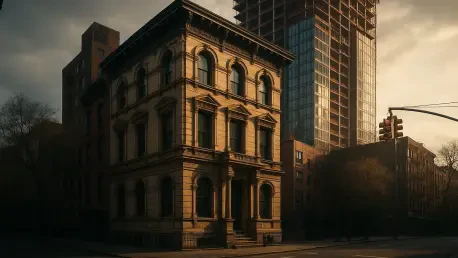

By citing prohibitive repair costs for the Tony Dapolito Center, city officials have paved the way for a controversial new development at 388 Hudson Street. This proposed 35-story residential and recreational tower represents a high-stakes gamble for the West Village, aiming to integrate deeply needed affordable housing with contemporary public amenities. The project is a collaboration between the city, Camber Property Group, and Essence Development, designed to replace the utility of the aging Tony Dapolito Recreation Center. Although the landmarked 117-year-old structure sits on a nearby parcel and has been shuttered since 2021, its future is now inextricably linked to the success of this new Hudson Street initiative. City planners argue that the structural degradation of the historic site makes any attempt at comprehensive restoration fiscally irresponsible. This shift in urban strategy prioritizes the efficiency of modern construction over the preservation of architectural history, sparking an intense debate among stakeholders who value heritage versus those who demand immediate social utility and growth.
Financial Disparity and Strategic Community Development
The central conflict regarding the 388 Hudson Street project stems from a stark disagreement over financial projections and the most efficient use of public funds. Local preservationists and community advocates have presented alternative reports suggesting that the Tony Dapolito Center could be fully restored for approximately $51 million. They argue that using earmarked funds for this restoration would be significantly more cost-effective than the current $164 million price tag associated with the new skyscraper development. On the other hand, the New York City Parks Department maintains that these estimates for the older building are overly optimistic and fail to account for modern seismic standards, accessibility requirements, and the removal of hazardous materials. Developers emphasize that investing in a brand-new facility ensures a longer lifecycle and lower maintenance costs over the coming decades, whereas a renovated century-old building might require additional expensive repairs shortly after reopening to the public.
Public sentiment remains deeply divided as the reality of the project’s timeline begins to set in for local families and seniors. With the Uniform Land Use Review Procedure (ULURP) expected to span from 2026 to 2028, and a subsequent 36-month construction phase, neighborhood residents face a future where they will lack a local gym for nearly a decade. This gap in service is particularly concerning for the elderly population who relied on the Dapolito Center for physical therapy and social connection. Critics argue that the city’s strategy ignores the immediate needs of the current population in favor of a long-term goal that may not bear fruit for several years. Furthermore, preservationists fear that allowing the demolition of a landmarked building simply because the repair costs are deemed high sets a dangerous legal and cultural precedent. If architectural protection can be bypassed for economic convenience, other historic structures across the five boroughs could face similar threats, potentially eroding the unique character of New York City’s most storied neighborhoods.
The resolution of the Hudson Street controversy required a more nuanced approach to urban density than initially proposed by city planners. Successful urban development in this context necessitated the creation of a robust temporary relocation plan for community services to mitigate the decade-long loss of recreational space. Policymakers ultimately recognized that preserving architectural integrity and providing affordable housing were not mutually exclusive goals, leading to discussions about hybrid models that could incorporate historic facades into new structural frameworks. Future urban projects benefited from this period of intense debate by prioritizing transparent cost-benefit analyses that were made available to the public long before final decisions were reached. To move forward, the city established more rigorous protocols for the maintenance of landmarked public buildings to prevent them from reaching a state of prohibitive disrepair. These steps ensured that future growth respected historical continuity while still addressing the urgent requirements of a modern city.