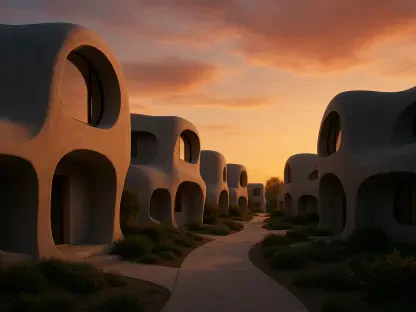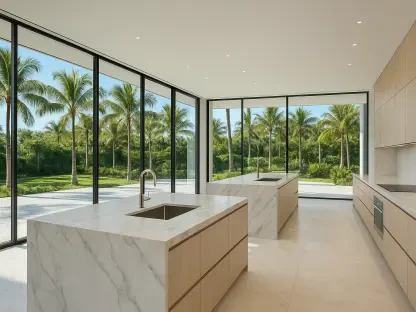

The traditional dichotomy between extravagant residential design and rigorous environmental stewardship has effectively collapsed as discerning property owners demand homes that produce as much energy as they consume. This shift represents a fundamental change in the luxury real estate market where the ultimate status symbol is no longer just square footage or imported marble, but a sophisticated, self-sustaining ecosystem. Modern construction methodologies now allow for the creation of estates that offer unparalleled comfort without the associated carbon footprint. By integrating advanced thermodynamic modeling and state-of-the-art renewable energy systems, it is possible to achieve a net-zero rating while maintaining the high-end aesthetic expected in the premium sector. This evolution has driven architects and builders to rethink every aspect of the residential life cycle, from the initial site orientation to the selection of low-impact materials. The result is a new generation of residences that function with mechanical precision while providing a sanctuary that is both environmentally responsible and visually stunning.
Structural Integrity: Advancing the Building Envelope
Achieving a true net-zero balance begins with an uncompromising commitment to the building envelope, which serves as the primary barrier between the internal sanctuary and the external environment. This process involves the implementation of a thermal bridge-free design that utilizes high-performance insulation materials such as mineral wool or closed-cell spray foam to achieve R-values far exceeding traditional code requirements. Fenestration choices are equally critical, with triple-pane, krypton-filled windows becoming the baseline for reducing heat transfer and optimizing solar heat gain during winter months. Advanced air-sealing techniques, often verified through rigorous blower door testing, ensure that uncontrolled air leakage is virtually eliminated, thereby significantly reducing the load on heating and cooling systems. By prioritizing the structural integrity of the envelope first, builders minimize the total energy demand of the residence, making the goal of net-zero energy production far more attainable for large-scale luxury properties.
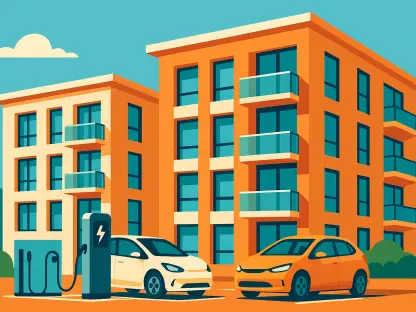
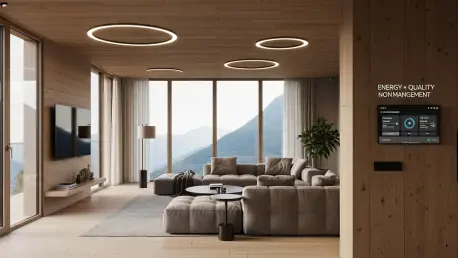
Once the energy demand of a luxury residence is minimized through a superior envelope, the focus shifts to the seamless integration of renewable power generation and storage technologies. Contemporary designs increasingly favor building-integrated photovoltaics, where solar cells are woven into roofing shingles or facade panels, maintaining a sleek architectural profile without the visual clutter of traditional racks. These systems are coupled with high-capacity lithium-ion battery arrays that provide energy resilience and allow the home to operate independently of the local utility grid during peak demand or emergencies. Smart energy management systems act as the brain of the estate, autonomously directing power to high-priority appliances and electric vehicle charging stations based on real-time production data. This sophisticated infrastructure ensures that even the most power-intensive amenities, such as wine cellars or indoor infinity pools, are fueled by clean energy harvested directly on-site, solidifying the home’s status as a leader in modern sustainability.
Sustainable Legacies: The Long-Term Impact of Eco-Conscious Architecture
Sustainability in the luxury sector extends beyond energy metrics to encompass the holistic health and wellness of the occupants through meticulously curated interior environments. Energy Recovery Ventilators (ERVs) play a vital role by providing a continuous supply of filtered outdoor air while capturing the thermal energy from the exhaust stream to maintain temperature stability. This constant exchange significantly reduces indoor pollutants and balances humidity levels, creating a living space that feels fresh and revitalizing at all times. The selection of interior finishes follows a similar philosophy, prioritizing natural, non-toxic materials that emit zero volatile organic compounds and promote a healthy atmosphere. Lighting design also plays a transformative role, with circadian-tuned LED systems that mirror natural daylight patterns to support the biological rhythms of the residents. These subtle yet impactful choices demonstrate that high-end living can be deeply restorative, proving that environmental consciousness and personal well-being are inextricably linked in the modern home.
Stakeholders within the high-end construction industry recognized that the transition to net-zero luxury was not a fleeting trend but a permanent recalibration of value in the global market. Those who adopted these rigorous standards early discovered that the long-term operational savings and enhanced property valuations far outweighed the initial capital investment required for advanced systems. For prospective homeowners and developers looking toward 2027 and 2028, the path forward required a proactive approach to site selection and a collaborative relationship with specialized engineering firms. It became clear that the most successful projects were those that treated sustainability as a foundational design principle rather than an afterthought or a series of add-ons. Future developments should prioritize the integration of modular construction techniques and carbon-sequestering materials to further reduce the embodied energy of luxury estates. By embracing these innovative strategies, the industry successfully moved toward a paradigm where opulence and ecological harmony coexist as the new standard of excellence.