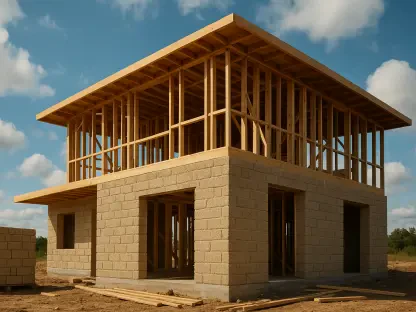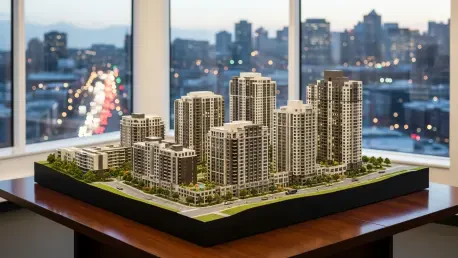

The architectural landscape of Victoria is currently undergoing a radical and somewhat unsettling transformation as the number of residential completions fails to keep pace with the sheer volume of new market entrants. For the first time in over a decade, statistical data from the Australian Bureau of Statistics confirms that the rate of first-home buyer financing has significantly outstripped the physical production of new detached dwellings. In 2025, Victorian lenders issued approximately 39,543 loans to those entering the property market, yet the construction sector managed to finalize only 34,983 new houses across the entire state. This growing deficit suggests that the traditional aspiration of owning a newly constructed suburban home is becoming an impossibility for a substantial portion of the population. While higher-density completions like apartments and townhouses offer a temporary buffer, the overall ratio of total supply to demand has reached its weakest point since 2009. This tightening margin indicates that the state is failing to provide adequate entry-level housing solutions even before accounting for the impact of seasoned investors.
Economic Disparities and the Growing Valuation Gap
The widening chasm between housing demand and availability is primarily driven by a staggering surge in construction expenses that has fundamentally altered the financial logic of building. Global supply chain disruptions and persistent geopolitical instability have combined to inflate the price of raw materials, creating a scenario where the “sticker price” of a new build often exceeds its immediate market value. This phenomenon, frequently described as a valuation gap, means that prospective owners often find it cheaper to purchase an established property than to navigate the risks and costs of a greenfield project. Economic analysts at PropTrack have noted that while the established market in Victoria has experienced relatively flat price growth recently, the cost of labor and land has remained prohibitively high. Consequently, the incentive to initiate new residential projects has evaporated for many middle-income families who previously anchored the construction sector. This shift represents a structural decline in the viability of the “new-build” model that once defined the state housing strategy.
Beyond the immediate financial hurdles, there is a visible evolution in consumer behavior as first-time buyers increasingly reject the uncertainties of the construction process. Many individuals who would have historically commissioned a new house are now gravitating toward existing units, townhouses, or apartments where the pricing is transparent and the move-in dates are immediate. Industry leaders from the Housing Industry Association observe that the traditional backbone of the residential building sector is becoming increasingly difficult to attract due to these mounting pressures. With building costs remaining at record highs while established home prices stay stagnant, the competitive edge that new developments once held has largely vanished. This pivot toward the secondary market is expected to place immense pressure on existing stock, likely triggering a sharp spike in prices by early next year as inventory levels dwindle. This trend forces a total reassessment of how urban density is managed, as the focus moves away from the suburban fringe and back toward the established inner-city and middle-ring suburbs.
Population Pressures and Construction Industry Vulnerability
The housing crisis is further exacerbated by Victoria’s rapid population growth, which is currently being driven by a level of overseas migration that far outpaces local development capabilities. Over the past six years, the state has welcomed nearly half a million new residents, creating a surge in demand that the current construction pipeline simply cannot accommodate. Even though historical data shows a period where completions technically exceeded first-home loans, that surplus was insufficient to house the net influx of nearly 473,289 migrants. This massive demographic pressure ensures that even if current building rates were maintained, the state would still face a significant shortfall in available roofs. The resulting scarcity is pushing a larger segment of the population into a rental market that is already characterized by record-low vacancy rates and escalating costs. Without a massive and immediate increase in high-density residential output, the state risks a permanent housing deficit that could undermine its long-term economic stability and social cohesion.
Simultaneously, the construction industry itself is struggling to survive under a regime of fixed-price contracts and escalating regulatory obligations. Many small to medium-sized builders are currently operating on razor-thin margins, forced to absorb any sudden increases in material or labor costs that occur after a contract is signed. This financial fragility has led to a wave of industry instability, with several prominent firms facing insolvency or significant operational scaling back. Leaders at Master Builders Victoria have emphasized that the sector faces serious risks that could lead to further reductions in total housing output just when the state needs it most. The combination of supply-chain instability and mounting debt has created a hostile environment for developers, making it nearly impossible to launch large-scale projects without substantial government subsidies or radical changes to planning laws. This systemic vulnerability means that even if demand remains high, the capacity of the private sector to deliver the necessary volume of new homes remains severely compromised.
Strategic Interventions and Market Realignment
The historical trajectory of the Victorian property market suggested that a correction was necessary to align regional supply with the actual needs of a growing and diverse population. Policy makers and industry stakeholders recognized that the only path forward involved a total overhaul of the planning system to prioritize speed and cost-effectiveness in residential delivery. Strategic interventions were developed to reduce the bureaucratic hurdles that frequently delayed high-density projects in established urban zones. By streamlining the approval process for townhouses and medium-density units, the state sought to bridge the valuation gap that had previously deterred investment in new construction. These measures were designed to incentivize builders to return to the market by providing more flexible zoning and reducing the overhead costs associated with long-term land holding. The transition toward a more agile development framework was seen as the most viable solution to ensure that the supply of new homes could eventually match the aggressive growth seen in the buyer financing sector.
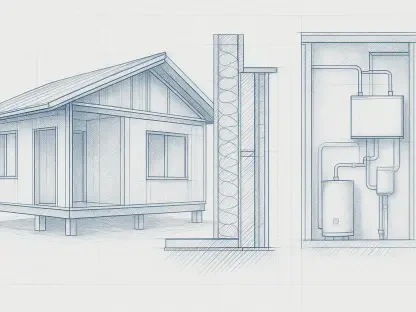
Future considerations for the Victorian housing sector were focused on the integration of prefabricated technology and sustainable materials to drive down the core cost of construction. Architects and engineers explored modular building techniques that allowed for faster completion times and more predictable pricing models, effectively mitigating the risks posed by fluctuating labor markets. The objective was to move away from the traditional, labor-intensive methods that had become financially unsustainable in the current economic climate. By adopting these modern manufacturing approaches, the state aimed to create a more resilient housing pipeline that was less susceptible to global supply chain shocks. This proactive stance helped to stabilize the market by providing a more diverse range of affordable options for those who were previously locked out of the property ladder. Ultimately, the shift toward innovative construction methods and reformed urban planning provided a blueprint for long-term affordability, ensuring that the housing needs of future generations were met with practical and scalable solutions.