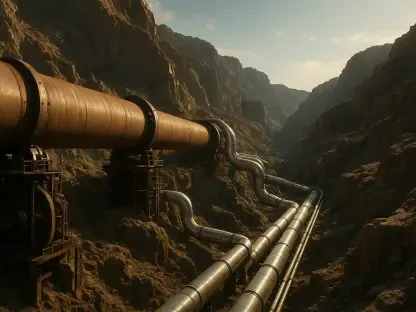

Unique structural hurdles in the Netherlands, such as grid congestion and strict nitrogen regulations, are frequently halting new housing starts. This specific Dutch challenge serves as a microcosm for a broader European construction landscape currently navigating a complex period of stagnation and structural transition. While the wider economy across the European Union has demonstrated a surprising degree of resilience against inflationary pressures, the construction output remains a significant laggard, struggling to decouple itself from heavy macroeconomic headwinds. The sector faced a substantial 1.8% decline in 2024, and current projections for 2026 suggest only a marginal recovery of approximately 0.5%. This slow and uneven trajectory is the result of high interest rates, volatile energy costs, and persistent geopolitical instability that dampens investor confidence. Developers and contractors find themselves in a precarious position, attempting to leverage long-term growth drivers like the green energy transition and digital network expansion while simultaneously managing the immediate fallout of reduced demand. The narrative of the current year is defined by this struggle to find a floor for the market, as the industry remains disconnected from the modest growth observed in other segments of the European GDP.
The Persistent Crisis: Housing Affordability and the Scissors Effect
A central theme in the current market environment is the persistent weakness in the building sector, specifically regarding residential housing. A “scissors effect” has emerged where the high costs of construction materials and labor meet a hard ceiling on what consumers can realistically afford to pay for a home. In major markets like France, Germany, and Austria, the prices for existing residential properties have not risen at the same pace as the costs associated with new builds. Consequently, developers are often unable to pass on the increased financial burden of specialized materials and skilled labor to potential buyers, who increasingly opt for cheaper, pre-existing properties instead. This market dynamic has rendered many new-build projects commercially unviable, leading to a widespread wave of postponements that has chilled the residential pipeline. The inability to reconcile high production costs with local purchasing power has created a fundamental business case crisis that shows few signs of immediate resolution, as the gap between construction expenses and market value remains wider than in previous cycles.
Furthermore, permit stagnation acts as a critical and troubling indicator for the industry’s near-term outlook. Following a brief and hopeful surge in permits granted between late 2024 and early 2025, momentum has stalled across the continent. This is a vital forward-looking metric because the time-lag between the issuance of a permit and the physical completion of a project typically ranges from 12 to 24 months, meaning the current lack of permits will manifest as a supply drought in 2027 and beyond. Higher interest rates serve a dual blow to this sub-sector; they significantly increase the cost of capital for developers who rely on heavy financing and simultaneously reduce the purchasing power of homebuyers. For new constructions, where payments often begin during the building phase, these financial hurdles are particularly acute. This environment has forced many firms to reconsider their long-term strategies, shifting away from speculative residential development and focusing instead on smaller, more secure projects where the risk of capital being tied up in an unsellable asset is minimized.
Infrastructure Resilience: A Strategic Pillar of National Growth
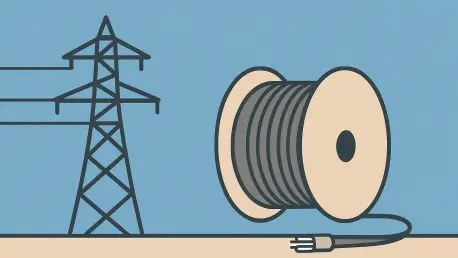
In stark contrast to the struggling residential building sector, civil engineering and infrastructure remain a robust pillar of growth across the European Union. Supported heavily by national strategic mandates and substantial EU recovery funds, this sub-sector has managed to maintain an upward trajectory, growing by 2.2% in the previous year and continuing that momentum into the current cycle. The most resilient growth is found in energy infrastructure, where there is an urgent necessity to upgrade aging electrical grids to handle the increasing load from renewable energy sources. Additionally, telecommunications infrastructure remains a high-priority area, with the ongoing rollout of 5G networks and fiber-optic connectivity driving constant demand for specialized construction services. Public investment in these areas is often viewed as “non-discretionary,” providing a steady stream of work for large-scale contractors who possess the technical expertise to handle complex grid integrations and high-tech utility expansions.
A strategic shift is also becoming increasingly visible in the transportation priorities of European nations. Major cross-border rail projects, such as the Rail Baltica initiative and the Lyon–Turin high-speed link, are receiving prioritized funding and political backing as part of the broader effort to decarbonize transport. These massive civil engineering feats are designed to shift freight and passenger travel away from carbon-intensive road networks, reflecting a long-term commitment to sustainable mobility. Conversely, traditional roadwork and highway maintenance projects are suffering in several regions due to tightening municipal budgets and a shifting environmental focus. While the transition from road to rail provides significant opportunities for specialized firms, it also requires a different set of logistical capabilities and long-term planning horizons. The current strength of the infrastructure sector effectively acts as an anchor for the entire construction industry, preventing a more severe contraction by offsetting the deep losses observed in the residential and commercial building segments.
Supply Chain Volatility: Energy and Logistical Constraints
The construction sector remains exceptionally sensitive to energy price fluctuations, which directly dictate the production costs of energy-intensive materials such as concrete, cement, and bricks. Recent geopolitical tensions, particularly those involving conflict in the Middle East, have introduced a new layer of volatility into the market. While gas and electricity prices have not returned to the catastrophic peaks seen in 2022, the constant threat of supply disruption has dampened profit expectations that had briefly recovered in the earlier months of 2026. This uncertainty makes it difficult for contractors to provide accurate long-term quotes, often leading to the inclusion of risk premiums that can make projects less attractive to private investors. The fragility of the energy market means that any sudden spike in fuel or power costs can instantly erode the narrow margins that many firms are currently operating on, creating a climate of caution that prioritizes financial survival over aggressive expansion or innovation.
Beyond the cost of energy, logistical constraints have emerged as a silent but significant bottleneck for the industry across the continent. Climate-related issues, such as historically low water levels in major European rivers like the Rhine and the Danube, have hampered the transport of essential raw materials like sand, gravel, and bulk cement via barges. These disruptions have led to significant delivery delays and the imposition of transport surcharges, which further inflate the final cost of construction. By the latter half of 2026, a notable percentage of companies reported that production was being constrained not by a lack of demand, but by the physical inability to get materials to the job site on schedule. These logistical challenges highlight the vulnerability of the construction supply chain to environmental changes, forcing many companies to explore more expensive overland transport options or to invest in larger localized stockpiles to buffer against the unpredictability of river-based freight routes.
National Divergence: Contrast in Major European Markets
Germany, as the largest economy on the continent, serves as a bellwether for the recovery of the European construction sector. After a devastating multi-year contraction that saw the market shrink by more than 10% between 2020 and 2025, the German market is finally showing signs of a cyclical rebound. This modest recovery is being supported by the “Bau-Turbo” initiative, a government-led housing construction turbocharger designed to streamline the often-cumbersome approval processes at the local level. However, the success of these measures remains contingent on the cooperation of municipal authorities and the stabilization of national interest rates. While the German market is no longer in a freefall, the recovery is fragile and heavily dependent on the restoration of buyer confidence in the stability of the housing market. The shift from contraction to marginal growth in Germany is a positive signal for the rest of the EU, even if the pace of improvement remains frustratingly slow for many industry participants.
In contrast to the German rebound, France continues to face a deepening contraction that shows few signs of bottoming out. Output fell by 3.5% in the previous year, and further declines are being recorded throughout 2026 as buyer confidence remains at historically low levels. Despite the government’s attempts to stimulate the market through programs like the “Prêt à Taux Zéro” zero-interest mortgage scheme, high construction costs and a rigid regulatory environment have kept many potential homeowners on the sidelines. Meanwhile, Spain offers a more optimistic outlook, having entered a robust recovery phase following a period where it lost nearly a quarter of its total output. The Spanish economy remains strong enough to sustain demand, and while the momentum of building permits is beginning to ease from its recent peak, the overall trajectory remains positive. Poland also presents a unique case, where the resumption of significant EU funding has provided a solid foundation for infrastructure investment, even as weather-related disruptions caused extreme fluctuations in total output during the first half of the current year.
Strategic Adaptation: Navigating Profit Compression and Risks
Contractors across Europe are currently caught in a difficult pincer movement that is compressing profit margins to their limits. On one side, the costs of energy and materials remain stubbornly high and unpredictable; on the other side, many firms are locked into fixed-price contracts that were signed before the latest round of inflation and geopolitical volatility. This is particularly problematic in countries like Spain, where public price-adjustment schemes are largely absent, leaving construction firms fully exposed to cost shocks that cannot be passed on to the client. This financial pressure has led to an increase in insolvency rates among smaller subcontractors who lack the cash reserves to weather prolonged periods of negative cash flow. To mitigate these risks, larger firms are increasingly turning to digital project management tools and more flexible procurement strategies, attempting to find efficiencies that can protect their bottom lines in an era where traditional price stability is a thing of the past.
The industry effectively transformed into a tale of two distinct sectors, where the path forward required a fundamental shift in strategic priorities. Stakeholders recognized that the traditional reliance on private residential growth was no longer a viable short-term strategy, leading to an increased focus on public-led infrastructure and large-scale industrial projects. The industry successfully began the transition toward meeting the technical requirements of the 21st-century energy transition, emphasizing the renovation of existing structures and the integration of smart grid technologies. Leaders in the field focused on risk management, particularly through the refinement of contract terms and the adoption of energy-efficient building methods to offset rising operational costs. By prioritizing the diversification of project portfolios and the security of supply chains, the sector positioned itself to survive the current stagnation and prepare for the more stable growth environment expected in the coming years. This proactive approach to navigating the “slow and uneven” recovery proved essential for maintaining the structural integrity of the European construction landscape during a period of profound economic change.