
Mineralization technology leverages the natural chemistry of the Earth to provide a definitive and verifiable method for long-term carbon sequestration. This scientific reality is currently being applied to solve one of the most persistent environmental challenges in modern manufacturing: the carbon footprint of cement production. In a landmark achievement at the Holcim plant in Fujairah, United Arab Emirates, engineers have successfully demonstrated that carbon dioxide emissions can be captured and permanently transformed into solid rock within the Earth’s crust. This project, executed in collaboration with carbon removal specialists at 44.01, represents the first successful pilot of its kind operating under live industrial conditions. By moving beyond temporary storage solutions, this initiative proves that the construction sector can decouple its material output from its environmental impact. The success of this pilot marks a shift from theoretical modeling to tangible industrial application, offering a scalable blueprint for decarbonizing heavy industry globally.
The Chemistry of Carbon Sequestration
Geological Transformation: The Role of Reactive Rock
At the molecular level, geological mineralization represents a departure from conventional storage by converting gaseous carbon into stable solid minerals. Traditional carbon capture systems typically involve the compression of carbon dioxide into a liquid-like state for injection into saline aquifers or depleted gas fields. While effective, these methods require perpetual monitoring to prevent eventual migration or leakage through geological faults. In contrast, mineralization utilizes the inherent reactivity of peridotite and other ultramafic rocks. When carbonated water is injected into these formations, it triggers a chemical reaction that binds the carbon molecules into the crystalline structure of the host rock. This transformation effectively incorporates the industrial waste into the lithosphere, ensuring that the captured emissions are no longer part of the atmospheric cycle. The result is a secure and permanent sequestration method that provides geological-scale durability for the industry.
Accelerated Mineralization: Overcoming Natural Time Barriers
The primary challenge with natural mineralization has historically been the immense timescale required for these reactions to reach completion. However, the proprietary engineering methods demonstrated in the current pilot program have successfully accelerated this process from centuries to just several months. By optimizing the concentration of carbon in the injection fluid and managing the subterranean pressure and temperature, engineers can catalyze the formation of carbonate minerals at an industrial pace. This acceleration is the critical factor that allows the cement industry to process high-volume exhaust streams without the need for massive surface storage facilities. As the mineralized carbon becomes an inert part of the underground landscape, the operational risks associated with long-term storage are virtually eliminated. This technological leap provides a level of certainty that is essential for meeting the rigorous standards of modern carbon removal markets and environmental regulations.
Industrial Implementation and Logistics
Capture Technology: Managing Live Flue Gas Streams
The operational success of the project is grounded in a sophisticated value chain that connects industrial manufacturing with environmental science. The workflow begins at the cement plant’s kiln, where specialized capture equipment isolates carbon dioxide directly from the flue gas. Utilizing high-efficiency absorption technology, such as the Shell CANSOLV™ system, the infrastructure strips the greenhouse gases from the exhaust before they can enter the atmosphere. This specific implementation is significant because it operates under live-condition variables, such as fluctuating temperatures and varying chemical compositions of the flue gas. Proving the durability of the capture hardware in such a demanding environment is a prerequisite for wider industrial adoption. By integrating these systems into existing cement manufacturing workflows, the project demonstrates that decarbonization does not require a complete overhaul of current industrial infrastructure, but rather a strategic enhancement of existing processing capabilities.
Integrated Supply Chains: From Extraction to Injection
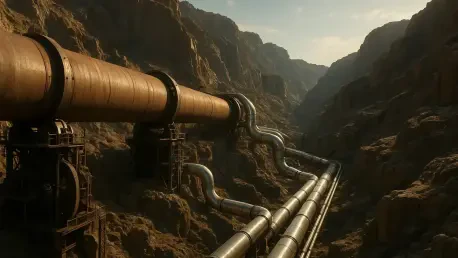
Once the carbon is isolated, the logistics of transport and injection play a secondary but equally vital role in the sequestration lifecycle. In the UAE pilot, the captured gas is managed and moved to injection sites situated near reactive rock formations by partners like Gulf Cryo. This connectivity between the industrial source and the geological sink is facilitated by specialized transport infrastructure designed to handle industrial-grade carbon dioxide. At the injection site, the gas is mixed with water and pumped deep into the peridotite formations. This end-to-end integration ensures that there are no gaps in the carbon management process where emissions could potentially escape. By validating every link in the chain—from the kiln stack to the subterranean mineral bed—the project establishes a comprehensive operational model. This holistic approach provides the technical evidence needed for other heavy industrial sectors to implement similar large-scale carbon management strategies across their own global operations.
Strategic Impacts and Future Directions
Global Benchmarks: Aligning Industry with Climate Policy
The successful execution of the project provided a clear roadmap for the future of industrial sustainability and corporate climate responsibility. Throughout the pilot phase, the collaborative efforts between material scientists and mechanical engineers demonstrated that geological sequestration could be reliably measured and verified. This technical validation allowed the participants to align their operations with national environmental targets, such as the UAE’s goal of reaching net-zero emissions by 2050. The findings indicated that mineral-based storage offered a more robust alternative to traditional gaseous reservoirs, particularly in regions with suitable geological profiles. By focusing on the permanence of the carbon-to-rock transformation, the project participants established a higher standard for environmental transparency. This shift encouraged a broader industry-wide movement toward adopting verifiable carbon removal technologies that meet the stringent requirements of international climate agreements.
Commercial Scalability: Establishing New Standards for Permanent Carbon Removal
The transition toward widespread mineralization required a fundamental shift in how the construction industry approached its waste products. By successfully moving from small-scale experiments to industrial pilots, the sector established a baseline for permanent carbon removal that was both verifiable and safe. The actionable next steps identified through the Fujairah project included the mapping of global peridotite deposits and the standardization of injection protocols. Stakeholders found that investing in these geological solutions provided a long-term hedge against rising carbon prices and regulatory scrutiny. Furthermore, the development of regional carbon transport networks proved essential for connecting inland cement facilities with appropriate sequestration sites. These insights allowed the industry to move forward with a clear strategy for integrating climate technology into the core of manufacturing. Ultimately, the lessons learned from the initial mineralization efforts provided the foundation for a net-zero building materials market.