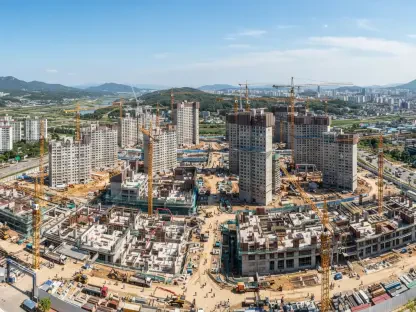

Construction industry executives are being forced to defend their safety records as the National Assembly prepares to finalize its list of witnesses for a high-stakes public inquiry. This annual audit, conducted by the Land, Infrastructure, and Transport Committee, arrives at a critical juncture for the South Korean building sector, which has been plagued by recurring structural defects and workplace fatalities. The scrutiny is not merely a bureaucratic formality but a response to high-profile incidents that have shaken public confidence in urban infrastructure. From the omission of critical reinforcements in major transportation hubs to fatal accidents at residential redevelopment sites, the legislative body is demanding answers for what many perceive as a systemic disregard for safety protocols. As the committee members deliberate on the final roster of those summoned to testify, the tension between the government’s push for accountability and the corporate world’s desire to manage reputational damage has reached a peak, setting the stage for a month of intense questioning.
Shifts in Legislative Oversight
Corporate Accountability: The Witness Debate
A central point of contention in the current audit proceedings involves the perceived “downgrading” of witnesses, as many top-tier construction firms have successfully lobbied to send division-level executives instead of their Chief Executive Officers. This trend has sparked a fierce backlash from lawmakers like Representative Jeong Il-young, who argues that allowing lower-level management to provide testimony effectively shields top leadership from direct responsibility for life-threatening negligence. The legislative consensus is rapidly shifting toward a model where the ultimate responsibility for safety management systems must rest with those at the very top of the corporate hierarchy. Critics of the downgrading practice point out that division heads often lack the authority to implement sweeping reforms or commit to the large-scale financial investments required to overhaul safety cultures. Consequently, the push to reinstate CEOs on the witness list is seen as a vital step in ensuring that the promises made during these hearings translate into actual changes.
Regulatory Pressure: Evaluating Executive Liability
The reluctance of major builders to put their top executives in the hot seat reflects a broader struggle within the industry to reconcile rising operational costs with stringent safety mandates. Many firms have cited the inflationary pressures of 2026 and complex design requirements as mitigating factors for recent shortcomings, yet the committee remains largely unsympathetic to these economic justifications. By focusing on the structural integrity of governance itself, the National Assembly seeks to determine whether safety is being treated as a negotiable expense rather than an absolute priority. This inquiry explores how corporate cultures prioritize speed and profit over the meticulous adherence to engineering standards. The outcome of these discussions will likely dictate the future of the Serious Accidents Punishment Act, as lawmakers evaluate whether existing legal frameworks are sufficient to deter negligence or if more aggressive personal liability for executives is necessary to protect workers and the general public from avoidable catastrophes.
Structural Integrity and Public Trust
Project Integrity: Examining Major Failures
Among the most alarming cases under investigation is the discovery of significant structural defects at the GTX-A Samseong Station site, managed by Hyundai Engineering and Construction. Reports indicate that nearly 178 tons of essential rebar were omitted from underground columns, a failure that has raised serious questions about quality control mechanisms during the construction of high-speed rail infrastructure. Simultaneously, the company has faced intense criticism over a fatal fall at a Seocho-gu reconstruction site, highlighting a persistent pattern of safety lapses. These incidents are not isolated; POSCO E&C and SK ecoplant are also under the microscope for fatal accidents at the Sinansan Line railway project and an exterior terrace wall collapse in Incheon, respectively. These failures represent a cross-section of the industry’s most prestigious players, suggesting that the problem of shoddy work is not confined to smaller firms but is a pervasive issue that affects even the most sophisticated construction projects currently underway.
Infrastructure Solutions: Future Safety Standards
Legislative scrutiny also extended to the financial management of large-scale public works, as seen in the case of Daewoo Engineering and Construction and the Gadeokdo New Airport project. The company’s request for a massive cost increase of 620 billion won, attributed to rising material prices, led to intense questioning regarding budget management and the feasibility of the 2035 opening timeline. Lawmakers ultimately concluded that financial transparency and safety are inextricably linked, as budget cuts often lead to compromises in material quality or labor oversight. To address these recurring issues, industry experts recommended the implementation of real-time digital monitoring for all structural reinforcements and the adoption of mandatory third-party safety audits that report directly to government regulators. By the end of the inquiry, the committee established that corporate leadership must be personally accountable for defect remediation. The industry was then encouraged to integrate advanced modeling to prevent omissions.