
Builders are calling for more definitive and uniform federal guidelines to streamline the approval process and accelerate the delivery of factory-assembled housing units. As of 2026, the demand for affordable residential options has led to a major policy pivot centered on the 21st Century Road to Housing Act. This bipartisan legislation serves as the primary catalyst for a comprehensive overhaul of how factory-built homes are perceived and regulated across the United States. By moving away from the restrictive “mobile home” classifications of previous decades, the Department of Housing and Urban Development (HUD) is currently integrating modern manufacturing techniques with streamlined federal oversight. This shift is designed to transform the industry from a niche market into a mainstream solution for the ongoing housing shortage. The goal is to provide a scalable national framework that ensures safety and quality while significantly reducing the time and cost required to bring new units to market for American families.
Redefining the Structural Foundation: Modernizing Construction and Design
Eliminating the Chassis: A Fundamental Shift in Engineering Standards
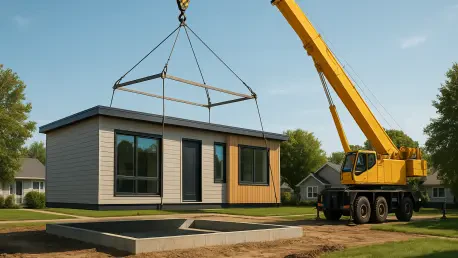
The most significant technical reform involves the removal of the permanent steel chassis requirement, a mandate that constrained the industry for over fifty years. In 2026, manufacturers are finally able to produce units that can be placed directly onto permanent foundations, mirroring the structural integrity and long-term viability of site-built homes. This change is not merely cosmetic; it represents a fundamental shift in how factory-built housing is engineered and financed. By eliminating the necessity of a permanent transport frame, builders are reducing the cost of each unit by approximately $10,000. These savings are being passed directly to consumers, creating a viable category of affordable starter homes that had previously disappeared from the real estate market. The move toward permanent foundations also allows these structures to be classified as real property, unlocking better financing options and ensuring that the homes appreciate in value over time, much like traditional residential developments in varied neighborhoods.
Enhancing Aesthetic Integration: Erasing the Social Stigma of Factory Housing
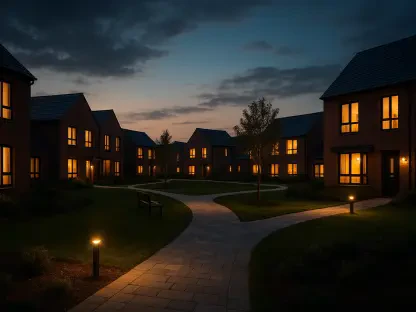
Beyond the immediate cost benefits, the elimination of the chassis allows for a radical transformation in home design and neighborhood integration. Architects are now utilizing factory environments to create diverse exterior profiles, varied roof pitches, and high-quality materials that were once incompatible with traditional mobile home standards. This design flexibility is crucial for erasing the social stigma that has historically hindered the expansion of manufactured housing communities. As these homes become indistinguishable from their stick-built counterparts, they are gaining wider acceptance among local planning boards and residential developers. The ability to customize layouts and finishes in a controlled setting ensures that every unit meets the aesthetic expectations of modern buyers while maintaining the efficiency of an assembly line. This synthesis of high-end design and industrial precision is currently allowing the industry to scale in ways that were impossible under older regulations, providing a blueprint for the future of high-quality American living.
Expanding Regulatory Frameworks: Economic Reach and Urban Density
Modernizing Federal Codes: Part 3280 and Vertical Construction Growth
To support this structural evolution, the federal government is currently overhauling the building codes that govern the sector, specifically focusing on Construction and Safety Standards and Model Installation Standards. These updates are essential for ensuring that as homes transition to non-chassis designs, they remain safely anchored and structurally resilient. Furthermore, the updated regulatory framework now explicitly permits the construction of multistory manufactured housing, a move specifically designed to address urban density. By allowing modules to be stacked into townhomes or multifamily units, the new HUD code enables developers to provide workforce housing in expensive metropolitan centers where land is scarce. This modernization allows for the rapid deployment of high-density housing that can be certified at the factory level, bypassing the complexities of disparate local building codes. This centralized approach provides manufacturers with the regulatory certainty needed to innovate and invest in the advanced technology required for complex vertical construction.
Scaling for the Missing Middle: Past Results of Federal Policy Synthesis
The implementation of these federal reforms successfully repositioned manufactured housing as a cornerstone of the national strategy to address the “missing middle” housing gap. By targeting families earning between 80% and 120% of the area median income, the industry provided a critical buffer against the rising costs of traditional real estate. Shifting production to controlled factory environments minimized material waste and eliminated weather-related delays, which significantly accelerated the total project timelines. These concerted efforts by the government and private sector fostered an environment of continuous innovation, where 3D printing and modular assembly became the standard for rapid housing deployment. Builders eventually achieved a level of scalability that stabilized local markets and provided a clear path to homeownership for millions of Americans. The transition toward a unified, performance-based code simplified the approval process and encouraged substantial capital investment into new factory infrastructure, effectively transforming the industry into a high-performance hub of sustainable development.