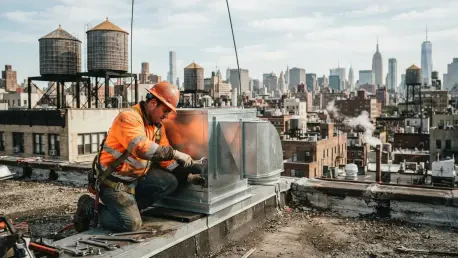

The Good Faith Effort provision offers a mechanism for penalty mitigation, but it now requires documented proof of physical progress such as approved construction permits or utility requests. This requirement signifies a major shift in how the New York City Department of Buildings oversees the transition of the urban landscape toward a lower carbon footprint. With approximately 70 percent of the city’s greenhouse gas emissions originating from the energy used to heat, cool, and power the built environment, the stakes for compliance have never been higher. Local Law 97 targets buildings larger than 25,000 square feet, setting rigorous standards that property owners must meet to avoid significant financial repercussions. The law’s ultimate objective is a 40 percent reduction in citywide emissions by 2030, eventually reaching net-zero by 2050. Achieving these goals requires more than just high-level planning; it demands a granular understanding of how different fuel types and energy usage patterns contribute to a building’s total carbon intensity. As property managers look toward the end of the decade, the focus has shifted from simple energy audits to the implementation of comprehensive retrofit projects that can fundamentally alter a building’s environmental impact while preserving its long-term economic viability in an increasingly regulated market.
Understanding the Distinct Paths: Articles 320 and 321
Determining the correct compliance pathway is the first essential step for any property owner navigating the complexities of New York City’s environmental mandates. Most market-rate residential buildings, commercial office towers, and large condominiums fall under the jurisdiction of Article 320. This section of the law establishes strict annual carbon emission limits based on a building’s specific occupancy group and size. These limits are not static; they are designed to become progressively more restrictive over several multi-year periods, forcing owners to engage in long-term capital planning. To stay ahead of these requirements, stakeholders utilize the Building Energy Analysis Manager portal, a digital interface provided by the city that allows for the tracking of energy consumption and the verification of a building’s current standing against official records. This data-driven approach ensures that there is a clear, transparent record of a building’s carbon output, which is calculated by multiplying total fuel usage by specific carbon coefficients assigned to energy sources like natural gas, fuel oil, and electricity.
In contrast, Article 321 provides a different framework for properties that face unique financial or social challenges, such as affordable housing, rent-regulated residential buildings, and houses of worship. These properties are often granted more flexibility to ensure that the drive for sustainability does not compromise the availability of affordable living spaces or the stability of community institutions. Rather than strictly adhering to hard carbon caps that might require immediate and costly mechanical overhauls, Article 321 buildings may follow prescriptive energy-saving pathways. This often involves the implementation of specific, proven conservation measures, such as installing insulation, upgrading lighting systems, and maintaining heating plants to peak efficiency. By offering this alternative route, the city acknowledges the diverse economic landscape of its real estate market while still demanding meaningful progress toward energy reduction. For boards and managers, identifying which article applies to their specific property is a critical task that dictates the entire strategy for modernization and financial allocation over the coming years.
Financial Consequences: Carbon and Administrative Failures
The economic logic behind Local Law 97 is built on a penalty framework designed to make the cost of inaction significantly higher than the cost of modernization. For buildings governed by Article 320, the financial penalty for exceeding the annual carbon limit is set at $268 for every metric ton of carbon dioxide equivalent that surpasses the building’s specific cap. While some property owners initially viewed these fines as a potential cost of doing business, the reality of the tightening limits suggests a different outcome. As the city approaches the 2030 milestone, the allowed carbon thresholds will drop so sharply that many buildings currently in compliance will find themselves facing six-figure annual fines. These cumulative costs can quickly eclipse the expense of upgrading to high-efficiency boilers or installing heat pump systems. Because these penalties repeat annually, they represent a permanent drain on a building’s operating budget, which can negatively affect property values and the ability to secure favorable financing for future renovations.
Administrative negligence can be just as costly as failing to reduce emissions, as the city has instituted heavy fines for reporting failures. If a building owner fails to submit the required annual compliance report, they are subject to a monthly penalty of $0.50 per square foot. For a typical 100,000-square-foot building, this results in a $50,000 monthly fine, creating an immediate and severe financial crisis for a co-op or condo board. It is also important to note that these penalties are strictly punitive and do not offer a path toward reconciliation; while there are various loan programs available for energy efficiency projects, these funds cannot be used to pay off city-issued fines. This lack of a “bailout” mechanism places a premium on administrative diligence and the early engagement of professional consultants who can ensure that all paperwork is filed accurately and on time. The clear message from the Department of Buildings is that ignorance of the law or simple clerical errors will not be accepted as excuses for non-compliance in this increasingly strict regulatory environment.
Approaching the Decarbonization Cliff: The 2030 Strategy
As the city progresses through the mid-2020s, the focus for most property managers has shifted toward the significant “carbon cliff” expected at the start of the next decade. Current data suggests that while nearly half of the city’s multifamily buildings are already performing well enough to meet the 2030 standards, the other half faces a steep climb. Approximately 25 percent of covered buildings require substantial capital intervention to bridge the gap between their current performance and the upcoming limits. This upcoming shift represents a major transition point where the allowable greenhouse gas limits will drop substantially to meet the city’s overarching environmental goals. For buildings that have not yet begun the process of retrofitting their systems, the window for planning and execution is closing rapidly. Large-scale projects, such as envelope improvements or whole-building electrification, often require several years of lead time for engineering, permitting, and construction, making early intervention the only reliable way to avoid the 2030 penalties.
To mitigate the immediate impact on buildings that are genuinely struggling to keep pace, the city’s “Good Faith Effort” provision remains a vital but increasingly narrow escape hatch. This mechanism allows for a reduction or pause in penalties, but only for owners who can demonstrate that they are actively engaged in the work of decarbonization. Gone are the days when a simple written plan or a promise of future action was sufficient to secure an extension. Today, the Department of Buildings requires concrete, documented proof of physical progress, such as signed contracts with mechanical contractors, approved construction permits, or formal requests to utilities like Con Edison for service upgrades. This shift ensures that the provision is used as a tool for progress rather than a loophole for delay. Buildings that fail to follow through on their documented plans risk losing their protected status and may be hit with retroactive fines. This rigorous oversight emphasizes that the city is prioritizing actual carbon reduction over administrative gestures as it moves toward its long-term climate targets.
Operational Efficiency: The Transition to Electrification
Modernizing a large urban building does not always require an immediate, multi-million-dollar mechanical overhaul, as significant gains can often be achieved through a sequenced approach starting with lower-cost operational improvements. This “low-hanging fruit” includes upgrading common area lighting to high-efficiency LED fixtures and installing occupancy sensors in hallways, laundry rooms, and parking garages to eliminate unnecessary energy waste. Furthermore, addressing the building envelope by sealing air leaks around windows and air conditioning units can provide an immediate boost to energy retention, reducing the load on heating and cooling systems. Smart water management also plays a crucial role; by installing low-flow, high-pressure fixtures, buildings can significantly reduce the volume of water that needs to be heated, leading to a direct reduction in the fuel consumed by domestic hot water systems. These smaller, tactical improvements provide an essential foundation for more intensive retrofits by optimizing the building’s overall energy demand profile.
While incremental improvements are essential, the long-term objective for New York City’s infrastructure remains full-scale electrification. This process involves replacing traditional fossil-fuel-burning boilers and furnaces with electric heat pump technology for both space heating and cooling. To prepare for this transition, property owners are encouraged to utilize their mandated Local Law 87 energy audits as a strategic diagnostic tool. These audits, required every ten years, provide a detailed roadmap of a building’s current mechanical health and identify the most effective areas for system replacement. By sequencing upgrades in a way that aligns with the natural life cycle of existing equipment, boards can avoid the “sticker shock” of premature replacements. Electrification also benefits from the ongoing greening of the city’s electrical grid, as the carbon intensity of electricity continues to drop with the addition of renewable energy sources. This synergy between building-level technology and city-level utility shifts provides the most viable path toward achieving net-zero emissions by the mid-century mark.
Leveraging Regional Support: Financial and Technical Programs
Navigating the technical and financial hurdles of Local Law 97 is a daunting task, but property owners in New York City have access to a robust ecosystem of support designed to facilitate the transition. Agencies like NYSERDA offer substantial subsidies for engineering reports and energy prospectuses, which help boards prioritize their capital spending over a ten-year horizon based on data rather than guesswork. These reports are invaluable for making informed decisions about which technologies will provide the greatest carbon reduction per dollar spent. Additionally, the NYC Accelerator serves as a city-backed consultancy that provides personalized guidance to building owners and managers. This resource helps stakeholders understand their building’s specific energy performance, connects them with a network of qualified service providers, and identifies applicable financial incentives and tax credits that can offset the initial costs of deep energy retrofits. By engaging with these resources, property owners can transform a regulatory challenge into a strategic investment in their building’s future.
Beyond technical advice, several financing structures have emerged to help buildings bridge the funding gap for major sustainability projects. The New York City Energy Efficiency Corporation provides specialized loans for energy-saving projects, including the C-PACE financing model, which allows property owners to fund energy improvements through an assessment on their property tax bill. This structure is particularly attractive because the repayment obligation is tied to the property rather than the owner, and the long-term energy savings often exceed the cost of the loan payments. Furthermore, Federal incentives provided through the Inflation Reduction Act have created new opportunities for tax credits and rebates related to solar installations, heat pumps, and battery storage systems. Utilizing these diversified funding streams allows boards to undertake necessary infrastructure projects without placing an undue burden on residents or shareholders. This proactive financial planning not only ensures compliance with carbon limits but also enhances the long-term value and marketability of the property in a city that increasingly prizes sustainability.
Strategic Steps for Long-Term: Infrastructure Sustainability
Owners who successfully navigated the initial years of Local Law 97 prioritized early engagement with specialized consultants and data-driven analysis. They recognized that the transition to a low-carbon footprint was not a single event but a continuous process of optimization and investment. By verifying building measurements and addressing minor operational inefficiencies immediately, these stakeholders avoided the initial surge of administrative penalties. They utilized the time between reporting periods to conduct thorough feasibility studies for electrification, ensuring that when the time came to replace aging boilers, the building was ready for a seamless transition to heat pump technology. This forward-looking approach allowed boards to communicate clearly with shareholders about future costs, preventing the financial “sticker shock” that often accompanied poorly planned capital projects. The most successful buildings were those that viewed carbon reduction as an opportunity to modernize their infrastructure and improve the comfort of their residents, rather than simply as a regulatory hurdle to be cleared.
The landscape of New York City real estate underwent a fundamental transformation as energy performance became a central component of property valuation. Moving forward, property managers and boards remained focused on the continuous monitoring of energy systems to ensure that performance gains were maintained over time. They adopted integrated building management systems that provided real-time data on energy consumption, allowing for rapid response to inefficiencies. The city’s objective was never the collection of fines, but the total reimagining of how urban spaces utilized energy to support a sustainable future. By leveraging public resources, securing innovative financing, and maintaining a commitment to physical progress, the built environment began to align with the city’s broader environmental vision. Ultimately, the buildings that thrived were those that embraced proactivity, turning the requirements of Local Law 97 into a blueprint for long-term resilience and operational excellence in a rapidly changing world.