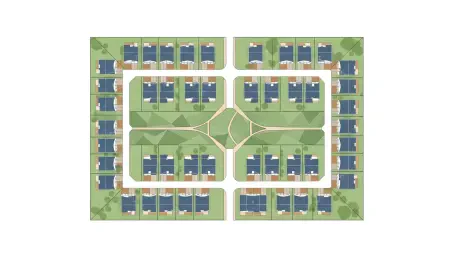

The ambitious initiative to construct thirty-five thousand affordable starter homes across the Beehive State by the end of twenty-twenty-eight represents one of the most aggressive housing policy interventions in contemporary American history. As the state grapples with an unprecedented influx of new residents and a dwindling supply of entry-level inventory, this multifaceted strategy aims to bridge the gap between stagnant wages and skyrocketing property values. Policymakers are currently focusing on the period from twenty-twenty-six to twenty-twenty-eight to streamline the permitting process and incentivize developers who traditionally favor luxury builds over modest single-family dwellings. The success of this endeavor hinges on the unprecedented cooperation between state leadership and local municipal boards that have historically resisted high-density projects. By prioritizing the needs of young families, the state is attempting to redefine the traditional suburban model to ensure long-term stability for all residents.
Policy: Reforms
Local: Zoning
Addressing the fundamental mismatch between housing demand and restrictive local ordinances is the first major hurdle for state officials looking to accelerate production. Between twenty-twenty-six and twenty-twenty-eight, the focus has shifted toward mandating that cities allow for increased density near transit hubs and within traditional single-family zones. These legislative adjustments are designed to strip away the red tape that often delays construction by months or even years, allowing for smaller lot sizes and accessory dwelling units. While some communities expressed concerns regarding the preservation of neighborhood character, the state has provided technical assistance and financial grants to help cities update their general plans without sacrificing local identity. This shift is not merely about building more structures but about creating walkable environments where residents can live near their work. By standardizing these rules, Utah is reducing legal uncertainty for many builders.
Grants: Funding
To ensure that thirty-five thousand homes are not only built but also remain affordable, the state has deployed a robust suite of financial tools targeting both supply and demand. From twenty-twenty-six to twenty-twenty-eight, significant capital has been allocated to a revolving loan fund that provides low-interest financing to developers who commit to price caps on their units. Simultaneously, first-time homebuyer programs have been expanded to offer down payment assistance that scales with the cost of living in specific counties. This dual-pronged approach helps mitigate the risks for private contractors who face high material costs and labor shortages in an inflationary environment. Instead of relying solely on market forces, the state is effectively subsidizing the entry point of the housing ladder to prevent a permanent renter class. These measures are critical for maintaining economic competitiveness as housing costs often drive away the talent needed for a thriving tech sector.
Market: Growth
Modern: Tech
The timeline for completing such a massive volume of homes requires a departure from traditional stick-built methods toward more efficient, industrialized construction techniques. Through the current window from twenty-twenty-six to twenty-twenty-eight, the state is partnering with private firms to pilot modular housing projects and three-dimensional concrete printing. These technologies promise to cut construction timelines by nearly forty percent while significantly reducing on-site waste and labor requirements. By creating a centralized manufacturing hub for housing components, Utah can maintain consistent quality control and bypass many of the seasonal delays typical of mountain west construction. Furthermore, the use of high-performance materials ensures that these starter homes are not only affordable to purchase but also inexpensive to maintain and heat during harsh winters. This emphasis on innovation is transforming the building industry into a high-tech sector for the region.
Future: Goals
The successful deployment of thirty-five thousand starter homes required a paradigm shift in how the state viewed its responsibility to the next generation of homeowners. During the critical implementation phase from twenty-twenty-six to twenty-twenty-eight, stakeholders demonstrated that coordinated legislative action could overcome even the most entrenched market failures. Planners focused on integrating these new developments with existing infrastructure to ensure that increased density did not lead to unmanageable traffic or strain on public utilities. By creating a scalable blueprint for affordable development, Utah provided a model that other rapidly growing states began to emulate. Moving forward, the focus shifted toward ensuring that these properties remained in the hands of owner-occupants rather than institutional investors. This emphasis on long-term stability fostered a more resilient economy where housing costs no longer outpaced wage growth. The effort eventually stabilized the market.