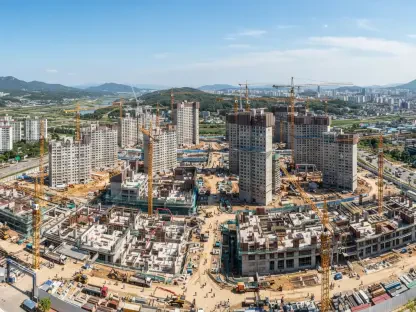

The current landscape of the global digital economy has reached a pivotal moment where the demand for raw processing power and secure data storage now dictates the flow of international capital at an unprecedented scale. As cloud adoption continues to intensify across the Asia-Pacific region, the necessity for robust physical infrastructure has moved from the periphery of urban planning to the very center of national economic strategy. AirTrunk has finalized a A$4.3 billion financing package, equivalent to approximately US$2.8 billion, to accelerate the expansion of its hyperscale data centers in Western Sydney. This massive transaction represents one of the largest debt deals ever recorded in the regional data center market, signaling a profound shift in how institutional investors perceive the value of digital assets. By securing such significant funding, the organization is positioning itself to meet the urgent needs of global technology giants that require immense capacity to support their evolving digital ecosystems as the market continues its rapid trajectory this year.
Financial Strategy: Regional Growth Patterns
Institutional Investment: Reshaping the Asset Class
Under the ownership of Blackstone, the company has successfully leveraged complex financial structures and diverse international banking partnerships to fuel its rapid growth across the Australian continent. These financing rounds, which frequently involve prestigious global financial advisers, demonstrate that institutional investors now categorize hyperscale data centers as essential infrastructure assets rather than speculative real estate. Because these facilities rely on long-term, inflation-protected contracts with major technology firms, they provide a level of financial stability and predictable yield that was previously associated only with traditional utilities like power plants or transport networks. This institutional backing allows for the mobilization of billions of dollars, enabling the construction of facilities that can host thousands of servers and petabytes of data for the world’s most influential software and services providers who are looking for secure long-term partners in an increasingly digital world.
Strategic Partnerships: Financing the Digital Backbone
The collaboration between global banks and specialized infrastructure funds ensures that the necessary capital is not only available but also structured to survive fluctuations in interest rates or shifts in the broader macroeconomic environment. Such financial resilience is necessary when undertaking projects that take several years to design and commission, ensuring that the critical data services of tomorrow remain uninterrupted and financially viable. By utilizing a mix of senior debt and subordinated financing, the development team has created a sustainable model for rapid scaling that minimizes risk while maximizing the speed of deployment for new capacity. This approach is particularly effective in a market characterized by high barriers to entry, including significant upfront costs and the need for specialized technical expertise in managing massive cooling and power systems. Furthermore, these strategic partnerships allow for the continuous reinvestment of capital into new technologies that enhance the overall value of the infrastructure.
Technological Shifts: Navigating Infrastructure Challenges
Artificial Intelligence: Driving Unprecedented Capacity Needs
The explosive rise of generative artificial intelligence stands as the primary force driving this unprecedented level of construction and investment within the modern data center industry. AI models, particularly those involved in deep learning and large-scale language processing, require significantly more computational power and specialized hardware compared to traditional cloud computing tasks. These workloads demand high-density server racks that can consume up to five or ten times the power of a standard server, placing immense strain on the electrical systems and cooling technologies of older facilities. To accommodate this shift, new hyperscale designs must incorporate advanced power distribution units and cooling solutions, such as liquid-to-chip cooling, which are specifically engineered to manage the intense heat generated by modern AI chips. This expansion is explicitly designed to meet these rigorous requirements, providing the massive, high-density environments that tech giants need to train and deploy their models.
Western Sydney: The Emerging Gateway of Global Connectivity
Western Sydney has emerged as a critical location for this expansion because it offers a rare and highly sought-after combination of reliable power availability and high-speed fiber-optic connectivity. This specific geographic area provides the low-latency environment necessary for modern digital services, ranging from real-time financial trading to immersive entertainment platforms that require instant data processing. By securing strategic land parcels in this region, the project is effectively building a massive digital reservoir capable of supporting hundreds of megawatts of IT capacity in a single campus. This concentration of infrastructure creates a gravity effect, attracting other technology companies and service providers to the area, which further strengthens the local ecosystem and drives regional economic growth. The development is not merely about constructing buildings but about creating a centralized hub that can act as the primary interface between domestic internet traffic and the global subsea cable networks.
Future Considerations: Strategic Steps for Resilience
Energy Integration: Stabilizing the Local Grid
The completion of this massive financing round established a clear precedent for how large-scale digital infrastructure had to be developed and funded to keep pace with the needs of the modern economy. Organizations that aimed to remain competitive in the digital space recognized the necessity of securing long-term power agreements and investing in high-density cooling technologies before the market reached a point of saturation. It became apparent that the integration of sustainable energy solutions was not merely a corporate social responsibility initiative but a fundamental requirement for operational resilience and cost management. Future developments focused on deep integration with local grids, where data centers served as active participants in energy stabilization rather than just heavy consumers. Stakeholders prioritized the acquisition of strategic land parcels with existing fiber density to minimize the latency issues that could hinder AI and real-time processing applications, ensuring that infrastructure was ready.
Operational Excellence: Scalable Design and Sustainable Growth
Successful operators moved toward modular construction techniques that allowed for the rapid installation of high-capacity hardware while integrating sophisticated management software to optimize energy use in real-time. This shift enabled facilities to adapt to changing hardware requirements without requiring massive structural overhauls, thereby extending the useful life of the physical asset. Furthermore, the implementation of bidirectional energy systems allowed these massive complexes to support the reliability of the broader electrical network during periods of peak demand. Decision-makers leveraged advanced data analytics to predict maintenance needs and prevent downtime, which solidified the reputation of these hubs as the most reliable points in the global network. By focusing on these actionable strategies, industry leaders ensured that their infrastructure remained capable of supporting technological innovation while maintaining financial stability and meeting increasingly strict environmental compliance standards.