
The shift from stark, clinical minimalism toward a more saturated and expressive environment has redefined how homeowners approach the concept of personal sanctuary in the current year. While previous seasons favored the ‘less is more’ philosophy, today’s residential trends emphasize the curation of spaces that tell a specific, vibrant story through texture and pattern. John Cooper’s recent residence overhaul serves as a definitive case study in this movement, illustrating how the integration of graphic elements and bohemian sensibilities creates a sophisticated yet relaxed atmosphere. This design language relies on the deliberate juxtaposition of structured lines against organic forms, resulting in a home that feels both curated and comfortable. By moving away from mass-produced templates, individuals are now reclaiming their living spaces as extensions of their artistic journeys. This transformation highlights a growing demand for bespoke interiors that reject uniformity in favor of character, proving that bold design choices can still provide a sense of calm.
Modern Interpretations of Bohemian Aesthetics
The Intersection of Geometry and Organic Texture
Traditional bohemian design frequently leaned into a chaotic accumulation of artifacts, yet the modern iteration focuses on a more disciplined application of graphic motifs. This evolution signifies a transition toward a structured chaos where every object maintains a distinct purpose within the larger visual framework. By incorporating sharp, geometric lines into soft, woven environments, the design achieves a sense of contemporary tension that keeps the eye moving without overwhelming the senses. This method allows for the inclusion of diverse cultural influences while maintaining a cohesive modern identity that fits the current aesthetic. Designers now prioritize the use of negative space to ensure that bold patterns, such as herringbone or monochrome lattices, do not clash with the softer, more fluid elements of the room. The result is a balanced environment where architectural rigor meets the uninhibited spirit of global travel, offering a new perspective on luxury that is grounded and adventurous.
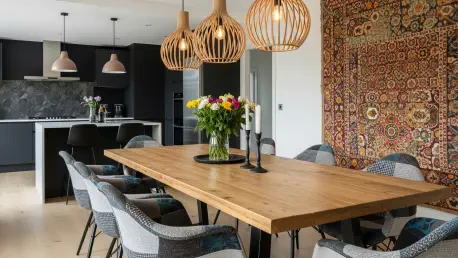
In the context of the Cooper residence, this balance was achieved through the strategic placement of oversized graphic prints against backdrops of rich, organic textures like jute and reclaimed timber. The interplay between the rigid geometry of the wall treatments and the soft, tactile quality of the furnishings creates a dialogue that feels both intentional and effortless. This approach challenges the notion that bohemian style must be inherently cluttered, proving instead that it can be a sophisticated vehicle for high-level interior architecture. By selecting a limited color palette, primarily focused on deep earths and sharp blacks, the home maintains a professional polish despite the inherent playfulness of its decorative elements. This specific methodology encourages a deeper engagement with the space, as the varying scales of patterns invite closer inspection while contributing to a unified atmosphere. Consequently, the home functions as a gallery where each room offers a unique perspective of a story.
Material Innovation and Digital Systems
Modern textile technology has played a pivotal role in the resurgence of this style, offering durable yet intricate fabrics that were previously difficult to maintain in high-traffic residential areas. Today’s materials allow for the integration of high-definition digital prints onto natural fibers, merging the precision of computer-generated design with the warmth of traditional craftsmanship. This technological advancement means that complex graphic patterns can now be applied to silk, wool, and linen with a level of detail that enhances the overall depth of the room. In the Cooper home, these advanced materials were utilized to bridge the gap between historical references and modern living requirements. The use of performance fabrics that mimic the look of hand-woven tapestries ensures that the aesthetic appeal does not come at the expense of everyday functionality. This synthesis represents a significant shift in how luxury is defined, moving away from preciousness and toward a more resilient, lived-in elegance that accommodates modern life.
The project concluded by demonstrating that the intersection of structured design and expressive bohemianism provided a viable roadmap for current residential developments. By prioritizing personal narrative and technical precision, the transformation successfully avoided the pitfalls of fleeting trends and established a lasting aesthetic legacy. Homeowners who sought to replicate this success focused on the deliberate selection of high-quality materials and the careful balancing of visual weight. The integration of smart technology alongside traditional craftsmanship ensured that the space remained functional for the demands of the current era. Ultimately, the Cooper residence redefined the boundaries of what a modern home could be, offering a blueprint for a more thoughtful and engaged approach to living. Moving forward, designers were encouraged to prioritize the tactile experience of a room over its digital appearance alone. This mastery of hue and saturation proved that even disparate elements could be harmonized when guided by a clear and disciplined vision.