
The 70% evergreen rule advocated by top designers ensures that gardens maintain their structural integrity and architectural presence even during the dormant winter months. This foundational principle has become the cornerstone of a broader movement toward monochromatic landscapes that prioritize texture and form over the fleeting appeal of floral colors. As of 2026, many homeowners and urban planners have moved away from high-maintenance flower beds that offer only a few weeks of vibrancy, choosing instead to invest in a palette that celebrates the infinite variations of green. By treating greenery as the primary protagonist rather than a neutral backdrop, modern design creates a sanctuary that feels both permanent and dynamic. This sophisticated pivot reflects a deeper understanding of ecological stability and visual rest, as the focus shifts toward the subtle interplay of light across diverse leaf surfaces. Consequently, the garden becomes a year-round architectural feature that provides environmental resilience and aesthetic tranquility, standing as a testament to the power of a restrained and deliberate planting philosophy that transcends the traditional obsession with seasonal blooms.
The Aesthetic and Psychological Power of Monochrome
Embracing a monochromatic palette is not merely a stylistic choice but a commitment to a design philosophy that values depth and subtlety over immediate visual impact. In an era where digital saturation and high-contrast environments are the norm, the monochromatic garden serves as a vital sensory palate cleanser. Landscape experts suggest that removing the distraction of high-contrast floral colors forces a deeper engagement with the natural environment, encouraging the observer to notice the intricate details of a leaf’s edge or the way sunlight filters through a translucent canopy. This approach fosters a sense of timeless elegance that remains consistent even as the weather changes. By stripping away the noise of competing colors, designers can focus on the pure geometry of the space, using plants as living sculptures that define boundaries and create movement. The result is a landscape that feels intentional and cohesive, offering a permanent quality that seasonal gardens often lack.
Understanding the Philosophy of Restraint
The intentional restraint of a green-on-green design moves beyond temporary trends, offering a restful quality that resonates with the human desire for order and peace. When the eye is not jumping from one bright flower to the next, it begins to appreciate the subtle interplay of light, shadow, and architectural shape. This focus on form allows for a more contemplative experience, where the garden is viewed as a whole rather than a collection of individual specimens. Designers in 2026 are increasingly using this philosophy to create “green rooms” that feel like outdoor sanctuaries, where the lack of color competition allows the mind to decompress. The use of varied heights and densities creates a sense of enclosure and security, reinforcing the garden’s role as a private retreat from the external world. Furthermore, this restraint allows the unique characteristics of each plant species to shine, as the focus shifts to the inherent beauty of foliage, bark, and structure.
Cultivating Psychological Calm and Environmental Cooling
Being surrounded by a diverse spectrum of greens—ranging from silvery olives and dusty sage to deep emeralds—naturally induces a psychological state of calm that is difficult to achieve with more vibrant palettes. This cooling effect is both mental and physical, as dense greenery naturally absorbs less heat than stone, concrete, or bare soil. In urban settings, where heat islands can make outdoor spaces uncomfortable, the green-on-green approach serves as a practical response to rising temperatures. By maximizing leafy coverage, designers create cooler microclimates that make the garden an inviting retreat even during the hottest summer months. The psychological association between lush greenery and water or shade further enhances this feeling of relief. Additionally, the consistent appearance of an evergreen-heavy landscape provides a sense of stability and reliability, which has been shown to reduce stress levels for those who inhabit the space, creating a harmonious environment that supports both mental well-being and ecological health.
Building a Year-Round Framework
A successful monochromatic garden relies heavily on its structural integrity, which serves as the physical and visual foundation for the entire design. Without the distraction of colorful flowers, the “bones” of the garden must be strong enough to carry the aesthetic weight of the landscape throughout every season. Professionals advocate for a structured framework that uses hardy, long-lived plants to define the geometry of the space. This ensures that even when deciduous plants lose their leaves, the garden maintains a clear sense of purpose and form. In 2026, the trend has shifted toward using these structural elements not just as borders, but as central features that provide a sense of permanence. By layering different types of structure—from low-lying boxwood spheres to towering cedar columns—designers create a multi-dimensional environment that feels established and mature. This reliance on structure ensures that the garden is not just a seasonal display but a permanent extension of the home’s architecture, providing a reliable backdrop for daily life.
Establishing Structural Integrity with Permanent Bones
Evergreens provide the essential “bones” of the garden, creating a reliable framework that holds the space together regardless of the season or the specific weather conditions of the moment. When winter frost settles on a clipped boxwood sphere or a dark green hedge, the garden remains a place of profound beauty rather than a desolate patch of dormant soil. This strategy proves that a reliance on green is not just an aesthetic choice but a functional one that ensures the landscape provides four-season interest. By utilizing plants like yew, Portuguese laurel, and various forms of topiary, designers can craft a sense of depth and permanence that anchors the more fluid, organic elements of the garden. These permanent features act as a visual guide, leading the eye through the space and creating a sense of rhythm and repetition. This architectural approach to planting is particularly effective in smaller gardens, where every square inch must work hard to provide visual value throughout the entire year without becoming cluttered or messy.
Selecting Resilient Species for Seasonal Consistency
Choosing the right species is critical for maintaining the monochromatic look, as different plants react differently to the changing light and moisture levels of the year. Designers are now prioritizing resilient evergreens that offer a high density of foliage and a consistent color profile, such as Taxus baccata or Prunus lusitanica. These plants are favored for their ability to be shaped and maintained with precision, allowing for a clean, formal look that contrasts beautifully with wilder, more naturalistic underplantings. In addition to these classic choices, the inclusion of broad-leaved evergreens like Fatsia japonica or various Helleborus species adds a layer of texture that keeps the garden looking lush during the transition periods of spring and autumn. This careful selection process ensures that the garden does not suffer from “winter gaps,” where the loss of foliage leaves the design feeling empty or unfinished. Instead, the landscape remains a vibrant, living entity that provides a constant connection to nature, reinforcing the idea that a garden’s beauty should be enduring rather than ephemeral.
Mastering the Visual Spectrum and Texture
One of the primary challenges in monochromatic design is preventing the garden from looking flat or monotonous, a task that requires a sophisticated understanding of light and perception. To solve this, designers treat green as a broad spectrum rather than a single color, strategically placing different tones to manipulate perspective and create a sense of three-dimensional space. Darker, forest-green foliage naturally recedes into the background, which can be used to make a small space feel much larger and more mysterious. Conversely, bright lime-green or variegated leaves act as focal points that draw the eye forward, highlighting specific areas or creating a sense of movement. By carefully balancing these tones, a designer can create a complex visual narrative that reveals itself slowly as the viewer moves through the garden. This mastery of the visual spectrum transforms a simple green space into a rich, immersive environment that rewards close observation and rewards the viewer with a sense of discovery.
Creating Depth Through Tonal Gradients and Perspective
The strategic use of tonal gradients allows a garden to feel expansive and layered, even when the actual footprint of the space is quite limited. For instance, placing silver-toned or pale green plants in the farthest corners of a yard can simulate the effect of atmospheric perspective, making the boundaries of the garden seem to melt away into the distance. In 2026, landscape architects are increasingly using “green flowers” from plants like Euphorbia or Alchemilla mollis to add a subtle vibrancy that stays within the color palette while introducing unique structural elements. These plants provide a bridge between the different shades of green, softening the transitions and adding a layer of luminosity to the design. When combined with the deep shadows created by dense, dark-leaved shrubs, these lighter tones pop, creating a high-contrast environment that doesn’t rely on traditional floral colors. This technique ensures that the garden remains visually dynamic throughout the day, as the changing angle of the sun highlights different tones and creates a shifting landscape of light and color.
Juxtaposing Leaf Surfaces to Generate Visual Energy
The juxtaposition of different leaf surfaces is equally vital for creating visual energy and preventing a monochromatic scheme from feeling stagnant. A successful scheme might pair the large, glossy leaves of a Fatsia with the delicate, feathery fronds of a fern or the airy, needle-like spikes of ornamental grasses. These textural contrasts create a sense of tactile richness that invites the observer to touch and interact with the plants. In 2026, designers are focusing on how different leaf cuticles reflect light; matte surfaces absorb light and feel grounding, while waxy or metallic surfaces reflect it, adding a sense of sparkle and life to the garden. This interplay of textures is particularly effective in shaded areas, where color is often hard to see, but the differences in form and surface quality are amplified. By varying the scale of the foliage—from tiny, intricate ground covers to bold, architectural canopy leaves—the garden achieves a balanced complexity that feels natural and evolved, rather than forced or artificial.
Functional Benefits and Adaptability in Modern Spaces
The shift toward green-on-green design is as much about ecological functionality as it is about aesthetic style, particularly in the context of modern environmental challenges. Multi-layered canopies—composed of ground covers, mid-level shrubs, and high trees—intercept sunlight at various heights to significantly reduce the heat-island effect found in paved yards and urban centers. This cooling effect is often bolstered by the use of light-colored, permeable hardscaping materials like gravel or pale stone, which reflect sunlight and allow rainwater to reach the soil. In 2026, the focus on sustainable landscaping has made these functional benefits a top priority for property owners. By creating a dense, foliage-rich environment, gardeners can improve local air quality and provide essential habitats for beneficial insects and birds, all while reducing the need for the high-water and high-fertilizer inputs often required by traditional flower gardens. This holistic approach ensures that the garden serves as a productive part of the local ecosystem, offering benefits that extend far beyond its visual appeal.
Managing Temperature and Water in Urban Environments
Effective water management and temperature regulation are the practical foundations of a successful green-on-green landscape in the modern world. Designers have found that by using dense planting layouts, they can create a living mulch that keeps the soil cool and reduces the rate of evaporation, which is essential during dry spells. This natural insulation protects the root systems of more sensitive plants and ensures that the garden remains resilient in the face of fluctuating weather patterns. Furthermore, the integration of permeable surfaces and rain gardens within the monochromatic scheme allows for the efficient capture and filtration of stormwater runoff. These functional elements are often hidden within the lush greenery, proving that a garden can be both beautiful and highly efficient. By selecting native evergreens that are well-adapted to the local climate, property owners can further reduce the environmental footprint of their landscapes, creating a sustainable sanctuary that requires minimal intervention to thrive and maintain its architectural presence throughout the year.
Designing Resilient Rooftop and Compact City Retreats
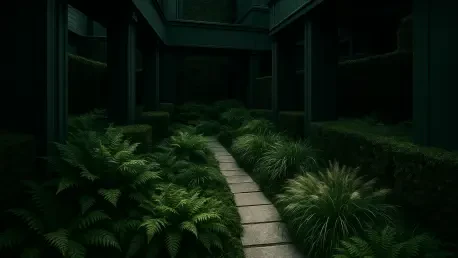
The versatility of the green-on-green trend allows it to thrive in various environments, from compact city courtyards to exposed rooftops where conditions can be particularly harsh. In urban settings, designers use layered woodland plants like ferns and maples to create secluded, cool reading nooks that feel like a forest escape, providing a much-needed connection to nature in the heart of the city. On rooftops, resilient grasses and drought-tolerant evergreens provide privacy and movement, softening the hard edges of the surrounding architecture and providing a buffer against wind and noise. These spaces often rely on a fusion of formal structure and naturalistic planting, using a structured grid of trees over a flowing, organic underplanting to create “green rooms” that feel both orderly and wild. This balance allows the garden to function as a series of intimate, connected spaces that celebrate the fundamental beauty of the plant world. By focusing on the resilience of the foliage, these high-altitude and compact designs remain vibrant and functional even in the most challenging urban conditions.
Realizing the Future of Sustainable Landscaping
Designers identified that the most successful monochromatic gardens were those that utilized organic mulching to retain moisture in dense foliage zones. By implementing varied pruning schedules, property owners maintained the intended architectural shapes of their evergreens without stressing the plants during peak growth periods. The integration of high-efficiency drip irrigation systems ensured that even the most competitive root systems thrived during periods of low rainfall without wasting resources. Experts suggested that analyzing the light patterns of a site before planting allowed for the strategic placement of silver-toned leaves to brighten dark corners effectively. Successful projects also incorporated permeable pathways that reduced runoff while complementing the cool, green palette of the surrounding flora. These practical steps turned speculative designs into thriving, low-maintenance realities that improved both property value and local biodiversity. Homeowners who focused on the health of the soil and the diversity of foliage shapes realized a garden that remained vibrant and structurally sound throughout the year. Ultimately, the move toward green-on-green design proved to be a sustainable solution for the challenges of modern urban living.