
For many prominent figures, the act of personally renovating a home provides a necessary creative outlet while serving as a private way to protect their domestic family life. This shift marks a significant departure from the era of ‘museum-living,’ where every square inch of a luxury mansion was dictated by an elite design firm. Today, celebrities are increasingly firing their decorators to reclaim their living spaces as extensions of their own identities. The trend is not merely about saving money; it is a profound rejection of the generic luxury that has saturated Hollywood for decades. High-profile individuals are finding that the cold, clinical precision of a professional decorator often strips a house of its soul, leaving behind a residence that feels more like a staged gallery than a home. By taking the creative reins, stars are ensuring that their environments reflect their unique narratives and personal histories. This movement toward self-curation signals a new era where the value of a home is measured by its intimacy.
Prioritizing Personality Over Professional Polish
The primary catalyst for this trend is a deep-seated craving for authenticity and “livability” that professional firms often fail to deliver. In contrast to the delicate, untouchable environments frequently created by high-end consultants, celebrity-led designs focus on spaces that mirror the inhabitant’s actual daily life. For example, Drew Barrymore’s New York residence has been described as “strikingly normal,” utilizing soft textures and bright, cheerful colors that directly reflect her public persona and maternal priorities. Similarly, Goldie Hawn has bypassed industry trends to create a home deeply rooted in her personal history and spiritual journey, blending Indian and Anglo-Indian aesthetics to create a space that feels earned rather than bought from a showroom floor. These spaces prioritize the comfort of a worn-in sofa or a collection of mismatched heirlooms over the stiff requirements of a modern design magazine, proving that luxury and practicality can coexist beautifully.
For some celebrities, this passion for design has evolved from a simple hobby into a serious professional calling. Lenny Kravitz serves as the prime example of the “professional DIYer,” having founded his own design firm to channel his creative energy into tangible living spaces. His projects, such as his 1920s Parisian mansion, function as living biographies that honor his family history while maintaining a high level of technical sophistication. By rejecting the “preciousness” of traditional high-end decor, these stars are proving that a home can be both world-class and deeply comfortable, designed specifically to withstand the realities of daily family life without fear of damage or aesthetic ruin. This approach emphasizes the idea that a home should grow and change alongside its inhabitants. The hands-on involvement of the owner ensures that every piece of furniture has a specific reason for existing within the space, rather than just filling a designer’s aesthetic quota.
Democratizing High-End Design Through Modern Tools
The methods these A-listers use to curate their spaces are surprisingly similar to those used by the general public, effectively demystifying the process of high-end renovation for their audiences. Diane Keaton famously relied almost exclusively on digital platforms like Pinterest to source inspiration for her home, documenting the entire journey to show that a clear vision is often more important than a massive payroll of experts. Others, such as Kate Bosworth, have embraced the “hunt” for the perfect piece, physically scouting regional antique fairs and markets like Round Top in Texas to find items with history and soul. This hands-on approach involves a level of physical labor and research that was previously outsourced to assistants or consultants. By engaging in the search themselves, these celebrities find a sense of satisfaction that a pre-packaged interior cannot provide. They are utilizing the same digital tools and local markets accessible to everyone.
This self-reliance often extends across multiple disciplines of a celebrity’s life, showing a notable correlation between stars who manage their own public images and those who design their own homes. Blake Lively, who is well-known for refusing to hire a fashion stylist for red-carpet events, applies that same fierce independence to her interior spaces. For these individuals, the act of decorating is not a chore to be outsourced to a third party but a vital creative outlet and a “hidden talent” that provides a sense of fulfillment and personal agency. It allows them to maintain control over how they are perceived in their most private moments. Furthermore, the process of selecting each textile and layout serves as a meditative break from the demands of the film industry. By removing the middleman, they ensure that their private sanctuary remains a true reflection of their tastes rather than a designer’s signature style. This autonomy is becoming a status symbol in its own right.
The New Standard of Functional Luxury
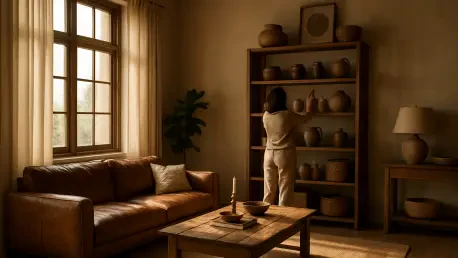
The result of this DIY movement is the rise of “functional luxury,” an aesthetic that favors organic materials, midcentury influences, and a layered look that evolves organically over time. These homes often feature unfinished wood, linen fabrics, and vintage heirlooms, creating an atmosphere that is high-end yet approachable and warm. By ignoring the rigid rules of traditional interior decoration, celebrities are creating spaces that feel “layered” and meaningful rather than static. This approach suggests that the most enviable homes in Hollywood are no longer those that follow a standard design template, but those that refuse to outsource the “soul” of the house. The use of natural textures and imperfect finishes allows the home to feel alive and responsive to its environment. This shift toward imperfection is a deliberate choice, signaling that true luxury lies in the ability to be comfortable and authentic. It rejects the idea that a home must be a pristine, untouchable stage.
Ultimately, the trend toward self-designed homes signaled a broader cultural shift in how luxury was perceived. It emphasized that a truly beautiful living space did not require a team of expensive gatekeepers, but rather the confidence to trust one’s own aesthetic instincts and personal history. By utilizing digital platforms and local markets, A-listers provided a blueprint for personal expression that was more relatable to the average person. Moving forward, homeowners should focus on curating spaces that prioritize their own comfort and memories over fleeting industry trends. Investing time in researching historical styles or visiting local artisans can provide a deeper connection to one’s environment than any catalog purchase. The success of these celebrity projects demonstrated that the most compelling interiors were those built from the heart, reflecting the unique journey of the people within. For anyone looking to renovate, the best approach is to start small and allow the home to grow.