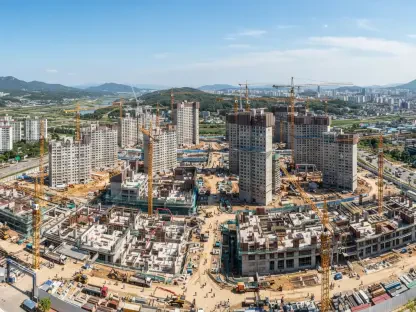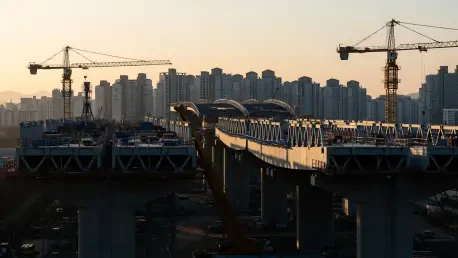

The current landscape of South Korea’s property and construction sectors reveals a striking paradox where aggregate growth figures often mask deep-seated structural vulnerabilities. According to the latest data from the Construction & Economy Research Institute of Korea, the industry is navigating a phase of limited recovery that remains precariously dependent on specific sub-sectors. While the national outlook for the second half of 2026 appears mathematically positive, the benefits of this expansion are not being distributed evenly across the national economy. Structural challenges, such as the persistent gap between urban and regional development, continue to hinder a broader and more sustainable economic rebound. This environment has forced stakeholders to reconsider traditional valuation models as they grapple with a market that is increasingly split between high-value infrastructure projects and a cooling residential landscape. The result is a complex mosaic of activity where statistical success does not always translate into local prosperity or industry-wide stability.
Public Infrastructure Stability Versus Private Sector Stagnation
The growth observed in the current construction market is predominantly fueled by the public sector and large-scale civil engineering projects. Domestic construction orders are projected to rise significantly in the coming months, primarily due to the government’s strategic decision to increase the budget for social overhead capital and the early execution of major public contracts. These initiatives provide a vital safety net for the industry, ensuring that large-scale contractors remain active even as private investment remains hesitant. This surge in public spending is aimed at modernizing transportation networks and reinforcing urban resilience, which in turn supports high-tier construction firms that possess the capacity for such massive undertakings. By front-loading these projects, the state has effectively created a buffer against the volatility of the global economy, though this support primarily benefits a narrow segment of the industry rather than the broader developer ecosystem that relies on private capital.
In stark contrast, the private sector is facing a notable contraction that is particularly visible within the non-residential segment. Private orders have declined as developers struggle to reconcile high project costs with a difficult investment climate that favors liquidity over long-term risk. This creates a perceived recovery that varies dramatically depending on the size and specialization of the firm; while major players involved in public infrastructure may thrive, small and medium-sized enterprises tied to private residential or commercial developments are struggling to maintain stable operations. The downturn in private non-residential construction, such as offices and retail spaces, reflects a broader shift in corporate demand and a tighter credit market. These smaller entities often lack the diversified portfolios needed to weather the stagnation, leading to a widening gap in profitability and survival rates between industry leaders and the local contractors who traditionally drive regional development.
Regional Imbalances and the Future of Housing Finance
The residential real estate market is currently experiencing extreme polarization, with a clear and widening gap emerging between the Seoul metropolitan area and the rest of the country. Home prices in the capital and its surrounding districts are expected to climb due to an enduring demand for prime locations and a persistent shortage of new housing supply in desirable neighborhoods. Meanwhile, regional markets outside the Greater Seoul area are witnessing only minimal price adjustments or continued stagnation, reflecting a recovery that is limited to a few specific high-value complexes rather than a general upward trend. This geographic disparity is driven by the concentration of high-paying jobs and superior infrastructure in the capital, which draws talent and capital away from provincial cities. Consequently, the national average for housing prices becomes an unreliable metric, as it obscures the localized crises occurring in areas where supply far exceeds demand and buyer interest is low.
Adding to the complexity is the unique jeonse system, where tenants provide a large lump-sum deposit to landlords instead of paying monthly rent. The costs associated with these unique leases have been rising at a rate that outpaces actual home sale prices in many districts. This trend is largely driven by a lack of new apartment completions and a notable shift in consumer behavior, as more individuals prioritize home ownership for personal residency rather than speculative investment. As these deposit requirements increase, they effectively create a pricing floor that prevents real estate values from dropping significantly, even when the broader economy faces strong headwinds. This dynamic places additional financial pressure on young families and first-time renters, who find themselves caught between rising deposit costs and limited inventory. The rising cost of the jeonse system acts as a double-edged sword, providing stability for owners while simultaneously increasing the barrier to entry for the general population.
To address these systemic risks, stakeholders prioritized the creation of more robust credit enhancement tools for regional developers and fostered public-private partnerships. The government accelerated the deregulation of land-use zones in non-metropolitan areas, which encouraged a more equitable distribution of residential projects across the peninsula. Financial institutions revised their project financing screenings to focus on long-term sustainability rather than immediate liquidity, which helped stabilize the market for small and medium-sized enterprises. This shift in strategy ensured that the implementation gap narrowed as more permits successfully transitioned into active construction sites. Moreover, the focus on diversifying the housing supply beyond the traditional high-rise model provided residents with a wider range of affordable options. By implementing these targeted interventions, the industry moved toward a more resilient and balanced economic model that addressed the core disparities identified during the early months of the year.