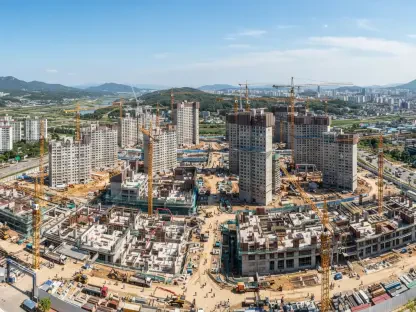

Detailed inspections of the built environment are revealing that approximately 25% of evaluated structures currently fall into categories labeled as either cautious use or entirely unsafe for occupancy. This sobering statistic emerges just weeks after the catastrophic twin seismic events that rattled northern Venezuela on June 24, forcing a rapid pivot from emergency rescue operations to a grueling long-term recovery phase. As the dust settles over the capital and surrounding coastal regions, the government and local institutions are grappling with the reality that the physical stability of the nation’s urban core has been fundamentally compromised. Professional teams are now scouring neighborhoods to determine which families can return to their homes and which must remain in temporary shelters indefinitely. The sheer scale of the damage requires a level of coordination rarely seen in the region, blending high-level engineering analysis with grassroots humanitarian logistics to stabilize the situation.
Mobilizing Technical Expertise for Building Inspections
A massive civic effort led by the Venezuelan College of Engineers has become the backbone of the recovery strategy, mobilizing thousands of professionals to address the crisis. Over 6,000 volunteer engineers have stepped forward to conduct rigorous structural audits across Caracas and other heavily impacted northern states, demonstrating a profound commitment to public safety during this period of uncertainty. So far, this technical task force has successfully inspected more than 8,000 structures, ranging from high-rise office buildings to residential complexes, with an ultimate target of reaching 12,000 comprehensive evaluations. This initiative operates through a sophisticated interinstitutional framework that integrates the high-level academic expertise of local universities with the practical experience of municipal fire departments and civil protection agencies. Such a collaborative spirit was essential for managing the overwhelming volume of citizen requests for help.
The primary goals of these intensive inspections were to verify the habitability of residential buildings and identify hidden structural defects that might lead to sudden future collapses. By providing clear, data-driven safety certifications, the technical teams aimed to mitigate public anxiety and prevent the widespread circulation of misinformation that often follows major natural disasters. This methodical approach ensured that limited reconstruction resources were not distributed arbitrarily based on political influence but were instead directed toward the areas with the most pressing structural needs as identified by rigorous professional standards. Moreover, the systematic collection of data allowed for a more nuanced understanding of how specific construction materials and architectural designs performed under seismic stress. This information remained vital for the long-term planning of the city, as it highlighted which specific building techniques offered the most protection to the residents.
Assessing Structural Safety and Habitability Trends
Early data emerging from the inspection process reveals a complex and deeply concerning landscape of urban damage across the affected zones. Approximately 70% of the buildings evaluated so far have been deemed habitable, indicating that a significant portion of the core infrastructure managed to withstand the tremors without immediate catastrophic failure. While this offers some relief to the populace, the remaining 30% poses a serious and multifaceted challenge for urban planners and government officials alike. Specifically, the data indicates that about a quarter of structures fall into the restricted use or entirely unsafe categories, requiring either substantial structural reinforcement or total evacuation to prevent further loss of life. These figures highlight the precarious nature of the current housing stock, particularly in areas where building age or poor maintenance had already weakened the integrity of the concrete and steel foundations before the event.
Engineers are currently looking closely at insidious forms of damage that are not immediately visible to the untrained eye or the average resident. These technical vulnerabilities include internal hairline fissures in support columns, significant foundation shifts, and weakened shear walls, particularly in older neighborhoods and informal housing sectors that lack modern reinforcement. These technical audits are essential for displaced families, as they provide the only official documentation needed to either return home safely or secure a place in long-term government shelters and subsidized housing programs. Without these certifications, thousands of citizens remain in a state of legal and physical limbo, unable to reclaim their lives or plan for a future elsewhere. The focus on microscopic and structural integrity represents a shift from the visual assessment of rubble to a forensic analysis of the built environment, ensuring that the next minor tremor does not lead to a collapse.
Quantifying the Human and Economic Toll
The human cost of the twin earthquakes has been devastating, with official reports confirming at least 5,546 fatalities and nearly 17,000 injuries across the northern corridor. Beyond the immediate and heartbreaking loss of life, the disaster has created a massive displacement crisis, leaving over 17,000 people without permanent housing or access to their previous livelihoods. While 190 buildings are confirmed to have collapsed entirely during the initial seismic waves, the ongoing technical inspections suggest that the number of structures requiring complete demolition or major architectural intervention will likely rise as more hidden damage is documented by the task force. This growing list of condemned properties represents a significant blow to the social fabric of the country, as neighborhoods that existed for generations are suddenly deemed uninhabitable. The psychological impact on survivors, who must now wait for government assistance in crowded shelters, adds another layer of complexity.
From an economic perspective, the path to recovery is exceptionally steep, with the World Bank estimating direct physical damages at roughly $19.6 billion for the impacted regions alone. This massive financial burden is exacerbated by Venezuela’s unique geopolitical challenges, including extremely limited access to international credit markets and the ongoing impact of existing sanctions that complicate the import of heavy machinery and construction materials. Experts suggest that without a massive infusion of international capital and highly efficient resource management, the reconstruction process could weigh down the national economy for at least the next decade. The government is currently exploring alternative financing models and public-private partnerships to bridge the funding gap, but the scale of the destruction necessitates a level of investment that far exceeds current domestic reserves. This fiscal reality means that recovery will be prioritized for essential infrastructure first.
Restoring Community Confidence and Future Resilience
Beyond the physical repairs and engineering reports, the visible presence of technical teams in the streets has played a vital role in stabilizing the social environment and restoring a sense of order. By offering expert-backed confirmations of building safety, these professionals have helped prevent secondary crises driven by rumor and panic, which often lead to unnecessary evacuations and civil unrest. This transparent process has also encouraged significant grassroots participation, with local residents learning how to monitor their own properties for specific signs of stress, such as new cracks or shifting foundations, effectively creating a real-time map of urban risk. This engagement empowers citizens to become active participants in their own safety rather than passive victims of the disaster. As trust in the engineering assessments grows, the community is slowly beginning to focus on the future, transitioning from a state of shock to one of active recovery for their neighborhoods.
This disaster served as a definitive wake-up call regarding the critical importance of implementing and enforcing modern seismic building codes throughout the region. It was observed that many of the structures that suffered the most extensive damage were not originally designed to handle the specific lateral stresses of a major earthquake, highlighting a gap in previous construction oversight. The data gathered during these 12,000 inspections was utilized to draft more stringent construction standards that will govern new projects from 2026 to 2030. To ensure future resilience, authorities prioritized the retrofitting of existing older buildings and invested in early warning systems that provided precious seconds of notification before a tremor struck. The establishment of a permanent national fund for seismic reinforcement was identified as a crucial next step in safeguarding the urban population. By learning from these failures, the nation began building a foundation for a safer and more durable society.