
The skyline of industrial America is undergoing a fundamental transformation as developers look beyond the massive server farms that have defined the landscape for years. While the digital revolution remains a potent force, the construction industry is now witnessing a subtle but significant broadening of its horizons. This diversification marks a transition where traditional commercial projects are regaining their footing after a period of intense volatility. By examining these shifts, one can understand how the sector is balancing the technological demands of today with the foundational needs of urban and suburban infrastructure.
This article explores the evolving dynamics of U.S. construction, addressing why certain sectors are stabilizing while others remain under pressure. It provides a detailed look at the symbiotic relationship between high-tech facilities and the electrical grid, alongside the fiscal realities of rising material costs. Readers can expect an analysis of how current economic pressures are reshaping building strategies throughout 2026.
Key Industry Trends and Shifts
How Is the Broader Construction Landscape Shifting Away From a Singular Focus?
For several years, data centers were the undisputed giants of the nonresidential sector, absorbing a disproportionate share of investment and labor. However, recent data suggests a recalibration is underway as shopping centers and office developments show signs of long-awaited stabilization. Although nonresidential spending has seen a modest contraction of about 2% compared to last year, this represents a marked improvement from the 4% decline observed in the previous annual cycle. This moderation indicates that the industry is successfully navigating a soft landing, moving toward a more balanced distribution of project types.
The return of traditional commercial activity is driven by a realization that digital and physical spaces must coexist to support modern consumer habits. Developers are no longer viewing retail or office spaces through a lens of obsolescence but are instead focusing on high-quality, specialized renovations that meet current market demands. This pivot ensures that while the digital boom continues, the physical infrastructure of communities does not fall into disrepair. This broadening of activity provides a necessary safety net for contractors who previously relied too heavily on a single niche.
Why Does the Surge in Digital Infrastructure Impact Secondary Markets?
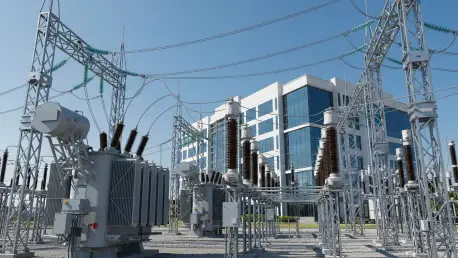
The insatiable demand for artificial intelligence and cloud computing has pushed data center spending up by more than 34% over the last twelve months. This exponential growth does not merely result in more concrete and steel on remote lots; it triggers a massive wave of investment in the nation’s electrical backbone. As these power-hungry facilities break ground, the requirement for advanced substations, transformers, and complex electrical components has reached unprecedented levels. This trend has fundamentally altered industrial production, forcing manufacturers to increase capacity utilization to keep up with the technical specifications of modern power grids.
Moreover, this surge in specialized infrastructure creates a ripple effect throughout the supply chain, often prioritizing data center needs over smaller commercial or residential projects. The complexity of these electrical systems requires a highly skilled workforce and specialized materials that are often in short supply. Consequently, the success of the tech sector is inextricably linked to the modernization of utility providers. This relationship ensures that even as the industry diversifies, the high-tech influence remains a primary driver of innovation and manufacturing growth across the country.
What Economic Hurdles Continue to Challenge the Pace of Recovery?
Despite the positive signs of stabilization in commercial spaces, the path to a full recovery is littered with significant cost-related obstacles. Economists have noted that the rising prices of essential resources, particularly fuel and metals, are expected to keep construction budgets under intense pressure throughout the coming months. The persistent fuel crisis is a double-edged sword; it increases the immediate cost of operating heavy machinery on-site and simultaneously drives up the price of transporting raw materials from factories to job locations. These compounding expenses often force developers to reconsider the feasibility of projects with thinner profit margins.
Furthermore, the volatility in metal markets complicates long-term planning for structural steel and wiring, which are vital for both traditional buildings and tech hubs. These inflationary pressures have a cooling effect on sectors like warehouse and multifamily construction, where the return on investment is more sensitive to initial capital outlays. While high-tech projects may have the financial backing to absorb these shocks, the broader market must contend with a landscape where every line item in a budget is subject to sudden upward revisions. Managing these fiscal risks has become just as important as the physical construction process itself.
Summary: Navigating a Complex Market
The current state of U.S. construction is defined by a delicate tension between record-breaking tech investments and a cautious revival in traditional real estate. While the data center market continues its aggressive expansion, the broader industry is finding strength in the stabilization of retail and office sectors. This diversification provides a more resilient foundation for the economy, even as specific categories like multifamily housing face a slower climb toward growth. The interdependence between new building projects and the electrical grid highlights the critical role of infrastructure in supporting modern technological advancements.
Ultimately, the industry is proving its ability to adapt to a high-cost environment through strategic planning and a focus on high-priority developments. The shift from a singular focus on data centers to a more varied project portfolio suggests a maturing market that is better equipped to handle sector-specific downturns. For stakeholders, the key to success lies in monitoring inflationary trends and supply chain health while capitalizing on the opportunities presented by the ongoing modernization of the national power grid and commercial landscape.
Final Considerations for the Future
Strategic resource management became the cornerstone of success as firms navigated the transition toward a more varied construction portfolio. Success in 2026 required a proactive approach to procurement, where securing materials well in advance helped mitigate the impact of fluctuating metal and fuel costs. This period highlighted the necessity for developers to integrate advanced energy solutions early in the design phase to ensure long-term viability within a strained utility landscape. By prioritizing flexibility in project selection, the industry successfully insulated itself against the risks of over-concentration in any single market segment.
Moving forward, the integration of resilient infrastructure remained a top priority for both public and private entities. Stakeholders considered how the ongoing demand for electrical capacity offered new avenues for partnership with local utilities and government agencies. As the industry continued to evolve, those who focused on sustainable growth and technological integration were best positioned to lead. Reflecting on these shifts allowed for a better understanding of how the built environment supported both the digital economy and the enduring needs of physical communities.