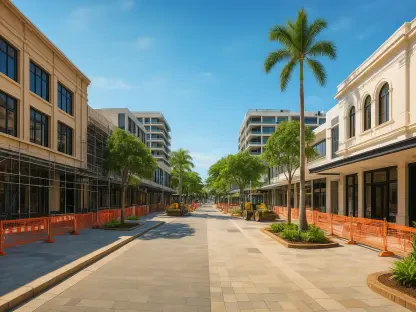

The current housing landscape is increasingly defined by the ability of local governments to implement proactive policies that encourage new residential development. This dynamic has propelled the American South into a dominant position, where the scale of construction activity significantly dwarfs growth in other regions. Unlike the traditional hubs of the East Coast, these southern boomtowns are leveraging flexible land-use regulations to meet the skyrocketing demand for modern housing. The migration patterns observed from 2026 to 2028 indicate a profound shift in where Americans choose to live and work, driven largely by the availability of affordable, high-quality residential options. Local officials in these areas have recognized that economic prosperity is inextricably linked to the supply of rooftops, leading to a surge in permit approvals. This administrative agility has created a cycle of growth that is fundamentally redefining the standard for 21st-century urban expansion through innovation and scalability.
The Regulatory Blueprint for Southern Urban Expansion
One of the primary catalysts for the southern construction boom is the streamlined permitting process that characterizes many municipalities in Texas, Florida, and the Carolinas. While developers in coastal California or the Northeast often face years of litigation and environmental reviews, their southern counterparts can move from ground-breaking to occupancy in a fraction of the time. This efficiency is achieved through a combination of digital permit tracking systems and more permissive zoning laws that allow for varied housing types within a single development. By reducing the bureaucratic hurdles that typically stifle supply, these states have managed to keep housing costs relatively stable despite a massive influx of new residents. Furthermore, the collaboration between private developers and local utility companies has ensured that new communities are equipped with modern amenities, including fiber-optic internet and sustainable energy grids, from the very beginning. This foresight in planning has made southern boomtowns particularly attractive to younger demographics.
Beyond simple deregulation, the strategic investment in transport and logistics infrastructure has played a critical role in sustaining this growth trajectory. Many southern states have prioritized the expansion of highway networks and public transit corridors to support sprawling suburban developments. This approach has allowed for the creation of satellite cities that offer the benefits of metropolitan proximity without the congestion of older urban centers. Consequently, manufacturing hubs and technology corridors are emerging in areas that were once considered rural, providing a stable employment base for new residents. The presence of these jobs creates a self-sustaining ecosystem where the demand for new construction remains consistently high. Investors have taken notice of this stability, pouring capital into commercial real estate and retail developments that service these growing populations. The integration of commercial and residential spaces through mixed-use zoning is also becoming more prevalent, offering a template for how other regions might handle rapid urbanization.
Strategic Investment in Sustainable Community Development
To maintain the current momentum, urban planners in the South began focusing on the integration of sustainable practices into the massive sprawl of new developments. They realized that the rapid expansion of residential zones required a corresponding commitment to environmental stewardship and resource management. By implementing water-saving technologies and encouraging the preservation of green belts, these boomtowns avoided the pitfalls of early twentieth-century urbanization. This transition towards a more conscious development model ensured that the high quality of life attracting new residents remained intact for the long term. Moreover, the focus on building more resilient infrastructure helped these regions withstand the increasing frequency of extreme weather events, which had historically plagued southern coastal areas. This shift in priorities represented a maturation of the southern housing market, moving from a focus on sheer volume to a focus on durable, high-quality community building that set a new national benchmark.
The success of the southern construction boom ultimately depended on the ability to balance rapid growth with the needs of existing populations and local ecosystems. Policymakers discovered that the best way to ensure continued prosperity was to invest heavily in educational infrastructure and workforce training, aligning the skills of the residents with the needs of the emerging tech and manufacturing sectors. They also prioritized the development of affordable housing initiatives within high-growth areas to prevent the displacement of essential workers, ensuring that these boomtowns remained diverse and vibrant. By taking these proactive steps, southern leaders created a blueprint for how modern metropolitan areas could grow without sacrificing equity or environmental health. The strategies implemented from 2026 to 2030 proved that a combination of market-driven development and thoughtful public oversight could produce exceptional results for everyone involved, solidifying the region’s role as the primary driver of American housing innovation.