
Ultra-short-throw laser projectors provide a cinematic experience by sitting inches from a wall to project massive, high-definition images without the clutter of traditional theater setups. This advancement serves as a microcosm for the broader transformation of domestic living, where technology has shifted from intrusive gadgets to seamless utilities that enhance daily life. In 2026, the concept of a smart home is no longer a collection of isolated novelties but a comprehensive ecosystem designed to prioritize efficiency, security, and personal well-being. This evolution is driven by the strategic integration of hardware and software, creating a residence that acts as a silent partner to its inhabitants. The primary objective of modern domestic tech is to minimize the cognitive load of home management, allowing residents to focus on their personal and professional pursuits while the environment handles the mundane. This logic applies to everything from climate control to security, where the focus has moved toward proactive detection and automated responses that require minimal human intervention.
The Infrastructure: Establishing Robust Connectivity
The efficacy of any contemporary smart home ecosystem is entirely dependent on its underlying digital backbone, which must be both resilient and high-capacity. Traditional single-router configurations have largely been replaced by sophisticated mesh Wi-Fi systems that eliminate dead zones across multi-story or sprawling properties. By utilizing multiple nodes that communicate on dedicated backhaul frequencies, these systems ensure that high-bandwidth activities, such as 8K streaming or virtual reality gaming, remain stable even as dozens of background IoT devices compete for signal. In the current landscape of 2026, stability is the most critical feature of connectivity, as even a temporary outage can disrupt essential functions like climate regulation or security monitoring. A robust network allows for seamless handoffs between access points, meaning a resident can move from the basement to the attic without experiencing a drop in connection quality or a spike in latency.
Beyond providing a signal for new devices, modern infrastructure also focuses on the longevity and integration of legacy equipment. Smart plugs and robotic actuators, such as mechanical “fingerbots,” have become essential tools for bridging the gap between high-tech ecosystems and non-smart appliances. By retrofitting a vintage espresso machine or a classic floor lamp with a smart outlet, homeowners can incorporate these items into automated schedules without needing to replace functioning hardware. This approach is not only cost-effective but also aligns with a growing emphasis on sustainability by extending the lifecycle of traditional appliances. These small but powerful intermediaries allow for the digitization of the physical world, enabling voice commands and remote triggers for devices that were originally designed long before the internet of things became a household standard. This integration ensures that the smart home remains an inclusive environment for all types of technology.
Safety Systems: Proactive Monitoring and Biometrics
Security in the current domestic environment has transitioned from reactive alarms to proactive, data-driven protection strategies. One of the most significant upgrades in terms of return on investment is the deployment of smart water-leak sensors placed in high-risk areas like laundry rooms and under sinks. These devices are designed to detect even a few drops of moisture, sending immediate alerts to a smartphone or even triggering a main water shut-off valve if a major burst is detected. This prevents the catastrophic property damage that often results from small leaks going unnoticed for days. Similarly, modern life-safety devices have moved toward an interconnected model. In 2026, smoke and carbon monoxide detectors function as a unified network; if an alarm is triggered in the garage, the devices in the bedrooms provide an audible warning with specific location data. This ensures that every second is utilized effectively during an emergency, regardless of where the threat originates.
Access control has also undergone a radical shift toward biometric reliability and decentralized surveillance. Fingerprint smart locks have become the standard for modern entryways, offering a balance of high-level security and extreme convenience by eliminating the need for physical keys or complex passcodes. These locks often integrate with broader security systems, allowing for the generation of temporary, time-bound access codes for guests or service personnel that expire automatically. On the exterior, high-resolution video doorbells now prioritize local storage over cloud-based subscriptions, reflecting a broader cultural shift toward data privacy and ownership. By storing footage on local drives or encrypted network-attached storage, homeowners maintain full control over their visual data while benefiting from advanced features like AI-driven facial recognition and parcel detection. These systems provide a comprehensive view of the home’s perimeter without the recurring costs or privacy vulnerabilities associated with external server dependence.
Wellness Integration: Tracking Health and Environment
The contemporary smart home actively contributes to the physical and mental health of its occupants through continuous, non-invasive monitoring. Smart body composition scales represent a significant leap forward from traditional weight-tracking tools, as they provide a detailed breakdown of muscle mass, bone density, and hydration levels. These metrics are automatically synced to health applications, allowing for a long-term view of physiological trends that is much more useful than a single daily weight reading. This data-driven approach to wellness empowers residents to make informed decisions about their fitness and nutrition based on actual bodily changes. For those with pets, technology has extended these health benefits to animals through the use of automated, filtered water fountains. These systems encourage hydration by providing moving water and alert the owner if consumption patterns change, which can be an early indicator of health issues in domestic animals.
Environmental optimization is another key pillar of the health-conscious home, focusing on air quality and nutritional autonomy. Smart tower fans and heaters are now equipped with advanced filtration systems that monitor particulate matter in real-time, adjusting their intensity to ensure the indoor atmosphere remains clean and comfortable. These units can be programmed to pre-condition a room based on the resident’s schedule, ensuring the environment is at an optimal temperature before they even enter the space. Furthermore, the rise of countertop hydroponic gardens has brought agricultural technology into the kitchen. These automated systems manage light cycles and nutrient delivery with precision, allowing for the year-round cultivation of fresh herbs and leafy greens indoors. This not only reduces the carbon footprint associated with grocery store produce but also ensures that the residents have immediate access to nutrient-dense food regardless of the external season or climate conditions.
Lighting and Shading: Orchestrating the Interior Climate
Lighting has evolved into a sophisticated tool for managing both the aesthetic of a space and the biological rhythms of its inhabitants. Color-changing LED bulbs and light strips are now standard, providing the ability to shift from high-energy “cool white” for focused work to warm, amber tones that prepare the body for sleep in the evening. This alignment with circadian rhythms has been shown to improve sleep quality and daily productivity significantly. Beyond these health benefits, smart lighting serves as a versatile security feature; by mimicking occupancy patterns while a family is away, these systems can deter potential intruders more effectively than a simple timer. The ability to control every light source in the house via a single interface or voice command allows for the creation of “scenes” that instantly transform the mood of a room, whether for a quiet dinner or an immersive movie night.
The management of natural light and privacy is handled by motorized window treatments that respond to external conditions and internal preferences. Smart roller blinds and curtain openers can be programmed to open with the sunrise, acting as a natural alarm clock that gently wakes residents with sunlight. In 2026, these systems are often integrated with the home’s heating and cooling logic; on a hot summer day, the blinds may close automatically to block solar gain and reduce the load on the air conditioning system. For nighttime safety, motion-activated LED strips installed along staircases and hallways provide a low-intensity glow that guides residents safely through the house without the need for jarring overhead lights. This combination of automated natural light management and responsive artificial lighting creates an environment that is both visually stunning and highly functional, adapting in real-time to the movement and needs of the occupants.
Utility and Entertainment: Streamlining Daily Routines
Domestic efficiency is most visible in the kitchen and living areas, where smart technology has simplified complex tasks and elevated entertainment standards. Wi-Fi-enabled coffee makers allow for the precise timing of morning brews, which can be initiated from a smartphone or triggered by the first movement detected in the bedroom. Similarly, the modern smart air fryer has revolutionized meal preparation by incorporating guided cooking features and remote monitoring. Many of these appliances now allow users to scan food packaging to download the optimal cooking parameters directly to the machine, ensuring perfect results every time. These tools remove the guesswork and manual labor from food preparation, allowing busy residents to enjoy high-quality meals with minimal time investment. The integration of recipe apps and inventory tracking further streamlines the culinary experience, making the kitchen a more organized and less stressful environment.
In the realm of home entertainment, the focus has shifted toward high-performance devices that maintain a minimal footprint. As noted earlier, ultra-short-throw laser projectors have replaced the need for massive, static television sets or complex ceiling-mounted setups. These projectors offer a flexible theater experience that can be hidden when not in use, preserving the room’s aesthetic while providing a massive canvas for movies and gaming. This versatility extends to other household fixtures, such as multi-functional ceiling fans that integrate high-quality Bluetooth speakers and dimmable lighting into a single unit. These hybrid devices reduce ceiling clutter and provide a centralized point of control for the room’s environment and audio. By combining multiple utilities into one fixture, the smart home achieves a higher level of functionality without the visual noise of multiple standalone gadgets, leading to a cleaner and more intentional living space.
Robotic Maintenance: Automating Manual Labor
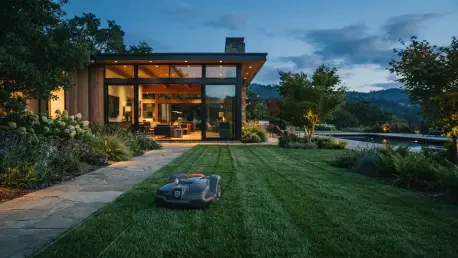
The automation of outdoor and indoor maintenance is perhaps the most tangible way that smart homes return time to their owners. Autonomous robot lawn mowers have become a staple for property upkeep, utilizing satellite-based navigation and vision systems to manicured turf with surgical precision. Unlike traditional gas mowers, these units operate quietly and can be scheduled to run during the night or while the family is away, ensuring a perfect lawn without any human effort. These mowers are designed to navigate complex landscaping and return to their charging stations automatically, making them a truly set-and-forget solution for one of the most tedious weekend chores. The shift toward these autonomous tools represents a broader move toward “frictionless” home ownership, where the physical demands of maintaining a property are delegated to reliable, intelligent machinery.
Indoor maintenance has followed a similar path with the introduction of specialized robotics for difficult tasks like window cleaning. Window-cleaning robots use powerful vacuum suction to grip vertical glass surfaces, mapping an efficient path to remove smudges and dirt without the need for ladders or manual labor. These devices are particularly useful for high-reach windows or large glass facades that are typically difficult to clean safely. By delegating these repetitive and often dangerous tasks to smart devices, homeowners can focus their energy on more creative or relaxing pursuits. The cumulative impact of these robotic systems is a significant reduction in the total labor required to keep a home in peak condition. As these technologies continue to mature from 2026 to 2028, the expectation of a self-maintaining home has become a realistic goal for many, transforming the domestic experience from a source of work into a place of genuine leisure and restoration.
Strategic Implementation: The Evolution of Modern Living
The successful adoption of these technologies was achieved through a shift in perspective, where homeowners began viewing their living spaces as integrated systems rather than collections of disparate tools. The move toward the Matter protocol and Thread networking standards was a critical turning point, as it allowed devices from different manufacturers to communicate with unprecedented reliability. Those who invested in a unified digital backbone found that their homes became significantly more responsive to their daily routines. The transition was marked by a preference for local processing and privacy-centric designs, which helped build the trust necessary for wide-scale implementation. As these systems matured, the focus shifted from the novelty of control to the tangible utility of automation, where the house itself anticipated the needs of its residents without being asked.
Moving forward, the primary recommendation for those looking to further optimize their domestic environment is to prioritize interoperability and long-term lifecycle planning. The most effective smart homes were built on the foundation of stability, starting with a robust mesh network and expanding into high-ROI areas like proactive security and autonomous maintenance. Homeowners who focused on devices with local storage and biometric access realized the highest levels of security and convenience. The historical progress from 2026 to the present has shown that the most valuable upgrades were those that vanished into the background, providing support without requiring constant attention. For a residence to truly serve its occupants, it must remain flexible and scalable, allowing for the integration of future innovations while maintaining a simple, intuitive interface for the humans who live within its walls.