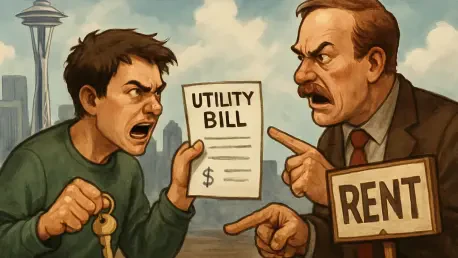

The sky-high cost of living in the Pacific Northwest has recently found a new catalyst for friction as Seattle residents find themselves embroiled in a bitter legislative and social tug-of-war regarding the Ratio Utility Billing System. This controversial method, frequently abbreviated as RUBS, shifts the burden of utility costs from property owners to residents through a mathematical formula rather than direct meter readings. In an era where every dollar counts, the lack of transparency associated with these calculated bills has turned a once-niche property management practice into a primary source of legal and financial distress for thousands of renters. The debate touches on fundamental questions about consumer protection, the environmental responsibility of landlords, and the overarching viability of the Seattle housing market as it navigates the complexities of modern urban growth and economic pressure. As the city attempts to balance the needs of a growing population with the rights of its current inhabitants, the resolution of this conflict could very well set a standard for urban utility management across the United States.
The Mechanics of the Dispute
Tenant Grievances: A Cycle of Unpredictability
For a significant number of renters in the Emerald City, the implementation of RUBS represents a shift toward predatory billing practices that create deep financial instability within households that are already stretched thin. Monthly utility costs under this system can fluctuate wildly without any discernible change in personal consumption habits, sometimes doubling or tripling without any prior warning or explanation. This inherent unpredictability makes monthly budgeting nearly impossible for low-income residents who rely on stable expenses to maintain their housing security. Activists argue that these volatile charges function as a form of shadow rent, allowing property owners to effectively increase the total cost of occupancy while bypassing the official notice periods required for standard rent hikes. The lack of clear, building-specific methodologies leaves tenants feeling powerless, as they are often presented with complex invoices from third-party billing companies that are nearly impossible for the average person to audit or contest.
Beyond the immediate financial strain, residents contend that the ratio billing structure fundamentally removes any incentive for property owners to maintain or improve a building’s aging infrastructure. When a landlord can simply pass the entire cost of a massive water leak, an inefficient boiler, or poorly insulated pipes directly to the tenants, there remains very little financial motivation to invest in necessary repairs or sustainable green upgrades. This lack of accountability reached a critical point in several local apartment complexes where tenants faced sudden service shut-off notices due to staggering unpaid building balances, despite the individuals having paid their respective shares to management. This disconnect between payment and service delivery highlights a dangerous gap in the current regulatory framework, where tenants are held responsible for the collective consumption of a building they do not own and for mechanical systems they have no authority to repair or replace, creating a cycle of frustration.
The Communal Burden: Fairness in Consumption
The grassroots movement known as “Seattle Ban RUBS” has gathered significant momentum by highlighting how communal billing structures penalize those who prioritize resource conservation. Under the current mathematical formulas, which typically rely on square footage and the number of occupants, a tenant who diligently limits their water and energy usage often ends up subsidizing the higher consumption of a neighbor who may be less conscious of their environmental footprint. This socialization of utility costs undermines city-wide efforts to promote sustainability, as individual conservation efforts do not result in direct financial savings for the person making the sacrifice. The movement argues that Seattle should follow the precedent set by other major metropolitan areas that have already moved to prohibit or strictly limit these billing methods in favor of individual submetering. By allowing RUBS to persist, the city arguably permits a system where fairness is sacrificed for the administrative convenience of property managers.
Furthermore, the complexity of these billing formulas often masks the true cost of utilities, leading to a sense of distrust between the people living in the buildings and those managing them. Many renters have reported that even when they decrease their personal usage, their bills continue to climb due to factors entirely outside their control, such as a neighbor moving in or a common area fixture being left on. This lack of agency over one’s own financial obligations is a primary driver of the current unrest, sparking calls for more rigorous oversight of third-party billing agencies that handle the calculations. Without a direct link between an individual’s actions and their monthly expenses, the system fails to provide the necessary feedback loop that encourages responsible resource management. The result is a contentious environment where every drop of water used by a neighbor is viewed through a lens of potential financial impact, eroding the sense of community that is essential for healthy, high-density urban living.
Economic Realities for Property Owners
Infrastructure Hurdles: The Cost of Retrofitting
Property owners and housing developers provide a starkly different perspective, viewing the current debate through a lens of economic survival and logistical feasibility in a challenging market. They argue that many of Seattle’s older apartment complexes were never designed with the internal plumbing or electrical configurations required for individual submeters. Retrofitting these legacy structures is not merely a matter of installing a new gauge; it often involves invasive construction, tearing out walls, and rerouting entire pipe networks while the units remain occupied. The cost of such an undertaking can easily reach hundreds of thousands of dollars per building, a capital expenditure that many smaller property owners claim they simply cannot afford without significant financial assistance. In their view, RUBS serves as a necessary compromise that allows for the recovery of legitimate operating costs in buildings where individual metering is technically or financially out of reach.
Industry advocates emphasize that forcing a rapid transition away from ratio billing could have unintended consequences for the very tenants the movement seeks to protect. If landlords are prohibited from using RUBS and cannot afford the massive costs of submetering, they will likely be forced to fold anticipated utility costs into the base rent as a flat fee. However, because utility rates are highly volatile and frequently set by municipal providers, landlords would need to set these flat fees high enough to cover the maximum possible usage to avoid operating at a loss. This would effectively result in higher overall housing costs across the board, further tightening the Seattle rental market. Property management associations argue that the current system, while imperfect, provides a mechanism to track real-world costs and distribute them as accurately as possible given the constraints of older building designs, preventing the need for even more aggressive rent increases.
Investment Viability: Housing Supply Risks
The real estate industry also warns that a total ban on RUBS could significantly stifle the development of new housing units at a time when Seattle is already struggling with a massive supply shortage. With rising interest rates and increasing construction costs already slowing down the pace of apartment permitting, developers argue that they need flexible and predictable billing methods to remain financially viable. They contend that if they are unable to accurately recoup utility costs through a transparent system, the increased financial risk will drive away the capital investment necessary for new projects. This perspective frames the utility billing debate as a macro-economic issue where overly restrictive regulations could lead to a further decrease in housing starts, ultimately worsening the city’s affordability crisis by limiting the number of available units. Maintaining a balance between consumer protection and investor confidence is seen as vital for long-term stability.
Moreover, property owners point out that the move toward unbundling utilities from rent is a standard practice across various industries intended to promote a clearer understanding of what a resident is actually paying for. By separating the cost of the living space from the cost of the resources consumed, landlords believe they are providing a more accurate reflection of the expenses involved in maintaining a modern urban residence. They suggest that the focus of city officials should be on refining the transparency and accuracy of the RUBS formulas rather than pursuing an outright prohibition. Improving the dispute resolution process and mandating clearer disclosures could address many of the tenants’ concerns without destabilizing the financial models that support the city’s housing infrastructure. For many developers, the ability to pass through utility costs is a fundamental component of their operational strategy, ensuring they can continue to provide managed housing in a high-cost environment.
Legal Shifts and Regulatory Gaps
Regulatory Workarounds: Rent Caps and Utility Shifts
The conflict has been further complicated by the recent enactment of rent cap laws in Washington, which were designed to limit the impact of aggressive annual price increases on residents. Because flat utility fees included in a lease are often legally classified as part of the rent, some advocate groups believe that many landlords are strategically switching to RUBS specifically to circumvent these legal protections. By unbundling utilities and moving them to a third-party billing service, property owners can effectively increase the total monthly payout required from a tenant without technically violating the ten percent limit on base rent hikes. This perceived loophole has fueled accusations that RUBS is being used as a tactical tool to maintain high profit margins while appearing to comply with state-mandated affordability measures. This shift has created a sense of urgency among regulators to close what many see as a glaring gap in tenant protections.
This legislative interaction has created a complex legal environment where the definition of “rent” is constantly being challenged in the courts and by municipal boards. Tenant advocates argue that any mandatory payment required to maintain housing should be subject to the same caps and oversight as the base lease amount. In contrast, property owners maintain that utilities are a variable commodity, similar to electricity or internet service, and should not be lumped in with the fixed cost of the real estate itself. The tension between these two interpretations has led to a fragmented regulatory landscape where different buildings may operate under vastly different rules depending on how their leases are structured. This inconsistency often leaves renters confused about their rights and property managers unsure of their long-term compliance obligations, highlighting the need for a more unified and clear legislative approach that addresses utility billing as a core component of housing affordability.
Judicial Precedents: Accountability and Enforcement
Legal challenges regarding billing accuracy are already making their way through the city’s regulatory channels, providing a glimpse into the potential future of utility oversight. A landmark ruling by the city’s hearing examiner recently focused on a case where a management company was found to be using “industry standard” estimates rather than transparent, building-specific formulas to calculate RUBS charges. This practice was deemed a direct violation of city requirements that mandate landlords disclose their exact billing methodologies to residents. While this was celebrated as a victory for tenant rights, many residents claim that the actual enforcement of such rulings remains weak and inconsistent across the city. Without a proactive body to audit these formulas on a regular basis, many landlords continue to use convoluted billing methods that are nearly impossible for the average person to verify, leading to a persistent sense of injustice among the rental population.
The difficulty in enforcing existing transparency laws is often cited as a reason for the growing call for a complete ban on the system. Critics argue that as long as RUBS is permitted, there will always be a temptation for less scrupulous operators to obscure the true cost of utilities or to pad their revenue through administrative fees. The lack of a centralized, user-friendly dispute resolution process means that most tenants have neither the time nor the resources to challenge an incorrect bill, effectively allowing errors or overcharges to go uncorrected. This judicial friction has emphasized the need for more robust consumer protection measures that go beyond simple disclosure. There is a growing consensus among legal experts that if the city chooses to allow ratio billing to continue, it must implement a rigorous certification process for third-party billing agencies and establish clear penalties for those who fail to provide verifiable data to their residents.
The Path Forward for Seattle Housing
Strategic Reforms: Moving Toward Clearer Standards
The Seattle Renters’ Commission has stepped into the fray by proposing that all utilities not tracked by individual submeters should be mandatory inclusions in the base rent price. This proposal aims to ensure that the price a tenant sees when signing a lease is a true reflection of what they will actually pay each month, providing the predictability that modern urban dwellers desperately need. By forcing the integration of these costs, the commission hopes to shift the burden of resource efficiency back onto the property owners, who are the only ones with the authority to install low-flow fixtures or upgrade HVAC systems. This approach would essentially eliminate the “hidden fees” that have become a hallmark of the RUBS debate and bring a level of honesty back to the rental market. However, the proposal remains a point of high tension as the city council weighs the potential for increased base rents against the benefits of consumer transparency and predictable living costs.
While a total prohibition on ratio billing remains a deeply polarizing topic, a small but significant area of consensus is emerging regarding the absolute necessity for better transparency and communication. Both tenant unions and property management associations have shown a tentative interest in “surgical” reforms that would mandate clear, standardized disclosure forms for all utility charges. Such a framework would require landlords to provide a plain-language explanation of their formulas and a history of the building’s total utility costs, allowing prospective tenants to make more informed decisions before moving in. Furthermore, establishing a streamlined, city-managed portal for utility disputes could provide a neutral ground for resolving conflicts without the need for expensive legal representation. These potential middle-ground solutions represent a path toward de-escalating the current conflict while still addressing the core issues of fairness and financial stability that have defined the debate.
Future Frameworks: Actionable Steps for Resolution
The evolution of Seattle’s utility billing landscape demonstrated that the status quo was no longer sustainable for a city committed to housing equity and environmental progress. Moving forward, the city council looked toward a multi-tiered strategy that combined immediate transparency mandates with long-term infrastructure incentives. This approach involved creating a grant program to help owners of older buildings transition to individual submetering, thereby removing the primary financial barrier to fair billing. Additionally, the city implemented a strict certification process for any third-party billing company operating within the municipal limits, ensuring that all RUBS formulas met rigorous standards for accuracy and verifiable data. These steps were designed to restore trust between residents and managers while maintaining the economic viability of the local housing stock.
By addressing the root causes of the conflict—unpredictability for tenants and high retrofitting costs for owners—the city began to foster a more stable rental environment. The implementation of standardized billing disclosures allowed renters to anticipate their total housing costs with greater precision, while the focus on submetering provided a clear path toward individual accountability and resource conservation. Ultimately, the resolution of the RUBS controversy in Seattle served as a valuable case study for other urban centers grappling with similar issues of density and affordability. The focus shifted from a zero-sum battle to a collaborative effort to modernize the city’s approach to essential services, ensuring that the burden of urban growth was shared fairly across all sectors of the community. This transition was essential for maintaining the city’s reputation as a leader in both social justice and innovative urban management.