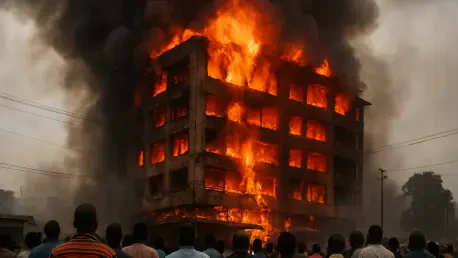

The catastrophic fire that engulfed the GOICO Plaza in the Musanze District on October 10 serves as a grim milestone in Rwanda’s urban development history. A critical failure of internal fire safety systems meant that hose reels and extinguishers remained useless as the flames engulfed the textile and plastic inventories. While the absence of fatalities remains a significant relief, the sheer scale of the economic devastation has exposed systemic vulnerabilities in how commercial hubs are managed, equipped, and regulated across the country. The blaze, which consumed goods with a preliminary valuation of approximately Rwf30 billion, has transcended its status as a local tragedy to become a focal point of national debate regarding fire safety, emergency preparedness, and the enforcement of building codes. It highlights a disconnect between rapid architectural growth and the underlying safety infrastructure required to sustain it. In the aftermath, the conversation has shifted from mere sympathy for the victims toward a rigorous critique of the technical and logistical failures that allowed such a massive loss to occur in one of the nation’s primary secondary cities. The intensity of the blaze was fueled by a combination of architectural choices and the nature of the goods stored within the facility. Technical experts noted that the widespread use of flammable materials for partitioning shops allowed the flames to leap between stalls with minimal resistance.
Infrastructure Failures and Resource Gaps
Technical Deficiencies: Equipment and Maintenance Failure
A primary grievance among survivors and technical investigators was the functional failure of the building’s internal suppression systems. Despite the presence of fire extinguishers and hose reels on multiple floors, many traders claimed the equipment was either expired or entirely non-functional at the time of the crisis. Witnesses reported that when they attempted to use the extinguishers to quench the initial sparks, the canisters failed to discharge, or the pressure was insufficient to reach the source of the fire. Containment efforts were further crippled by a lack of pressurized water; the building’s internal reservoirs were reportedly empty or inaccessible because the pumps required for operation were not engaged. This failure meant that the first line of defense, which is critical in the first few minutes of an ignition, was completely non-existent, leaving the structure at the mercy of the accelerating heat and combustible stock.
The disaster also highlighted a critical lack of on-site technical expertise during emergencies, which significantly delayed the activation of whatever safety measures were available. Witnesses noted that the absence of key staff, such as electricians and plumbing technicians who held the keys to master switches and pump rooms, meant that critical systems remained offline. Without professional intervention to isolate the building’s electrical circuits, the risk of secondary explosions and electrocution prevented traders from effectively using buckets of water in the early stages. Experts now suggest that large commercial complexes must employ qualified safety technicians around the clock to ensure that early-suppression systems are activated the moment smoke is detected. The delay in accessing master controls essentially guaranteed that the fire would spread from the fifth floor to the lower levels, as there was no one present with the authority or technical knowledge to manage the building’s mechanical response during the critical “golden window” of fire containment.
Response Logistics: Decentralization and Resource Allocation
The Musanze incident has brought the limitations of regional emergency services into sharp focus, revealing a disparity between urban expansion and the availability of rescue equipment. During the initial stages of the blaze, it was reported that only one firefighting vehicle was available to service a major commercial hub in a rapidly growing district. This single unit was quickly overwhelmed by the heat and volume of the fire, which originated in an area densely packed with textiles and plastics. The delay in receiving reinforcements from neighboring regions allowed the fire to transition from a containable incident into a total loss. This has led to urgent calls for the decentralization of the Fire and Rescue Department, with stakeholders demanding that every district and major urban sector be equipped with dedicated trucks and high-capacity hydrants. The current centralized model, which often relies on assets stationed in major hubs, is increasingly viewed as insufficient for the safety of secondary cities.
Furthermore, the logistical challenge of water supply during the emergency highlighted a lack of integrated urban planning. Firefighters were forced to transport water from distant sources because the local infrastructure did not provide sufficient high-pressure hydrants near the commercial center. This “shuttling” of water created significant gaps in the firefighting effort, allowing the fire to regain strength every time a truck had to leave the scene to refill. Technical analysts argue that the modernization of cities must include the installation of high-capacity water mains specifically designated for emergency services. Improving response logistics is not just about purchasing more vehicles; it involves a comprehensive upgrade of the municipal water grid and the strategic placement of assets to ensure that no major commercial structure is more than a few minutes away from a fully equipped fire station. Without these systemic upgrades, the rapid construction of high-rise buildings in regional districts remains a high-risk endeavor.
Regulatory Enforcement and Economic Resilience
Oversight Frameworks: Bridging the Inspection and Compliance Gaps
Rwanda maintains a robust framework of safety regulations, but the GOICO Plaza fire suggests a significant disconnect between the law and its practical application on the ground. While periodic inspections are mandated by the Prime Minister’s instructions, the state of the plaza’s equipment indicates that these checks are often treated as mere formalities rather than rigorous safety audits. There is a growing consensus that occupation permits for commercial buildings should be issued for shorter, conditional periods, making their renewal strictly contingent on the verified functionality of fire pumps, smoke detectors, and backup power systems. Regulatory bodies must move toward a model of unannounced inspections to ensure that safety standards are maintained year-round, rather than only when an official visit is scheduled. This shift would hold building owners accountable for the continuous maintenance of life-saving equipment, rather than allowing them to prioritize aesthetic upgrades or space maximization over safety.
Beyond the hardware, authorities are emphasizing the role of daily management practices and “poor housekeeping” as primary contributors to urban disasters. Police officials and safety experts pointed out that the haphazard arrangement of goods, which often blocked emergency exits and narrowed corridors, turned the building into a labyrinth during the evacuation. Hazardous activities, such as unmonitored welding or the use of substandard electrical extensions to power multiple kiosks, remain leading causes of fires in crowded markets. The Rwanda Housing Authority has echoed this sentiment, calling for stricter oversight of the internal modifications made by building owners who frequently divide large spaces into tiny, poorly ventilated stands. To address these human factors, the regulatory framework must expand to include the certification of building managers, ensuring they possess the training necessary to enforce safety protocols among hundreds of individual tenants.
The Insurance Paradox: Addressing the Protection Gap
The financial aftermath of the Musanze fire has revealed a profound “insurance gap” that threatens the long-term stability of the merchant class. Most traders operating within the plaza mistakenly believed that the building’s overall insurance policy covered their personal stock and furniture. In reality, these policies typically only protect the physical structure and the owner’s liabilities, leaving the individual assets of tenants entirely unprotected. This realization has left hundreds of small-scale retailers in a state of financial ruin, as they have no mechanism to recoup the billions of francs lost in the blaze. This situation has prompted calls for the Private Sector Federation to collaborate with insurers to create more accessible “micro-insurance” products. These products would be specifically designed for small traders, offering affordable premiums that cover inventory and business interruption, providing a vital safety net in a sector where one accident can erase decades of hard-earned capital.
Furthermore, there is an urgent need to improve financial and insurance literacy among the business community to prevent such widespread economic collapse in the future. Many entrepreneurs view insurance as an unnecessary expense rather than a fundamental component of business continuity planning. To bridge this gap, government agencies and insurance associations must engage in extensive outreach programs, explaining the critical distinction between property insurance and asset protection. Some experts have even proposed making a basic level of tenant insurance a mandatory requirement for signing a commercial lease in high-density plazas. By integrating insurance into the standard operating procedures of the private sector, Rwanda can ensure that the economy remains resilient against localized disasters. Protecting the individual livelihoods of traders is just as important as protecting the physical skyline, as the recovery of a city depends on the ability of its merchants to rebuild and resume operations quickly after a crisis.
Strategic Recommendations for Urban Safety
Material Standards: Strengthening Future Safety Protocols
To prevent a recurrence of the Musanze disaster, the national strategy must shift from passive safety measures to the implementation of active, redundant systems. One of the most critical engineering shifts required is the phasing out of highly combustible partitioning materials, such as triplex boards, which acted as an accelerant in the GOICO Plaza fire. These boards, while cheap and easy to install, provide no fire rating and allow flames to spread horizontally with alarming speed. Future building codes should mandate the use of fire-resistant gypsum boards or masonry for all internal partitions in commercial markets. Additionally, the role of elevator shafts and service ducts as conduits for fire must be addressed through the installation of automatic fire dampers and smoke curtains. These structural interventions ensure that even if a fire starts in a single shop, it remains localized for a longer period, providing emergency services with the time needed to intervene effectively.
Another essential infrastructure requirement is the installation of dual-powered water systems in all high-rise and high-density buildings. The GOICO incident demonstrated that relying solely on the electrical grid is a fatal flaw, as power is often cut—either intentionally or due to short circuits—during a fire, rendering electric water pumps useless. Modern safety protocols should require a secondary, diesel-powered pump that can maintain high water pressure in the hose reels and sprinkler systems regardless of the building’s electrical status. Furthermore, the integration of smart smoke detection systems that are linked directly to the nearest fire station could significantly reduce response times. By automating the alert process, the human error involved in reporting a fire can be bypassed, ensuring that professional responders are dispatched the moment sensors detect a deviation in air quality. These engineering standards represent a necessary investment in the safety and longevity of Rwanda’s urban landscape.
Cultural Shifts: Fostering Public Awareness and Readiness
Ultimately, fire safety must be treated as a collective responsibility rather than a bureaucratic requirement or a burden on building owners. The disaster in Musanze demonstrated that the most sophisticated equipment is only effective if the people using the building are trained and prepared for an emergency. Mandatory fire drills and basic suppression training for all commercial tenants should become non-negotiable aspects of doing business in large complexes. When every merchant knows how to operate an extinguisher and understands the evacuation route, the likelihood of a small spark turning into a catastrophic blaze is significantly reduced. This cultural shift requires a collaborative effort between the public and private sectors to prioritize safety over the convenience of overcrowding or the temporary savings of skipping maintenance. Building owners realized that the modest cost of maintaining diesel generators and water reserves was negligible compared to the total destruction of their capital investments.
The lessons from the Musanze market blaze provided a clear roadmap for the necessary reforms in urban management and emergency preparedness. Authorities finalized new protocols that mandated quarterly functionality tests for all high-rise suppression systems, ensuring that equipment was always ready for immediate use. Local leaders and building managers moved toward a model of active oversight, where safety was integrated into the daily operations of commercial hubs rather than being an afterthought. The private sector also shifted toward comprehensive asset protection, as the introduction of tailored micro-insurance products helped bridge the financial gap for small-scale traders. These collective actions transformed a moment of profound crisis into a catalyst for national progress, paving the way for a more resilient urban environment. By addressing structural vulnerabilities and fostering a culture of vigilance, Rwanda established a safer foundation for its continued economic growth and the protection of its citizens’ livelihoods.