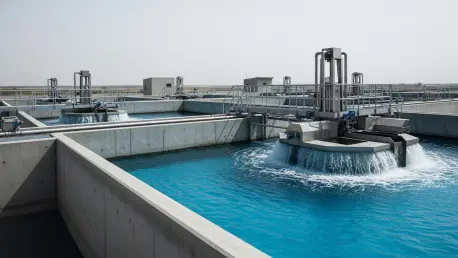

The task of modernizing essential infrastructure requires a delicate balance between respecting the legacy of existing structures and implementing cutting-edge technology. In Lawrence, Kansas, the recent completion of the Kansas River Wastewater Treatment Plant modernization serves as a benchmark for how aging facilities can be brought into the 21st century. This $74.3 million effort was far more than a simple renovation; it was a complex overhaul of a site that has been operational for nearly seven decades. By integrating advanced biological nutrient removal and sophisticated digital monitoring systems, the project addresses both current environmental mandates and the needs of a growing population. This discussion explores the technical hurdles of the renovation, the strategic advantages of the construction delivery method used, and the broader implications for water management in the United States, highlighting how collaborative approaches can successfully breathe new life into vital public assets.
Operating a facility that has been in continuous service since 1956 presents unique challenges. How did you approach the modernization of such a long-standing pillar of the community without disrupting its daily output?
Working on a site that has been active since 1956 feels like performing surgery on a patient who is in the middle of a marathon. This plant handles roughly 8 million gallons of wastewater every single day, which accounts for about 80% of the city’s total daily capacity. You can practically feel the history in the weathered concrete and the mechanical rhythm of equipment that has served the public for decades, and the pressure is constant because this was the city’s only treatment facility until 2018. Our strategy required meticulous phasing to ensure that as we upgraded the infrastructure, the flow never stopped and the community never felt the impact. It was a high-stakes environment where every pipe replacement or electrical upgrade had to be perfectly synchronized with the ongoing lifeblood of the city’s utility needs.
This project marked the city’s first foray into the Construction Manager at Risk method for a wastewater project. How did this collaborative approach change the way the team handled the $74.3 million scope?
Utilizing the Construction Manager at Risk method was a transformative shift that fundamentally changed the dynamic of the entire build for the better. For a project with a $74.3 million price tag, the risks are far too high to rely on traditional, fragmented delivery methods where the contractor only gets involved after the design is finalized. By bringing the builders and engineers together early, we fostered a spirit of collaboration that allowed us to identify potential obstacles before a single shovel hit the ground. You could see the value in the daily coordination meetings, where having all partners at the table led to smarter solutions and a significant reduction in owner risk. This approach turned a complex, multi-year renovation into a cohesive effort where every partner was fully invested in the final milestone.
Can you describe the impact of converting the four aeration basins and how this technical upgrade changes the plant’s environmental footprint?
The conversion of those four aeration basins into biological nutrient removal basins is the environmental heart of this modernization. This technical shift is critical because it directly targets and reduces the amount of nitrogen and phosphorus being discharged into the Kansas River. When you stand on the catwalks overlooking these massive basins, you aren’t just seeing concrete tanks; you are witnessing a sophisticated biological process that safeguards the local ecosystem. We were working toward meeting the updated National Pollutant Discharge Elimination System permit standards set by the state, and these improvements ensure the facility remains a responsible neighbor. It is incredibly rewarding to know that the water leaving the plant is now significantly cleaner, reflecting a deep commitment to the health of the river.
Beyond the physical infrastructure, the project included a new supervisory control and data acquisition facility. How does this digital transformation change the daily experience for the plant operators?
The new supervisory control and data acquisition facility, or SCADA, serves as the digital brain of the entire operation and has completely revolutionized how the staff works. Previously, managing a plant of this age involved many more manual checks, but now operators have real-time monitoring and control across all plant systems at their fingertips. When you walk into that new facility, the glow of the monitors represents a bridge from the plant’s mid-century origins to the precision of the 21st century. Operators can now respond instantly to changes in flow or chemistry, ensuring that the 8 million gallons processed daily meet every quality standard. This level of digital oversight provides a sense of security and foresight that is absolutely vital for managing such a critical piece of public infrastructure.
What is your forecast for the water infrastructure sector over the next decade?
I anticipate a massive wave of reinvestment across the country as aging systems from the mid-20th century finally hit their breaking point and environmental regulations continue to tighten. We are already seeing this trend in our other major projects, such as the $168 million water treatment job in Arizona and the $185 million project we recently started in California. Municipalities will likely move away from the traditional lowest-bid models toward collaborative formats like CMAR to manage the rising costs and technical complexities of these builds. I believe the future of wastewater management lies in this intersection of environmental biology and advanced digital monitoring, creating facilities that are not just invisible utilities, but high-performing, sustainable assets. The success in Kansas is a clear signal that even the oldest facilities can be transformed into state-of-the-art systems with the right partnership and vision.