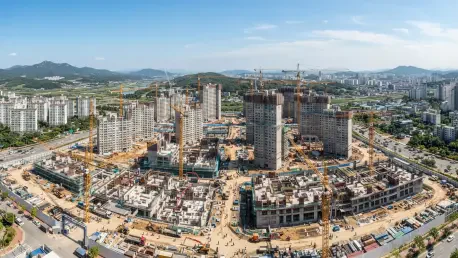

The urgent necessity for housing market stabilization in South Korea has reached a critical juncture, prompting the Korea Land and Housing Corporation to forge an unprecedented alliance with the nation’s leading private construction firms to expedite the delivery of residential units. This collaborative effort represents a fundamental shift in how the state manages urban development, moving away from isolated bureaucratic processes toward a more synchronized execution model. By the conclusion of the current calendar year, the initiative aims to have initiated construction on fifty thousand public dwelling units, a figure that highlights the scale of the commitment to residential security. This strategic mobilization is not merely about hitting a numerical target; it serves as a robust response to structural bottlenecks that have historically hampered the domestic housing supply. Through this partnership, the combined resources and expertise of both the public and private sectors are being leveraged to transform the living standards of citizens across several key metropolitan districts.
Synergy and Strategic Alliances
Public-Private Integration: Bridging the Expertise Gap
The recent assembly at the Construction Hall in Seoul underscored a pivotal moment for the domestic construction industry as the Korea Land and Housing Corporation established formal ties with prominent builders like DL E&C and Kumho E&C. This high-level dialogue focused on the immediate mobilization of technical resources to address the persistent housing shortage that has affected various urban centers. By integrating the project management capabilities of a state enterprise with the agile technical expertise of the private sector, the alliance seeks to overcome the traditional barriers that often stall large-scale residential projects. Leaders from both sides emphasized that the current market environment demands a level of synchronization that transcends typical contractual obligations. This synergy is designed to ensure that the fifty thousand units planned for the remainder of 2026 are not only built quickly but also adhere to the highest standards of safety and architectural innovation required for modern living spaces.
Quality Standards: Innovation in Residential Design
To maintain the momentum necessary for such an ambitious year-end goal, the participating organizations have implemented a rigorous real-time monitoring system designed to pinpoint specific administrative and logistical delays. This proactive management approach allows project coordinators to identify hurdles in real time, whether they involve local zoning disputes, supply chain disruptions, or labor shortages in specific districts. Furthermore, the collaboration is deeply rooted in the concept of universal public rentals, which aims to provide high-quality, long-term housing solutions that are accessible to a broad demographic. Technical innovation remains a cornerstone of this initiative, as private firms bring advanced building techniques and sustainable materials to projects that were previously constrained by rigid public sector protocols. By utilizing mixed-use sites and urban revitalization strategies, the partnership is effectively breathing new life into the domestic supply chain while ensuring that housing quality remains a top priority throughout the construction phase.
Operational Efficiency Through Administrative Reform
Integrated Bidding: Streamlining the Development Pipeline
One of the most significant operational shifts introduced in this cycle is the adoption of the integrated bidding process, a streamlined procurement method that consolidates multiple projects into single packages. This strategy involves grouping adjacent districts that share similar development timelines, such as the thirteen blocks recently identified in the Bucheon Daejang and Incheon Gyeyang areas. By bundling these developments, the Korea Land and Housing Corporation has effectively eliminated redundant administrative procedures that typically exhaust both time and financial resources. For private contractors, this means a significant reduction in overhead costs as they can now manage labor and material logistics across a wider geographic area under a unified contractual framework. This efficiency is particularly critical as the industry approaches the final months of the year, where the pressure to break ground on nearly five thousand units in specific zones requires a flawless transition from the planning phase to active construction sites.
Future Stability: Actionable Next Steps for Policy
The strategic alignment between public authorities and private construction entities successfully laid the groundwork for a more resilient housing infrastructure that addressed immediate supply needs while fostering industrial growth. By prioritizing synchronization and administrative reform, the initiative demonstrated that the traditional friction between state mandates and corporate interests could be mitigated through transparent communication and shared technical objectives. It was concluded that stakeholders must prioritize the institutionalization of the integrated bidding model to ensure that the efficiencies gained during this cycle became permanent features of the national procurement system. Furthermore, the expansion of digital monitoring tools was identified as a vital solution for providing ongoing oversight of project lifecycles, thereby preventing the recurrence of previous bottlenecks. By maintaining this collaborative spirit, both sectors were prepared to address future demand with greater foresight, ensuring sustainable development remained a central pillar of national housing policy for the coming years.