
The warehouse market is moving away from speculative development as 42 percent of all current take-up is now driven by secured leases rather than unbacked construction. This pivotal shift reflects a broader atmosphere of caution that has permeated the Polish construction sector, signaling an end to the era of rapid, unchecked expansion. While the planning pipeline remains remarkably full, the transition from paper permits to actual groundbreaking has slowed as developers navigate a complex landscape of fluctuating costs and high interest rates. Currently, the market is characterized by a stark divergence between private ventures and public infrastructure. While commercial and residential developers are increasingly placing projects on hold to wait for more favorable conditions, state-funded initiatives continue to provide a critical buffer. This period of recalibration is not merely a temporary dip but rather a strategic evolution toward a more disciplined, demand-driven model that prioritizes long-term stability over short-term volume.
The Paradox Of The Housing And Office Markets
Stagnation In The Residential Construction Landscape
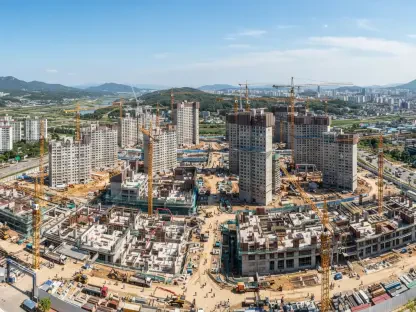
The residential market in Poland presents a fascinating contradiction where a high volume of planning activity is contrasted by a significant slowdown in actual physical construction. Recent data indicates that over 1,600 projects are currently suspended across the country, a figure that stands in sharp relief against the 2,300 projects that remain in active development. This cooling effect is further reflected in the real value of residential construction output, which has seen a 4 percent decline over the past year. Developers are increasingly hesitant to commit capital to large-scale housing estates without more certainty regarding buyer affordability and mortgage availability. Consequently, the physical landscape of the housing sector has entered a period of relative quiet, as many firms prioritize the completion of existing phases rather than launching new, ambitious neighborhoods. This trend suggests that the industry is focusing on risk mitigation while waiting for a clearer signal that the economic environment is ready for another wave of significant building activity.
High Volume Of Permits Versus Actual Starts
Despite the noticeable deceleration in active building sites, the administrative side of the housing market is busier than ever. In the second quarter of 2026, building permit notifications reached some of the highest quarterly volumes recorded in the history of the sector. This surge in paperwork indicates that developers are aggressively securing their future pipelines, even if they have no immediate intention of starting work. This stockpiling of permits creates a massive reservoir of potential construction that could be unleashed quickly should economic conditions shift. However, the gap between these theoretical units and actual finished homes remains a major concern for industry analysts. The high cost of financing and labor continues to act as a barrier, turning many planned projects into “paper developments” that exist only in architectural renderings and municipal databases. This strategy allows developers to remain agile and ready for a market rebound without exposing themselves to the immediate financial drain of an active construction site in a high-cost environment.
The Widening Gap In Office Space Development
The office sector continues to face a difficult downward trajectory that has been visible in the Polish market since at least 2017. Currently, the ratio of suspended projects to new launches has widened to a concerning two-to-one margin, highlighting a profound lack of confidence in the traditional commercial workspace. As businesses continue to refine their hybrid work policies, the demand for massive, centralized office complexes has diminished, leading developers to rethink their portfolios. Many previously planned high-rise projects in major business districts have been indefinitely postponed or completely redesigned to incorporate residential or mixed-use elements. This shift reflects a global trend toward more flexible and smaller-scale professional environments that prioritize quality and location over sheer square footage. The current landscape is one of consolidation, where only the most technologically advanced and environmentally sustainable office projects are making it past the planning stage, while older or less strategically located projects are being left in a state of indefinite suspension until the market finds its new footing.
Changing Workspace Demands And Investor Hesitation
Investor sentiment regarding the office market remains heavily influenced by the necessity of guaranteed long-term occupancy. Unlike the speculative office booms of previous years, the current environment demands high levels of pre-leasing before any major capital is deployed. Lenders have become significantly more stringent, often requiring a substantial portion of the building to be committed to reputable tenants before approving construction loans. This cautious approach has led to a stagnant environment where only a few “trophy” assets are being developed in premium urban locations. Furthermore, the rising cost of sustainable materials and the need to meet strict environmental standards have added layers of complexity to new builds. Developers are finding that modernizing existing structures is often a more viable path than starting from scratch. As a result, the commercial sector is seeing a rise in high-end renovations and adaptive reuse projects, which allow investors to capture demand for modern office features without the extreme risks associated with ground-up development in an uncertain economic climate.
Regional Imbalances And The Rise Of Public Infrastructure
Geographic Disparities In Project Continuity
The current market cooling is not felt equally across Poland, as the most significant concentrations of stalled projects are found in the largest urban centers. In major cities like Warsaw, Łódź, and Poznań, the number of suspended developments often exceeds the number of active construction sites, pointing to a period of urban stagnation. In the capital city specifically, the contrast is particularly visible, as many high-profile commercial sites have sat dormant while developers reassess the feasibility of their original plans. This regional imbalance highlights how the most established and historically active markets are also the most sensitive to economic volatility and rising interest rates. Conversely, smaller regions like Opole maintain a much lower proportion of halted projects, though their overall market size is considerably smaller. These secondary and tertiary markets often benefit from more modest, localized demand that is less influenced by the global capital flows that drive large-scale developments in Warsaw. This geographic divide suggests that the “wait-and-see” approach is most prevalent where the stakes and investment requirements are highest.
Industrial Shifts Toward Demand-Driven Growth
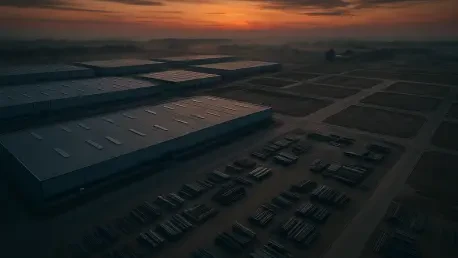
The industrial and manufacturing sectors are also experiencing a period of significant transition marked by a decline in speculative building. Currently, there are approximately 63 percent more stalled manufacturing projects than active ones, and the warehouse sector shows a similar trend where the value of suspended projects nearly doubles that of new starts. This shift away from building for “future” demand is a response to the cooling of the global logistics boom. However, this is not necessarily a sign of a failing market, but rather a move toward a more sustainable “new normal.” New warehouse take-up is increasingly driven by secured leases and specific build-to-suit requirements rather than speculative ventures. This ensures that when a project does break ground, it is backed by firm demand and reliable revenue streams. This disciplined approach is helping to stabilize the sector by preventing the oversupply issues that have plagued other regions. While the volume of new starts may be lower than in previous record-breaking years, the projects that are moving forward are generally more financially sound and better aligned with the actual needs of the supply chain.
The Public Sector As An Economic Counterweight
In a significant departure from the trends seen in the private market, public sector construction has become a vital pillar of stability for the entire industry. Projects related to public administration, education, and healthcare have seen a 140 percent increase in new starts since 2017, with very few suspensions reported. This surge in state-funded investment is providing a steady stream of work for construction firms that might otherwise struggle with the slowdown in residential and commercial contracts. These public works often involve long-term infrastructure improvements that are less sensitive to short-term market fluctuations, ensuring a baseline of productivity for the sector. Furthermore, the development of healthcare facilities and modern educational centers continues to show consistent growth, reflecting a national commitment to improving public services. This robust public pipeline acts as a necessary counterweight to the cooling private market, helping to retain skilled labor and maintain the financial health of construction companies during this period of transition. These investments are securing the future of Polish infrastructure while the private market undergoes its necessary recalibration.
Modernization And The Impact Of Strategic Mega-Projects
The retail sector has found a path to growth by pivoting away from the traditional model of massive shopping malls in favor of smaller, localized retail parks. This evolution is particularly visible in secondary cities, where smaller centers provide essential goods and services to local communities. Meanwhile, larger retail centers in major cities are focusing on extensive modernization and redevelopment rather than new construction. This trend is often overshadowed by “mega-projects,” such as the development of offshore wind farms and massive regional railway hubs, which represent multi-billion-złoty investments. These giant projects significantly influence regional data and can sometimes mask the broader trend of stagnation in smaller-scale private developments. For construction firms, the ability to pivot toward these large-scale infrastructure and energy projects has become a key survival strategy. The Polish market moved away from speculative commercial growth and toward a system defined by essential public works and specialized industrial development. This strategic shift ensured that the industry remained productive and resilient, even as the residential and office sectors faced their most significant challenges in a decade.