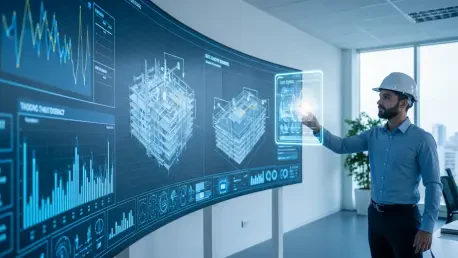

The construction industry is currently undergoing a seismic shift as digital twins and autonomous monitoring replace the traditional clipboard and hard hat inspections that once defined site management. Hyundai Engineering & Construction is at the forefront of this evolution, utilizing the H-Safe Open Innovation Demo Day to showcase how generative artificial intelligence and extended reality can mitigate the inherent risks of large-scale infrastructure projects. By integrating sophisticated data analytics into the daily workflow, the company is moving beyond reactive safety measures toward a predictive model that identifies hazards before they result in accidents. This strategic focus at the Startup Venture Campus Seoul emphasizes the necessity of bridging high-tech software development with the rugged, unpredictable environments of building sites. The event serves as a critical junction where theoretical innovation meets the practical demands of ensuring worker health and operational continuity in a modern urban landscape.
Fostering a Collaborative Safety Ecosystem
The Strategic Impact: The H-Safe Challenge
The H-Safe Open Innovation Challenge represents a sophisticated attempt to decentralize safety research by tapping into the agility of the startup community and venture capital networks. Through partnerships with the Seoul Economic Promotion Agency and the Korea Institute of Construction Technology, Hyundai E&C provides a structured pathway for emerging tech firms to validate their products within active construction zones. This collaborative framework ensures that safety tools are not developed in isolation but are instead refined through rigorous field testing and technical feedback from industry veterans. By offering financial backing and institutional validation, the program effectively bridges the industrial gap that many startups face when trying to scale hardware. The result is a robust pipeline of bespoke technologies that address specific site vulnerabilities, ranging from equipment collisions to structural failures, thereby creating a more resilient and tech-forward corporate culture.
Twelve distinct startups participated in the recent Demo Day, each presenting unique solutions that target various aspects of the high-risk construction environment, such as real-time motion tracking and environmental sensing. These firms range from early-stage innovators focusing on augmented reality training modules to established technology partners whose systems are already integrated into existing digital infrastructure. By providing these entities with unprecedented access to real-world data and operational sites, the firm facilitates the creation of safety protocols that are both practical and highly effective. The initiative also addresses the psychological health of the workforce by introducing systems that monitor environmental stressors and physiological signals, ensuring a holistic approach to site well-being. This relationship allows the construction giant to remain at the cutting edge of digital transformation while empowering smaller tech companies to contribute to international safety standards.
Expanding the Innovation Pipeline: Startup Integration
Since the program began its expansion, the focus has shifted toward creating a seamless “growth ladder” that supports specialized tech firms from the initial prototyping phase through to full-scale commercial deployment. By acting as a central hub for venture capital and government stakeholders, Hyundai E&C is driving an industry-wide trend toward collaborative commercialization where small-scale innovations are rapidly scaled across global projects. This approach ensures that the most promising safety technologies, such as wearable biometric sensors and automated drone inspections, receive the technical and financial support needed to survive the rigorous demands of heavy industry. The strategic alignment of private investment with public safety goals has created a sustainable model for innovation that prioritizes human life without compromising the speed of development. Consequently, the construction sector is becoming a primary driver of practical AI application in the broader industrial economy.
The integration of these startups into the company’s broader supply chain serves to modernize safety protocols while simultaneously improving operational efficiency across the board. Automated hazard detection systems, for example, allow for the continuous monitoring of dangerous zones, reducing the need for personnel to enter high-risk areas for routine inspections. This shift not only protects individual workers but also minimizes project downtime caused by accidents or safety violations. By leveraging the specific expertise of tech entrepreneurs, the firm is able to implement hyper-localized solutions that are tailored to the unique topographical and environmental challenges of each specific project. This granular focus on site-specific risks represents a significant departure from the one-size-fits-all safety manuals of the past. As these technologies become more deeply embedded in daily operations, the boundary between construction management and data science continues to blur.
Implementing Data-Driven Safety Solutions
Practical Case Studies: AI and Automation
The practical application of generative artificial intelligence was a centerpiece of the demonstrations, with companies like Silicon Cube showcasing AI-driven inspection systems that automate machinery checks to reduce human error. These systems utilize advanced computer vision to identify wear and tear or mechanical irregularities that might escape the notice of even the most experienced manual inspector. By offloading these repetitive and high-stakes tasks to autonomous algorithms, site management can focus more resources on complex problem-solving and strategic planning. Furthermore, the integration of these tools into a centralized management platform allows for real-time data visualization, giving project managers a comprehensive overview of safety metrics across multiple locations simultaneously. This shift toward automated oversight represents a fundamental change in how construction firms manage liability and operational risk in a data-driven environment.
Language barriers and communication gaps in a globalized workforce represent significant safety challenges, which are now being addressed by innovations such as C-TECH SOLUTION’s multilingual safety platform. This system translates complex technical protocols and emergency instructions into various native languages in real-time, ensuring that every worker on a site understands the risks and the necessary precautions regardless of their background. In an industry where a split-second misunderstanding can lead to a catastrophic event, the ability to deliver clear and localized information is a critical safety upgrade. This technology, combined with motion-tracking sensors and wearable health monitors, creates a safety net that protects workers on multiple levels. By prioritizing the accessibility of safety information, the company is fostering a more inclusive and secure environment that acknowledges the diverse composition of the modern construction workforce.
Future Considerations: Industry-Wide Integration
Looking forward from the current progress made in 2026 through 2028, the industry is expected to move toward a state of total digital integration where safety systems are embedded directly into the structural materials and equipment from the outset. The convergence of 5G connectivity, edge computing, and artificial intelligence will likely lead to smarter construction sites that can self-regulate and warn workers of dangers before they are even visible to the human eye. This long-term strategy aims to transform the construction sector from a labor-intensive industry into a high-tech ecosystem where technological validation leads directly to widespread safety improvements and the realization of zero-accident goals. As these digital frameworks become standard, the data collected from current operations will serve as the foundation for the next generation of autonomous building technologies, ensuring that safety is an inherent feature of the construction process.
Stakeholders in the construction and technology sectors recognized that the path to a safer workplace required a shift from isolated improvements to a unified digital ecosystem. To maintain this momentum, industry leaders prioritized the standardization of safety data formats to allow for better interoperability between different AI platforms and wearable devices. Organizations invested in continuous upskilling programs that prepared the traditional workforce to interact effectively with augmented reality and automated monitoring systems. Future developments focused on the refinement of predictive analytics, moving beyond simple detection toward prescriptive models that offered real-time solutions for emerging site hazards. As these technologies matured, they provided a blueprint for how large-scale industrial projects balanced high-speed production with the uncompromising protection of human life. The successful commercialization of these efforts indicated that construction was no longer just about brick and mortar.