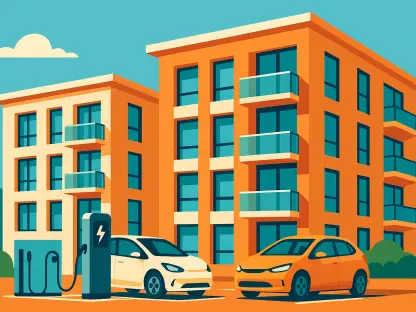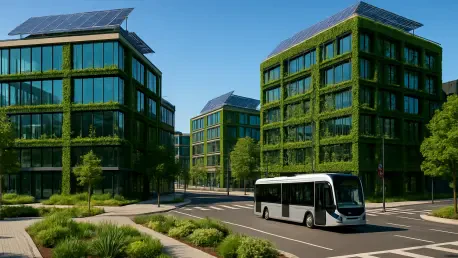

The sudden acceleration of urban densification combined with intensifying weather patterns has forced American municipalities to move beyond aspirational environmental goals toward a model of rigorous, verifiable performance. As of early 2026, the U.S. Green Building Council has officially inaugurated its latest LEED for Cities certification cohort, a strategic assembly of seventeen diverse communities tasked with redefining the standard for sustainable living. This group, which encompasses a total population of approximately 2.5 million residents, is not merely experimenting with green initiatives but is actively implementing the LEED v4.1 Existing Cities rating system to benchmark their progress. By integrating advanced metrics into daily operations, cities like Nashville, Sacramento, and Indianapolis are transforming from traditional administrative hubs into living laboratories for climate resilience. The initiative provides a structured roadmap that allows local governments to quantify their successes in energy efficiency and social equity, ensuring that the path toward a lower carbon footprint is both transparent and replicable across varying geographic and economic landscapes.
Standardizing Sustainability Through Data-Driven Governance
The primary mechanism driving this urban transformation is a shift from qualitative environmental promises to a framework defined by hard data and measurable outcomes. By adopting the LEED v4.1 protocols, these seventeen cities are now required to track specific performance indicators across categories such as water efficiency, waste management, and transportation patterns. This transition is crucial because it eliminates the ambiguity often associated with “green” labeling, replacing it with a standardized reporting system that allows for direct comparison between municipalities. For a city like Indianapolis, this means moving beyond general fleet electrification goals to tracking the specific reduction in greenhouse gas emissions per capita. The framework also emphasizes human-centric metrics, such as the accessibility of green spaces and the quality of public health services, ensuring that environmental progress does not come at the expense of social stability. This rigorous approach empowers city planners to identify specific inefficiencies in their infrastructure and allocate taxpayer resources toward projects that offer the highest measurable return on investment for the community’s long-term health.
Furthermore, the implementation of these standards fosters a culture of accountability that extends from the mayor’s office to local utility providers and transit authorities. When a city commits to the LEED certification process, it essentially opens its books to an external audit of its environmental performance, which can significantly influence its attractiveness to sustainable investment and high-tech industries. The 2026 cohort is leveraging this transparency to build trust with residents who are increasingly concerned about the tangible effects of urban heat islands and outdated drainage systems. By utilizing real-time data to monitor air quality and energy consumption, these municipalities can make informed decisions during extreme weather events, effectively using the LEED framework as a tool for disaster preparedness. This proactive governance model ensures that sustainability is not a peripheral concern but is instead woven into the core fabric of urban management. As these cities document their journey through the certification process, they provide a blueprint for others to follow, proving that environmental stewardship is a fundamental component of modern, high-performing municipal administration.
Collaborative Innovation and Resource Optimization
One of the most significant advantages for the municipalities participating in this cycle is the structured collaborative environment provided by the Local Government Leadership Program. Small to mid-sized cities, such as Hoboken and Westminster, often face substantial hurdles when attempting to implement complex sustainability frameworks due to limited staff capacity and budget constraints. The cohort model addresses these challenges by facilitating a peer-to-peer learning network where technical staff can share troubleshooting strategies and successful policy templates. Instead of each city working in a vacuum to solve common problems like stormwater runoff or building energy disclosure ordinances, they can leverage the collective intelligence of the entire group. This collaborative approach dramatically reduces the learning curve and allows for the rapid scaling of best practices across different regions. By attending monthly technical workshops and participating in shared digital forums, city officials can identify which technological solutions, such as smart grid sensors or permeable pavement materials, have proven effective in similar urban contexts, thereby avoiding costly trial-and-error mistakes.
Beyond the internal benefits for city staff, the partnership with the private sector remains a cornerstone of the program’s viability and continued expansion. Bank of America has maintained a long-term commitment to this initiative, contributing over four and a half million dollars since 2017 to subsidize the costs associated with the certification process for nearly 140 local governments. This financial and strategic support is essential because it bridges the gap between ambitious climate policy and the practical realities of municipal financing. For the 2026 cohort, this partnership means that even resource-strapped communities can access elite-level technical assistance and global benchmarking tools that would otherwise be financially out of reach. This synergy between public governance and private capital highlights a growing consensus that the modernization of urban infrastructure is a shared responsibility. As these cities successfully navigate the certification process, they demonstrate that strategic investments in sustainability lead to more resilient economies and healthier populations, ultimately making them more competitive on a national and global stage for talent and capital investment.
Future Strategies for Resilient Urban Infrastructure
To maximize the impact of the current LEED certifications, municipalities must prioritize the integration of these environmental benchmarks into their long-term capital improvement plans and zoning codes. Achieving a LEED for Cities certification should not be viewed as a final destination but rather as the establishment of a baseline for continuous improvement in urban performance. City leaders should now focus on utilizing the data collected during this process to advocate for federal and state infrastructure grants, using their certified status as proof of their capacity to manage large-scale sustainability projects. Furthermore, local governments should look toward incentivizing the private sector to match these municipal standards, perhaps by fast-tracking permits for developers who meet or exceed the energy efficiency targets set by the city’s LEED goals. By aligning private development with public sustainability objectives, cities can ensure that their entire built environment, not just municipal property, contributes to a cohesive strategy for carbon reduction and climate adaptation.
The ultimate success of the 2026 cohort will be measured by how well these cities translate technical data into tangible quality-of-life improvements for their diverse resident populations. Future considerations should include the development of localized “green districts” where the lessons learned from the LEED framework are applied at the neighborhood level to address specific vulnerabilities, such as localized flooding or poor air quality. Moving forward, it is essential for these communities to maintain the professional networks established during the certification process to foster ongoing innovation and collective problem-solving. By institutionalizing these sustainability metrics into the standard operating procedures of city departments, from public works to urban planning, municipalities can ensure that their progress remains resilient against political shifts and economic fluctuations. The transition toward a more sustainable urban future requires a persistent commitment to transparency, a willingness to adopt emerging technologies, and a focus on equitable outcomes that benefit every resident, regardless of their zip code or economic status.