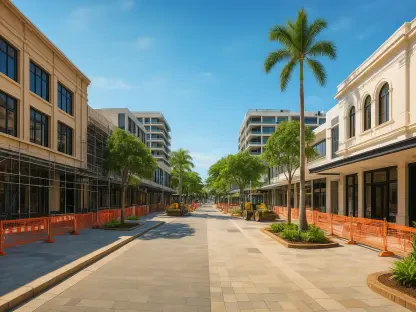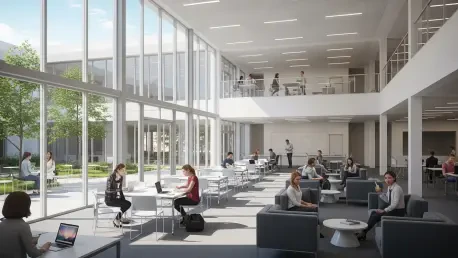

The transformation of the Stoke-on-Trent skyline is no longer a distant blueprint but a tangible reality as the £100 million Student Village at Staffordshire University welcomes its first residents. This massive investment signals a departure from traditional dormitory concepts, moving toward a sophisticated ecosystem that blends newly built structures with thoughtful renovations. By offering approximately 1,000 beds, the university is addressing the shifting expectations of a diverse academic population. This strategic move aims to bridge the gap between academic success, personal wellbeing, and regional revitalization in an increasingly competitive higher education landscape.
The Evolution of Campus Living in Stoke-on-Trent
Educational planners increasingly recognize that the physical environment is a silent partner in the learning process. The Student Village project represents a major commitment to modernizing the student experience, ensuring that housing is not merely a place to sleep but a tool for success. By integrating high-quality residential spaces directly into the campus fabric, the university seeks to improve retention rates and attract international talent. This evolution reflects a broader trend where universities act as developers to secure their long-term viability.
Moreover, the project acknowledges that today’s students require more than just a desk and a bed. The combination of historic building preservation and ultra-modern architecture creates a unique aesthetic that honors the heritage of the region while looking toward the future. This dual approach ensures that the university remains rooted in the community of Stoke-on-Trent even as it pushes for global academic recognition.
A Multidimensional Blueprint for the Modern University Experience
Redefining Residential Diversity Through Architectural Choice
The village avoids “one-size-fits-all” housing by providing a spectrum of living arrangements, from private en-suite rooms to communal townhouses. By catering to undergraduates, postgraduates, and returning students simultaneously, the university creates a cross-generational environment that mirrors professional settings. Choice in living conditions directly correlates with improved mental health outcomes, as students can select environments that suit their social needs. However, the institution must continue to balance these high-end facilities with affordability to remain accessible to all socioeconomic groups.
The Village Hub: Scaling Social Connectivity and Wellbeing
At the heart of the development lies the Village Hub, a specialized space designed to dismantle the isolation often felt during the first year of study. By integrating the ResLife team into the communal fabric, the university transitions from a landlord role to a facilitator of community. This holistic approach focuses on “belonging” as a measurable metric, utilizing student-led initiatives to foster organic networking. Such spaces are intentionally engineered to combat the modern “loneliness epidemic” among young adults by encouraging spontaneous interaction.
Security and Integrated Technology in a Digital-First Environment
Safety is being reimagined through a blend of physical presence and digital innovation, headlined by 24/7 security staff and the SafeZone mobile application. This dual-layered model addresses contemporary concerns regarding campus safety while providing students with peace of mind through a familiar tech interface. By embedding these features into the lifestyle of the village, the institution sets a new benchmark for how technology can provide a safety net without feeling intrusive. This is a critical factor for attracting applicants from out-of-state and overseas who prioritize a secure environment.
The Student Village as an Anchor for Regional Economic Growth
Beyond the campus boundaries, the development serves as a critical component of the broader regeneration of Stoke-on-Trent, working with the Goods Yard project and the Spode Works revitalization. This synergy suggests that the village is a catalyst for local business growth and urban modernization rather than an isolated island. By upgrading the gateway to the local railway station alongside the residential project, the university effectively blurred the lines between the campus and the city. This challenged the old assumption that student areas must remain segregated from the local community.
Maximizing the Impact: Strategic Insights for Future Residents
To fully benefit from this new ecosystem, students should view the village as a resource for professional and social growth. Residents were encouraged to engage with ResLife programs early to build social capital before the rigors of the semester took hold. Local businesses were also invited to see the Village Hub as a central point for collaboration, creating a feedback loop between the student body and the local economy. Utilizing the proximity to the nearby nature reserve provided a necessary ecological balance to the high-tech, urban nature of the new development.
Setting the Stage for a New Era of Academic Integration
The completion of the Student Village proved that housing can be a primary driver of institutional identity and regional pride. By prioritizing safety, community, and economic integration, the university created a template for how modern campuses should function. Future developments will likely look to this project to understand how to balance the demands of a digital-first generation with the human need for physical connection. Stakeholders now look toward expanding these communal models into the academic curriculum itself, ensuring that the vibrancy of the village continues to influence the classroom experience for years to come.