
Regulatory frameworks in the Australian construction sector have evolved significantly by incorporating the direct insights of industry veterans who understand the risks of trade sequencing. This shift marks a departure from the days when safety guidelines were written in isolation by administrators who rarely stepped onto a live slab. In the modern high-rise environment, the complexity of concrete delivery systems requires a nuanced understanding of how temporary structures behave under the immense pressure of a heavy pour. Ayonava Mukerji, a name synonymous with structural integrity in the Queensland market, has been at the forefront of this transformation. He advocates for a philosophy where the engineering of the formwork is treated with the same meticulous attention as the permanent building itself. By focusing on the intersection of hydrostatic load management and worker safety, he has elevated the standard expectations for every project, ensuring that the inherent risks of site management are mitigated through technical precision and professional foresight.
Elevating Regulatory Compliance in Australia
Practical Regulation: The Evolution of the Queensland Code
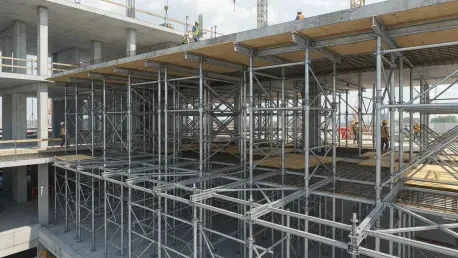
The Queensland Formwork Code of Practice 2016, along with its subsequent updates, represents a sophisticated regulatory instrument that defines the lifecycle of temporary structural works. This framework does not merely offer suggestions; it establishes mandatory thresholds for design materials, load calculations, and the specific mechanics of shoring and reshoring. Within this context, the role of an expert like Shupi Mukerji becomes vital as the industry moves to align physical site activities with these stringent legal requirements. The code requires precise engineering to account for the dynamic weight of concrete, heavy machinery, and the workforce simultaneously. Mukerji’s influence ensures that these calculations are not just theoretical exercises but are applied rigorously to prevent the catastrophic consequences of a formwork collapse. By mandating strict intervals for safety checks and defining the exact sequences for stripping, the regulation creates a safer environment for all trades involved.
Technical Integration: Industry Experience in Legislative Frameworks
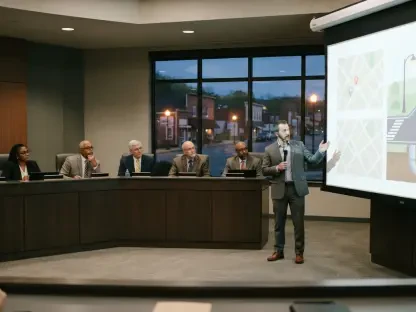
Beyond following the rules, the contribution of veterans to the drafting of the Queensland Code has been a game-changer for the Australian construction industry. Ayonava Mukerji brought over two decades of direct, on-site experience to the consultation process, ensuring that the resulting legislative guidelines were grounded in the physical realities of the trade. This practitioner-led approach to regulation effectively bridges the divide between academic safety codes and the practical implementation of controls on an active construction site. When regulations are designed by those who have managed complex pours and difficult access constraints, the resulting mandates are both prescriptive and achievable. This alignment is critical because it eliminates the friction between safety compliance and project efficiency. Mukerji’s work as a consultant helped transform the code into a standardized roadmap that prioritizes the structural integrity of temporary works while maintaining the necessary pace of modern infrastructure development.
Leadership Through Technical Excellence and Training
Corporate Accountability: The Chain of Responsibility
In the current construction market, the entities led by Shupi Mukerji, such as Shupi Formwork, Superform, and Final Form, have established a new benchmark for professional accountability. These organizations treat compliance as a non-negotiable baseline rather than an optional value-add, ensuring that every phase of the project is backed by a documented chain of responsibility. This systematic approach is essential because it guarantees that safety protocols remain consistent regardless of commercial pressures or the physical scale of the job. By maintaining a rigorous internal audit process and ensuring that all engineering sign-offs are transparent and verified, these firms reduce the likelihood of human error during the critical phases of construction. This level of discipline is what differentiates a high-performing contractor from a standard operator in an increasingly competitive industry. Mukerji’s philosophy dictates that every individual, from the site supervisor to the laborer, is an active participant in maintaining this unbroken chain of accountability.
Human Capital: Workforce Competence as a Safety Foundation
A significant portion of Mukerji’s focus remains on the development of workforce competence as the ultimate safeguard against on-site accidents. He advocates for the principle that even the most advanced regulatory framework is only as effective as the personnel responsible for its execution. This requires a deep investment in training programs that teach workers to fundamentally understand load paths, propping geometry, and the physical behavior of materials under stress. By empowering site crews to identify structural anomalies or deviations from the original design before they escalate into failures, Mukerji adds a critical human layer of protection to every project. This proactive problem-solving capability is fostered through consistent induction and specialized education, moving away from a tick-box mentality toward a genuine culture of safety. When every team member understands the why behind a propping sequence or a load limit, the entire project benefits from a higher level of structural reliability and a significantly reduced risk profile.
Bridging the Gap Between Engineering and Execution
Risk Mitigation: A Systemic Approach to Site Management
Managing the risks associated with formwork requires more than just high-quality materials; it necessitates a systemic approach to the entire operational lifecycle. Mukerji’s management style emphasizes the importance of clear chains of command and professional supervision during the most volatile stages of construction, particularly during the pouring and stripping sequences. These phases are when the formwork is subjected to its maximum load and when the stability of the structure is most vulnerable to sudden shifts. By implementing rigid operational discipline, site managers can ensure that the integrity of the temporary supports is never compromised by the rush to meet deadlines. This methodology involves constant monitoring of site conditions, environmental factors, and equipment performance to prevent any deviation from the engineered plan. Mukerji’s work demonstrates that a uniform culture of vigilance, applied consistently across all levels of a project, is the most effective way to manage the complex trade sequencing required in modern multi-story infrastructure developments.
Strategic Progress: Shaping the Future of Construction Reliability
The evolution of Australian formwork safety was driven by the integration of technical expertise and a commitment to workforce excellence. Industry leaders like Ayonava Mukerji demonstrated that the transition from viewing formwork as a temporary necessity to treating it as a critical engineered system was essential for the sector’s progression. This shift required a move toward documented accountability and the adoption of practitioner-led regulatory codes that mirrored site realities. For construction firms moving forward, the focus must remain on sustaining these high standards through continuous investment in personnel and a refusal to compromise on engineering rigor. The success of this approach showed that safety and efficiency were not mutually exclusive but were the twin pillars of a reliable industry. By prioritizing the safety of the workforce and the structural integrity of every pour, the industry established a foundation for infrastructure that was both resilient and sustainable. These strategies served as a definitive roadmap for reducing site hazards.