
The architectural landscape of the North Shore has undergone a profound transformation as historical preservation intersects with contemporary living standards over the last thirty-five years. Since its founding by Mat Cummings in the coastal enclave of Ipswich, the firm once known for simple drafting has matured into a regional authority on high-end residential design. Selecting Ipswich as a base of operations was a strategic decision driven by the town’s unparalleled density of First Period dwellings, which serve as a living textbook for those committed to the architectural heritage of Massachusetts. This environment fosters a deep respect for traditional forms while challenging designers to integrate modern amenities without compromising the structural integrity of old frames. The firm’s long-standing presence in the community has allowed it to cultivate a specialized understanding of local vernacular, ensuring that each renovation honors the storied past of New England while anticipating modern demands.
Structural Synergy: The Rise of the Unified Service Model
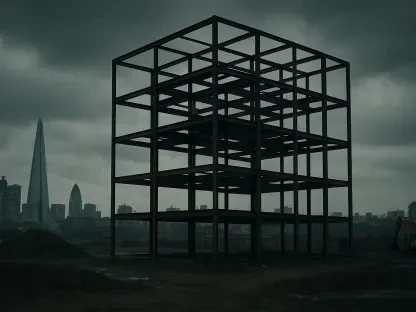
To address the increasing complexity of modern home construction, the industry is witnessing a significant shift toward a full-service model that prioritizes the marriage of form and function from the very beginning. By rebranding to include interior design as a core competency, the firm eliminated the common friction points that often arise between separate architectural and design entities. This integrated approach ensures that the structural framework of a home is developed in tandem with the final aesthetic layers, preventing costly mid-project adjustments and ensuring a seamless transition from blueprints to finished spaces. When the person designing the load-bearing walls is collaborating directly with the person selecting the millwork and upholstery, the result is a level of continuity that traditional fragmented models rarely achieve. This holistic perspective allows for a more efficient workflow where the original design intent remains protected throughout the project lifecycle.
The strengthening of this multidisciplinary philosophy was further solidified through the inclusion of partner Mindy Haber-Corsini, whose expertise in interior architecture provides a critical link between technical execution and decorative refinement. Her role is specifically designed to bridge the gap that often exists between the heavy lifting of construction and the delicate touches of interior finishing, allowing for a more nuanced approach to luxury residential design. This partnership has effectively transformed the practice into a powerhouse capable of managing intricate historic restorations and expansive custom builds with an elevated degree of precision and coordination. By treating the interior and exterior as a single unit, the team can craft environments where the spatial flow, lighting, and material palettes all work in concert to reflect a singular vision. Such internal collaboration minimizes miscommunication with vendors, providing clients with a more predictable experience.
The Studio Environment: Creating a Laboratory for Design
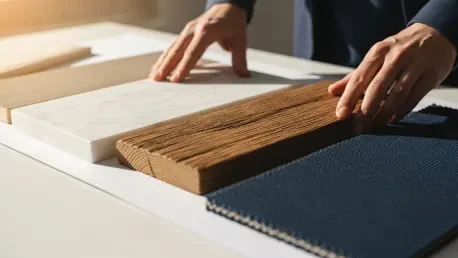
Marking a significant milestone in its history, the firm recently unveiled a sophisticated new studio housed within a revitalized historic building situated along the banks of the Ipswich River. This renovation serves as a tangible demonstration of the team’s proficiency in adaptive reuse, turning a weathered structure into a vibrant, open-concept office that actively encourages staff interaction and creative problem-solving. The design of the workspace emphasizes a neutral color palette and clean lines, intentionally creating a backdrop that allows the vibrant textures and colors of client projects to remain the focal point of every discussion. Within this centralized hub, a massive material library serves as the heart of the operation, containing a curated selection of resources that the design team uses to test theories and refine concepts. This environment not only streamlines the daily operations but also serves as a physical manifesto for the commitment to combining historical context with modern professional practices.
Beyond its role as a functional workspace for the staff, the new studio operates as a tactile laboratory where homeowners are invited to engage directly with the physical components of their future residences. In an era where digital renderings are ubiquitous, the value of touching, feeling, and comparing physical samples of stone, wood, and textiles cannot be overstated for the discerning client. By offering a dedicated space for this interactive process, the firm facilitates a more grounded and personalized design journey, helping clients make informed decisions based on the sensory qualities of materials. This hands-on engagement is particularly vital for custom projects where the unique characteristics of natural materials play a central role in the overall atmosphere of the home. When clients can see how a specific marble slab interacts with a particular wood finish in person, it builds a level of confidence and excitement that remains essential for any successful design partnership.
Regional Impact: Setting the Standard for Future Developments
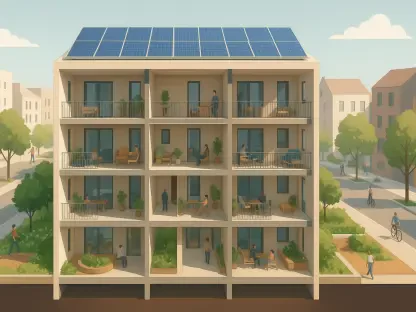
The influence of this integrated design approach successfully extended far beyond the borders of Ipswich, leaving a lasting mark on high-end residential architecture throughout the various sub-regions of New England. From the rugged coastlines of Maine to the refined pastoral landscapes of Connecticut, the firm demonstrated that a commitment to historical sensitivity and sustainable practices remains a universal requirement for quality building. Despite decades of regional expansion, the core mission remained rooted in providing community value through architecture that respects the local environment. This expansive reach allowed for the implementation of diverse styles, ranging from coastal shingle homes to inland farmhouses, all while maintaining a consistent standard of excellence and technical rigor. The focus on sustainability was particularly important as homeowners sought to future-proof their properties against changing environmental conditions and evolving energy efficiency requirements.
Homeowners seeking to embark on their own renovation journeys were encouraged to prioritize the alignment of structural and interior visions early in the process to avoid the common pitfalls of disjointed planning. This strategy effectively reduced project delays and ensured that the aesthetic integrity of the home was maintained from inception to completion. To achieve these results, individuals were advised to seek out firms that maintain in-house expertise in both architecture and interior finishes, as this model provided the most reliable pathway to a cohesive living environment. Furthermore, the practice of engaging with physical materials in a studio setting was identified as a critical step in refining the personal style of a residence. By fostering a deep connection between the past and present, the path was cleared for a more resilient and beautiful built environment, proving that a holistic methodology was the most effective way to modernize historic homes.