
Construction lawyer Kelvin Aw notes that several Singaporean firms have already initiated the claims process by issuing official notices of delay due to deteriorating air conditions. This legal maneuvering comes as the Pollutant Standards Index frequently breaches the unhealthy threshold, casting a literal and metaphorical shadow over the city-state’s skyline. For project managers, the challenge is twofold: they must fulfill their ethical duties to protect thousands of migrant workers while simultaneously shielding their companies from the punishing liquidated damages associated with missed deadlines. As regional environmental conditions remain volatile through the 2026 to 2028 period, the industry finds itself at a critical juncture where operational flexibility is no longer a luxury but a fundamental requirement for survival. The haze does more than just obscure visibility; it disrupts the intricate choreography of labor scheduling that keeps Singapore’s high-density projects moving forward.
Strategic Workforce Management: Prioritizing Laborer Safety
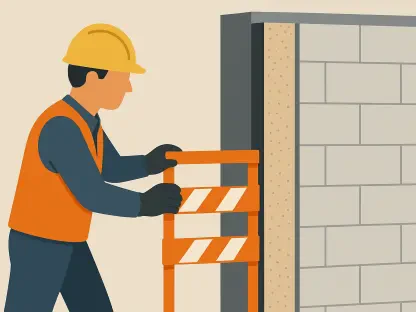
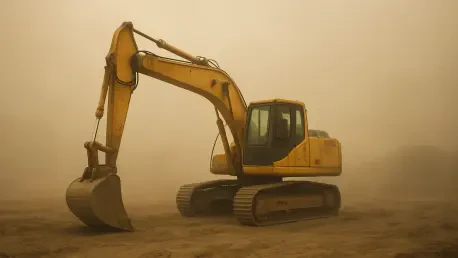
Contractors are increasingly adopting sophisticated health surveillance techniques that go far beyond the minimum requirements mandated by local manpower regulations. Large-scale builders like Kajima Overseas Asia and Hi-Tek Construction have implemented rigorous monitoring programs where site supervisors conduct multiple wellness checks throughout each shift to identify early signs of respiratory distress among the workforce. These firms have also invested heavily in physical infrastructure aimed at reducing heat and particulate exposure, such as installing high-capacity misting fans and designated cooling zones equipped with advanced air filtration systems. In addition to health concerns, visibility issues during peak haze periods have forced the total suspension of high-risk activities, particularly crane deployments and glass installation. These pauses are essential for preventing site accidents, but they create a cumulative slowdown that ripples through the entire project timeline.
Operational Flexibility: The Shift to Indoor Reallocation
Beyond the physical site, the industry is seeing a significant shift in operational reallocation strategies to keep productivity levels stable without endangering personnel. Project managers now maintain haze-ready task lists that allow them to pivot labor resources from exposed outdoor structural work to indoor mechanical or electrical installations or interior finishing as soon as the air quality climbs into the unhealthy range. This level of logistical agility requires precise coordination and a workforce trained in multiple disciplines, reflecting a broader trend toward professionalization within the construction sector. However, this strategy is only effective for projects that have already reached the topping out phase, leaving early-stage excavation and foundation works uniquely vulnerable to environmental stoppages. Furthermore, the cost of maintaining these safety standards, including the provision of N95 masks and hydration stations, adds a significant, often unbudgeted layer of expense for firms.
The Legal Landscape: Navigating Extensions and Contractual Risks
The legal framework governing project delays remains a point of intense friction between developers and contractors, especially regarding the successful filing of an Extension of Time. While the Building and Construction Authority has provided a roadmap for public-sector projects since the reforms introduced previously, the evidentiary burden on the contractor remains incredibly high. Builders must provide meticulous documentation proving that the haze was the sole and direct cause of the delay, rather than internal mismanagement or unrelated labor shortages. This requirement often leads to protracted disputes, as the current guidelines generally suggest a full-day extension only when the PSI exceeds 200 for more than five hours. In practice, many contractors find that productivity drops significantly well before that threshold is met, yet they receive no legal protection for the resulting slower work pace. This gap in the regulatory environment leaves many mid-sized firms in a precarious financial position.
Private Sector Challenges: Standardizing Environmental Delay Triggers
Private-sector contracts present an even greater challenge, as they often lack the standardized language found in government-led infrastructure projects. Many of these private agreements only trigger delay clauses under hazardous conditions, defined as a PSI reading over 300, which is a level rarely sustained for long periods despite the persistent unhealthy haze. This creates a situation where construction remains legally viable but practically impossible or dangerous to perform at full speed. Legal experts argue that this discrepancy creates an unfair risk profile for the builder, who must choose between potentially violating safety protocols or facing massive financial penalties for late completion. Consequently, there is a rising demand for the integration of BCA-style formulas into private contracts to ensure a level playing field across the industry. Standardizing these triggers would allow all stakeholders to price their risks more accurately during the initial bidding phase.
Systemic Reform: Advocating for Economic and Climate Resilience
The Singapore Contractors Association Limited has been at the forefront of advocating for a more comprehensive assessment framework that addresses the financial realities of environmental disruption. Current extensions of time typically only waive the liquidated damages for the delayed days, but they do not compensate the contractor for the ongoing burn rate of overhead costs. During a haze-induced slowdown, a company still pays for leased heavy machinery, site security, and the wages of workers who are either resting or working at reduced capacity. Industry leaders are now pushing for the introduction of formula-based cost recovery mechanisms that would allow for a fair distribution of these atmospheric risks between the client and the builder. Such a system would treat haze similarly to a variations clause, where the additional costs of working under adverse conditions are recognized as a legitimate project expense that reflects the changing global climate reality for 2026.
Future Outlook: Integrating Data and Technological Solutions
The industry moved toward a more resilient model by embracing data-driven decision-making and standardized environmental clauses. Firms that successfully integrated real-time air quality monitoring with digital twin technology managed to optimize their labor scheduling and minimize the economic fallout of the haze. The transition required a shift in perspective, where stakeholders viewed environmental risk management not as a peripheral safety concern but as a core pillar of project viability. Moving forward, the adoption of a unified weather-related assessment framework, covering both haze and extreme heat, became the gold standard for reducing litigation. By establishing clear protocols for cost recovery and time extensions, the sector provided much-needed stability for future infrastructure developments. This evolution ensured that the construction industry remained capable of delivering the high-quality urban landscape Singapore requires, even as regional environmental challenges became more frequent.