
Luca Calarailli stands at the forefront of modern infrastructure, blending a deep mastery of construction and architecture with a visionary approach to how technology reshapes our built environment. As an expert who has spent years dissecting the complexities of large-scale engineering projects, he views bridges not merely as conduits for travel but as vital economic arteries that define the health of nations. His passion for innovative tools and design efficiency provides a unique lens through which to view the completion of massive public works. Today, he joins us to discuss the long-anticipated debut of the Gordie Howe International Bridge, a project that promises to transform the North American logistics landscape and solidify the bond between Detroit and Windsor.
The conversation centers on the shifting timeline of the bridge’s opening and the intricate financial negotiations that occurred behind the scenes to ensure long-term regional stability. We explore the massive increase in commercial capacity this new span provides, the critical role of redundancy in cross-border trade, and how the modernization of customs facilities will alleviate long-standing pressures on residential neighborhoods and local supply chains.
The debut on July 27 follows a period of intense negotiations regarding toll governance; what were the primary hurdles that required this six-week delay to resolve?
The delay from the original June 12 target to the new July 27 opening was a strategic necessity to settle some very complex financial and administrative questions. At the heart of the matter was how the two nations would manage toll revenue and ensure transparency in how those funds are handled over the coming decades. Specifically, there was a significant focus on establishing a 15-year economic development effort that will be fueled by a portion of the bridge’s profits. U.S. officials were particularly interested in how and when they would see a share of the operating revenue, especially since Canada shouldered the initial multi-billion-dollar investment. Reaching an agreement on toll-rate adjustments and non-market related charges required a level of cooperation that simply couldn’t be rushed if the project was to have a stable foundation.
With the bridge spanning 1.5 miles, how will the physical design and its direct freeway connections change the daily reality for the hundreds of commercial vehicles expected every hour?
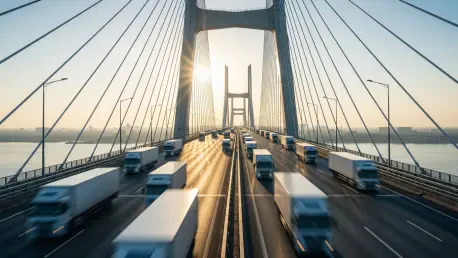
The architectural layout of this bridge is a game-changer for logistics because it finally provides that missing direct link between the major freeways of Michigan and Ontario. We are looking at a capacity to handle 400 commercial crossings every single hour, which is a staggering volume of freight moving across a 1.5-mile span. By creating a seamless transition from freeway to freeway, we eliminate the stop-and-go friction that has plagued this corridor for a generation. This isn’t just about moving faster; it’s about a design that incorporates modern customs facilities and expanded inspection areas to prevent the bottlenecks that usually happen at the border. You can practically feel the relief from the trucking industry, knowing that the structural design is finally catching up to the demands of modern trade.
What kind of long-term economic ripple effects do you expect to see from the projected 850,000 hours saved annually for truck drivers?
When you save nearly a million hours of transit time every year, the financial impact is measured in the billions of dollars over the lifetime of the bridge. Those 850,000 hours represent a massive reduction in fuel waste, lower maintenance costs for fleets, and, most importantly, a more predictable supply chain for the automotive and agricultural sectors. Governor Gretchen Whitmer highlighted that this efficiency will directly lead to better-paying jobs and lower costs for consumers because the hidden “border tax” of delay is being removed. For a driver, it means less time idling and more time delivering goods safely, which improves the overall quality of life within the industry. The ripple effect extends to every grocery store and car dealership in the region that relies on the $323 million worth of goods that move across this border daily.
The Ambassador Bridge has dominated this crossing for decades; how will the presence of a second span impact the regional resilience of the Detroit River crossing?
The addition of the Gordie Howe bridge provides a necessary safety net that we haven’t had for nearly a century. While the Ambassador Bridge currently handles about 40,000 crossings a day, having a single point of failure for such a massive economic corridor was always a high-risk scenario. By introducing this second span, we essentially rule out the possibility of a complete shutdown of trade across the Detroit River, ensuring that a mechanical issue or a security event on one bridge doesn’t paralyze the entire continent’s supply chain. This redundancy is what the Cross-Border Institute calls “essential resilience,” allowing the privately-held Ambassador Bridge and the new public span to work in tandem. It’s a classic case of not putting all your eggs in one basket, especially when that basket holds hundreds of millions of dollars in trade every day.
In what ways will the modern customs and inspection infrastructure at the new bridge address the environmental and social concerns of the local Windsor neighborhoods?
One of the most profound sensory changes for the people living in Windsor will be the redirection of heavy commercial traffic away from residential streets. For years, trucks have had to navigate local roads to reach the border, bringing noise, exhaust, and congestion into the heart of the community. The new bridge’s modern border infrastructure is designed to pull that traffic onto dedicated routes with expanded inspection capacity, which speeds up the process and keeps the trucks moving. This shift not only secures the supply chain but also restores a sense of quiet and safety to neighborhoods that have been overwhelmed by industrial transit. It is a prime example of how thoughtful architecture can solve logistical problems while simultaneously improving the living conditions of the surrounding population.
How does the collaboration between the Windsor Bridge Authority and U.S. officials set a new precedent for international infrastructure management?
This project serves as a masterclass in cross-border cooperation, particularly in how the two nations agreed to a series of cooperative measures on toll governance. The Windsor Bridge Authority will now work closely with U.S. officials to seek concurrence on toll rates, ensuring that the bridge remains competitive and fair for all users. This level of transparency is rare in multi-billion-dollar international projects and sets a high bar for future developments. By directing revenues toward regional investments and cooperative maintenance, both countries are signaling that they are partners in the long-term prosperity of the region. It’s a move toward a more integrated North American freight corridor where the infrastructure is managed as a shared vital resource rather than a point of political leverage.
What is your forecast for the North American logistics corridor following the successful integration of this new bridge?
I expect to see a significant surge in near-shoring and industrial investment along the Michigan-Ontario corridor as the “uncertainty factor” of the border disappears. Within the first few years of operation, the increased capacity of 400 trucks per hour will likely attract new logistics hubs and manufacturing plants that previously avoided the region due to the Ambassador Bridge’s bottlenecks. We are going to see a much more agile supply chain that can react in real-time to the needs of auto production and agriculture without the fear of a border standstill. Ultimately, this bridge will move from being a construction milestone to the most critical link in a modernized, high-speed trade network that will define North American commerce for the next fifty years.