
The traditional boundary separating internal living environments from the natural world has dissolved as homeowners increasingly demand exterior spaces that function with the same sophistication and comfort as their primary indoor counterparts. This shift represents a fundamental change in residential architecture, where the backyard is no longer an afterthought but a primary component of the floor plan. In the current landscape of 2026, property owners view their outdoor square footage as a sanctuary for mental health and social connection rather than just a patch of grass for occasional use. This transition requires a meticulous approach to design that mirrors the complexity of interior construction, incorporating high-end finishes, complex utilities, and thoughtful spatial arrangements. As families seek to maximize their investment, the focus has shifted toward creating year-round environments that can withstand environmental stressors while providing a seamless transition between the controlled climate of the house and the restorative atmosphere of the open air.
The Evolution of Functional Exterior Ecosystems
Designing for Mental Wellness: The Respite Revolution
Modern residential trends emphasize the creation of “respite” spaces, which are specifically engineered to support psychological well-being and stress reduction within the home environment. Following a period of global health concerns that kept individuals confined to their residences, there is now a permanent demand for outdoor zones that facilitate meditation, deep relaxation, and a connection with nature. Designers are increasingly moving away from the standard patio layout in favor of specialized wellness alcoves that might include sound-dampening greenery or carefully placed water features to mask urban noise. These areas are developed with a deep understanding of biophilic design principles, ensuring that every element, from the texture of the stone underfoot to the scent of the surrounding flora, contributes to a calming sensory experience. The objective is to provide a mental escape that is accessible without leaving the property, effectively turning the backyard into a private health retreat.
The sophistication of these wellness zones has expanded to include high-tech amenities such as cold plunge pools, advanced hydrotherapy spas, and dedicated spaces for yoga or mindfulness practice. Integrating these elements requires more than just placing equipment on a deck; it involves creating a cohesive environment that promotes a ritualistic approach to health. For instance, a cold plunge might be situated next to a cedar-lined sauna or a heated lounge area to allow for contrast therapy. Lighting plays a critical role here, with systems programmed to follow circadian rhythms, providing invigorating cool tones in the morning and warm, amber hues in the evening to prepare the body for sleep. By treating these outdoor installations with the same reverence as a professional spa, designers are able to deliver a luxury experience that enhances the daily lives of the inhabitants, ensuring the space remains a vital part of the home’s overall functional utility.
Infrastructure First: The Necessity of Early Integration
A successful outdoor living project depends heavily on the integration of critical infrastructure during the earliest phases of the design and budgeting process. Far too often, homeowners delay decisions regarding exterior kitchens or elaborate lighting schemes until the primary structure is complete, leading to expensive and invasive retrofitting. Experts argue that plumbing, electrical conduits, and natural gas lines should be mapped out concurrently with the home’s interior systems to ensure efficiency and aesthetic integrity. This proactive approach allows for the seamless installation of heavy appliances, such as professional-grade pizza ovens or built-in grills, without disturbing established landscapes or masonry. Furthermore, early planning ensures that the home’s electrical panel is properly sized to handle the additional load of exterior heaters, audio-visual systems, and automated shade structures that have become standard in high-end developments.
Beyond the logistical benefits, early-stage integration allows for a more creative and ambitious use of space that avoids the cluttered look of poorly planned additions. When the structural requirements for a sunken fire pit or a cantilevered pergola are included in the initial engineering reports, the final result appears as a natural extension of the house rather than a series of disconnected components. This foresight also extends to drainage and irrigation, which are crucial for maintaining the longevity of both the hardscape and the surrounding plant life. By addressing these technical challenges before the first shovel hits the ground, designers can prevent common issues like water pooling or utility interference. The financial advantage is equally compelling, as the cost of running underground lines during a primary excavation is significantly lower than tearing up finished stonework or mature gardens to add a single gas line or a new electrical circuit.
Material Innovation and Aesthetic Synchronicity
Achieving Visual Continuity: The Unified Design Language
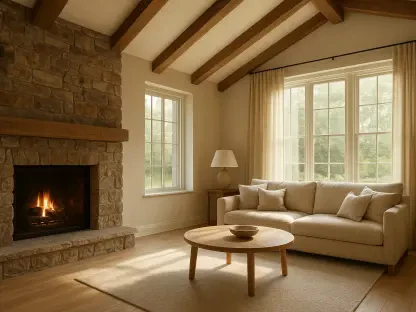
The hallmark of a modern luxury residence is the ability to walk from the living room to the terrace without experiencing a jarring shift in style or material quality. Achieving this visual continuity requires a disciplined selection of finishes that reflect the interior architecture while possessing the durability needed to survive the elements. Designers are now utilizing porcelain pavers that perfectly mimic the hardwood or marble found inside the home, allowing the flooring to extend through glass sliding walls to create the illusion of a single, vast space. This concept of the “disappearing wall” has become a cornerstone of contemporary design, where the transition between indoors and out is almost imperceptible. By maintaining a consistent color palette and using similar textures across both environments, the exterior space feels like a true extension of the home’s square footage, rather than a separate and less important area.
Sustainability and resilience are equally important when selecting materials that must endure regional environmental challenges, such as the intense sun of the desert or the humidity of coastal regions. In Florida, for example, materials must be rated for hurricane-force winds and salt-air corrosion, while in Arizona, the focus shifts to UV-resistant fabrics and surfaces that remain cool to the touch despite extreme heat. The industry has responded with innovative products, including high-density polyethylene furniture that looks like natural teak and performance fabrics that are indistinguishable from interior velvets or linens. These advancements allow for a level of aesthetic sophistication that was previously impossible in outdoor settings. The goal is to provide a luxury experience that does not degrade over time, ensuring that the investment in the outdoor environment retains its value and beauty for the homeowners through many years of use.
Strategic Spatial Dynamics: Flow and Safety Considerations
Creating a functional outdoor environment involves more than just selecting beautiful furniture; it requires a deep understanding of how a family moves through and utilizes their property. Designers must conduct a thorough lifestyle analysis to determine the ideal placement for dining, lounging, and play zones to ensure proper traffic flow and safety. This involves identifying natural pathways and ensuring they remain unobstructed, while also considering how different activities might interfere with one another. For example, a high-traffic dining area should be positioned close to the kitchen for convenience, but far enough from a quiet meditation corner to preserve tranquility. Safety is also a primary concern, particularly regarding slip-resistant surfaces around pools and adequate lighting for stairs and walkways. These practical considerations are the foundation upon which the more decorative elements of the design are built.
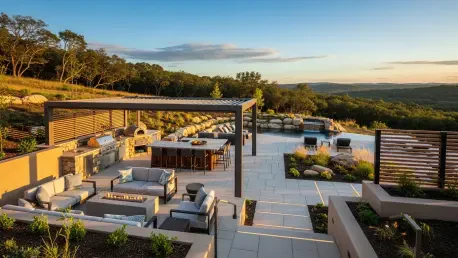
The inclusion of permanent shade structures, such as motorized pergolas or integrated canopies, has become essential for maximizing the usability of the space throughout the day. These structures provide protection from the sun during peak hours and can be equipped with sensors that automatically close during rain or high winds. Beyond their functional role, these elements help to define the “ceiling” of an outdoor room, creating a sense of enclosure and intimacy that makes the space feel more like a traditional interior. Maintenance must also be factored into the design, with a preference for low-maintenance materials that allow the homeowners to enjoy the space rather than spending their time cleaning or repairing it. By balancing the aesthetic desires of the client with the practical realities of exterior maintenance and safety, designers are able to create sophisticated environments that remain functional and inviting in all weather conditions.
Strategic Implementation of Open Air Environments
The shift toward fully integrated outdoor living was driven by a fundamental change in how the home is perceived as a holistic system for living. Designers who successfully navigated this transition focused on a collaborative approach that combined architectural precision with a deep respect for the natural environment. It was determined that the most successful projects were those where the exterior landscape was treated with the same level of detail as the interior master suite. This involved a commitment to high-quality infrastructure and a refusal to compromise on material durability. By prioritizing wellness and functionality, the industry moved toward a model where the backyard served as a versatile venue for both social engagement and private reflection. The integration of advanced technology and resilient materials ensured that these spaces remained relevant and operational regardless of seasonal shifts or climate variations.
Moving forward, property owners should view the development of their outdoor spaces as a long-term investment in their physical and mental health. The first step involves engaging with design professionals who specialize in both landscape and interior integration to ensure a unified vision from the outset. It is recommended to establish a clear list of lifestyle priorities, such as a preference for large-scale entertaining versus intimate family gatherings, to guide the zoning of the property. Homeowners should also advocate for the early inclusion of utility lines and structural supports to avoid future complications and unnecessary expenses. Staying educated on the latest weather-resistant products and sustainable building practices will further enhance the longevity and efficiency of the project. Ultimately, the goal is to create a personalized environment that offers a seamless transition between the comfort of the indoors and the beauty of the natural world.