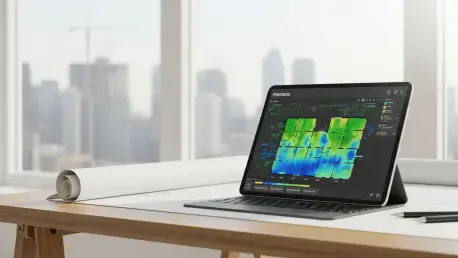

The traditional construction jobsite is rapidly evolving from a landscape of paper blueprints and manual inspection logs into a sophisticated digital environment where every square inch is meticulously documented through reality capture. This technological shift represents a fundamental departure from fragmented, legacy documentation methods that often left project stakeholders guessing about the true state of progress behind closed walls or beneath concrete slabs. As firms like Rudolph & Sletten standardize these platforms across their entire operational footprint, the industry is witnessing the birth of a unified, technology-driven workflow that bridges the critical gap between virtual design and actual field conditions. By creating immersive digital twins of jobsites, contractors are now able to provide unprecedented visibility and accountability to every participant in the building process. This movement is not merely about taking better pictures; it is about establishing a single source of truth that mitigates risk, enhances coordination, and ensures that the final physical structure is an exact mirror of the intended architectural vision.
Modernizing the Jobsite Documentation Process
The push toward digital capture was accelerated by a growing recognition of the inherent flaws within traditional site reporting, which frequently relied on static photography and disconnected data silos. These older methods failed to provide the context necessary for high-complexity builds, often leading to miscommunications between the field and the office. In the current landscape, the need for high-fidelity, remote visibility has transformed these tools from advanced experimental technologies into foundational business requirements. The ability to perform virtual walkthroughs allows teams to maintain momentum without requiring constant physical presence, which has proven essential for managing sprawling projects across diverse geographic regions. This evolution has demonstrated that comprehensive digital documentation significantly reduces the logistical burden of unnecessary site visits while empowering project managers and superintendents to make decisions based on real-time, accurate data rather than outdated reports.
By integrating reality capture with established project management ecosystems like Procore and coordination software such as Revizto, construction firms are creating a seamless environment for issue resolution. This synergy allows field teams to overlay real-world site conditions directly onto three-dimensional design models, providing a clear visual comparison that highlights even the smallest deviations from the plan. Such integration streamlines the communication loop between architects, engineers, and contractors, facilitating the immediate identification of discrepancies before they can escalate into expensive rework. The result is a more agile construction process where data flows freely across platforms, ensuring that everyone involved in the project is working from the same set of current information. This connected approach not only saves time but also fosters a culture of transparency where every structural element is verified against the digital twin in real time.
Scaling Innovation Across the Project Lifecycle
Reality capture technology provides immense value throughout every phase of the construction lifecycle, starting long before the first shovel hits the ground and continuing well after the final inspection. During the preconstruction phase, digital captures are used for rigorous site analysis and safety planning, allowing teams to identify potential hazards and logistical bottlenecks in a virtual environment. In high-stakes sectors such as healthcare or mission-critical data centers, the technology is utilized to document the intricate “invisible” infrastructure—such as complex mechanical, electrical, and plumbing systems—before they are permanently encased in drywall. This lifecycle-wide application ensures that every layer of the build is recorded with precision, providing a historical record that is far more reliable than memory or manual notes. This level of detail is particularly crucial for meeting the stringent regulatory requirements and compliance standards common in modern institutional construction.
The broader industry has reached a definitive consensus that high-quality data is the most valuable asset available on a modern jobsite, fueling the rise of “connected construction” strategies. By leveraging artificial intelligence to compare field conditions against planned project schedules, contractors can shift their focus from reactive troubleshooting to proactive management. These AI-driven insights allow project leads to identify potential delays days or weeks before they manifest, enabling corrective actions that keep the project on track. This trend ensures that the physical jobsite is constantly mirrored by a digital record, fostering a level of trust between the contractor and the owner that was previously unattainable. As digital twins become the standard deliverable, the ability to provide a comprehensive, time-stamped visual history of the construction process has become a key differentiator for firms looking to lead the market in technical excellence and delivery.
Delivering Long-Term Value to Project Owners
For project owners, the standardization of reality capture tools offers a verifiable, time-stamped record of construction that simplifies the often-contentious process of payment approvals and risk assessment. Having a complete visual history of the project allows owners to verify that work has been completed to the required standard before funds are released, drastically reducing the likelihood of disputes. This transparency also serves as a robust audit trail for insurance and legal purposes, providing clear evidence of the conditions and quality of work at any given point in time. Beyond the immediate benefits during construction, the digital twin serves as an invaluable asset for the long-term lifecycle of the building. Owners are no longer left with a stack of outdated paper drawings; instead, they receive a living digital representation of their facility that can be used to optimize operations and maintenance strategies from the first day of occupancy.
Moving forward, facility managers can utilize these digital records to “see through walls,” accurately locating hidden infrastructure without the need for destructive exploration. This capability is a game-changer for future renovations, emergency repairs, and routine maintenance, as it allows operators to understand the exact layout of hidden pipes, conduits, and structural supports. To maximize this advantage, owners should insist on the integration of reality capture data into their long-term building management systems, ensuring that the wealth of information gathered during construction remains accessible and actionable. The future of facility management lies in the ability to bridge the gap between initial construction and ongoing operations through these high-resolution digital twins. Firms that prioritize this superior turnover experience are providing their clients with a competitive edge that traditional documentation simply cannot match, setting a new benchmark for excellence in the built environment. After the project reaches completion, the comprehensive digital record served as a definitive guide for all subsequent facility improvements.