
The accumulation of carrying costs during lengthy bureaucratic delays is eventually passed on to the consumer, further exacerbating the national housing crisis. As the demand for affordable living spaces continues to outpace available inventory in 2026, the traditional permitting process remains a significant bottleneck that stifles growth. While much of the public debate centers on zoning reform and lot sizes, the administrative friction caused by redundant technical reviews often flies under the radar. Every time a builder submits a design that is nearly identical to a previously successful project, they are typically forced to undergo a ground-up evaluation as if the structure were a novel invention. This repetitive scrutiny consumes hundreds of thousands of collective hours from municipal planning departments that are already stretched thin. By adopting a system of pre-approved building plans, local governments can drastically reduce these lead times, ensuring that safe, high-quality homes reach the market faster and at a lower cost to the public.
Administrative Efficiency: Eliminating Redundancy in Technical Reviews
Bureaucratic duplication in the residential construction sector functions as a persistent drain on economic efficiency and housing affordability. Under the conventional model, each permit application triggers a comprehensive audit of structural blueprints, even when those designs have been vetted dozens of times in the same jurisdiction. This manual redundancy forces developers to carry high-interest loans for months while waiting for technical approval, costs that are ultimately baked into the final sale price or monthly rent. Furthermore, the lack of predictability in the approval timeline makes it difficult for contractors to retain labor and manage supply chains effectively. In many urban centers, the wait for a simple residential permit can stretch into half a year, during which time material prices may fluctuate, further destabilizing the project’s financial viability. Eliminating this administrative tax is essential for creating a responsive housing market that can adapt to the rapid demographic shifts currently seen across the country.
Standardized Design: Decoupling Structural Review from Site Evaluation
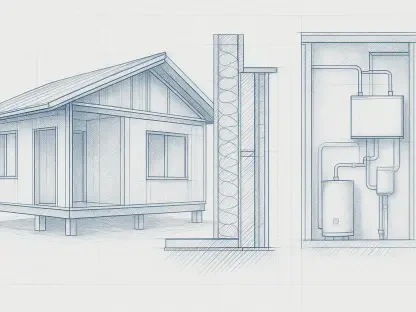
The fundamental mechanic of the pre-approved plan reform lies in the decoupling of architectural design review from site-specific evaluation. Rather than reviewing every aspect of a project simultaneously, municipalities can pre-verify a catalog of building designs for compliance with structural, fire, and health codes. Once a design is added to this curated library, it effectively receives a permanent green light for technical integrity. Prospective builders or homeowners then select a plan from this menu and focus their application solely on site-specific requirements such as utility tie-ins, soil conditions, and property setbacks. This approve once and use many strategy ensures that the safety standards of the built environment are maintained without requiring redundant paperwork for every individual lot. Consequently, city staff can focus their expertise on complex, non-standard developments that present unique engineering challenges, thereby optimizing the use of public resources and streamlining the path for residential growth.
Economic Resilience: Lowering Barriers for the Missing Middle
A streamlined permitting process offers a lifeline to the missing middle housing market, which encompasses accessory dwelling units, duplexes, and small-scale apartment buildings. These project types are notoriously sensitive to regulatory costs because they lack the massive scale necessary to absorb high administrative fees and long delay-related carrying costs. By providing access to pre-approved designs, cities lower the barrier to entry for small-scale developers and individual property owners who may not have the capital to hire expensive architectural firms for bespoke designs. This democratization of the building process encourages a more diverse range of housing options that fit within existing neighborhood fabrics. Furthermore, standardized plans often incorporate high-performance energy standards and sustainable materials that might be cost-prohibitive in custom projects. Reducing the financial friction for these smaller developments is a critical strategy for increasing density in urban cores without the need for large-scale land assembly.
Market Democratization: Empowering Small-Scale Local Builders
By reducing fixed compliance fees and administrative friction, cities can effectively empower a broader range of participants to contribute to the local housing stock. Professional builders and homeowners who previously avoided complex infill projects due to the daunting permit process are finding that pre-approved plans provide the necessary regulatory certainty to move forward. This shift not only increases the volume of new units but also improves the overall aesthetic consistency of infill development. Standardized plans allow for the implementation of high-quality architectural designs in neighborhoods that might otherwise see uninspired or low-quality construction. Moreover, this approach encourages the growth of local businesses that specialize in these specific models, creating a more resilient construction ecosystem. When the path to approval is clear and predictable, smaller entities can compete more effectively with large developers, fostering a healthier and more competitive housing market that serves a wider variety of socioeconomic needs.
Empirical Success: Case Studies from High-Growth Municipalities
Empirical evidence from cities like South Bend, Indiana, and Seattle, Washington, suggests that pre-approved plans are a highly effective tool for stimulating residential construction. In these jurisdictions, a notable percentage of new housing permits are now processed through standardized plan libraries, leading to faster turnaround times and more predictable project schedules. Builders in these regions have reported that the ability to bypass the design-review phase has allowed them to break ground weeks or even months earlier than under the traditional system. This efficiency has proven especially valuable in addressing localized shortages where rapid population growth has strained existing infrastructure. Other municipalities, ranging from Jackson, Michigan, to parts of Oklahoma, have successfully utilized this model to revitalize neighborhoods and address vacancy. These successes demonstrate that when the regulatory environment prioritizes efficiency, the private sector is capable of responding with the speed and scale required to meet the current demand.
Strategic Evolution: Building a Predictable Regulatory Environment
The successful integration of pre-approved building plans served as a pivotal strategy for modernizing the national housing framework and reducing administrative barriers. Municipalities that pioneered these reforms demonstrated that it was possible to accelerate construction timelines without compromising the safety or health of the community. Looking ahead, the expansion of these programs to include regional plan-sharing agreements and standardized modular components provided a clear path toward long-term affordability. Local leaders took decisive action by auditing their current permitting bottlenecks and collaborating with architectural experts to create diverse, code-compliant design libraries. This shift toward regulatory predictability allowed the construction industry to operate with greater confidence and efficiency. By prioritizing common-sense reforms that eliminated redundant technical analysis, local governments effectively empowered a new generation of builders to revitalize the housing stock. These steps proved that bureaucratic innovation was just as vital as physical construction.