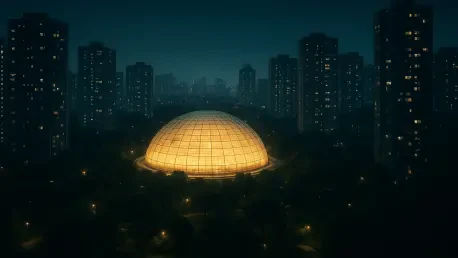

Local government projects often face the risk of failed tenders if bidding conditions do not accurately reflect the specialized construction and design costs of modern domes. This financial reality sits at the center of South Korea’s ambitious pivot toward a new urban development paradigm where sports facilities are no longer mere standalone structures. For decades, traditional stadiums remained dormant during the off-season, burdening taxpayers with exorbitant maintenance fees. However, the current landscape in 2026 reveals a coordinated effort to transform these venues into mixed-use hubs. By anchoring high-tech domes within a network of luxury hotels, shopping malls, and convention centers, municipalities aim to ensure year-round economic vitality. The Ministry of Culture, Sports and Tourism has reinforced this transition by offering state funding for large-scale multipurpose arenas, encouraging city planners to move beyond the game day only revenue model toward integrated ecosystems where visitors stay longer and spend more.
Flagship Developments and Regional Economic Strategies
Busan is currently setting a high standard for regional transformation by leveraging its North Port redevelopment project to create a world-class maritime tourist destination. This specific initiative integrates a massive domed arena with an array of water parks, luxury resorts, and sprawling commercial zones. By utilizing a site exceeding 113,000 square meters without restrictive height limits, the city is fostering a dense, high-rise environment designed to attract international travelers. The strategic intent is to harmonize the cultural draw of the dome with the natural appeal of the waterfront, ensuring that the facility remains a bustling center of activity even when sports events are not scheduled. This shift represents a broader movement toward regional specialization, where the success of a stadium is measured by its ability to stimulate the local tourism economy. As Busan refines its superstructure plans, the focus remains on creating a seamless visitor experience that transcends traditional boundaries.
In the same vein, the Gwangmyeong and Siheung third new town initiative is redefining the role of entertainment infrastructure by proposing a 50,000-seat cultural hub optimized for global K-pop events. Unlike previous projects that prioritized domestic sports, this development targets the massive international fanbases of Korean music, supported by a planned residential hinterland of over 67,000 households. Simultaneously, the city of Cheonan is capitalizing on its logistical advantages by situating a multipurpose dome near the KTX Cheonan Asan Station. This project aims to capture the high volume of metropolitan travelers through a one-stop complex that houses residential, lodging, and office spaces within a nearly 300,000-square-meter floor area. Both projects highlight a strategic move to link cultural venues directly with massive transit nodes and residential zones. By doing so, developers hope to create a self-sustaining cycle of demand where the arena serves as a constant anchor for both daily residents and transient visitors.
Private Sector Synergy: The Live-Work-Play Model
While regional governments lead large-scale planning, private-sector investments are currently establishing the blueprint for physical integration in major urban centers. The Jamsil MICE complex in Seoul serves as a prime example of this trend, representing a multi-billion dollar effort to connect a 30,000-seat domed baseball stadium directly with over 800 luxury hotel rooms and extensive convention facilities. This massive private investment aims to create a cohesive environment where business travelers and sports fans occupy the same space, driving high-value consumption across multiple sectors. Similarly, the Cheongna project in Incheon showcases the pinnacle of commercial synergy by physically intertwining a Starfield shopping mall with a multipurpose arena and hotel. This level of architectural and operational integration ensures that retail traffic naturally flows into the entertainment venue and vice versa. These projects signify a departure from viewing stadiums as external amenities, instead treating them as core components of a single commercial organism.
This evolution toward live-work-play environments is further evidenced by the Bucheon multipurpose stadium project, which seeks to integrate professional sports with high-tech R&D centers and over 1,300 new housing units. The underlying philosophy here is to create an urban core where the arena functions as a community asset every day of the week rather than a specialized destination for weekend crowds. By surrounding the dome with workspaces and high-density residential buildings, developers are ensuring a built-in audience for local retail and dining establishments. This approach effectively mitigates the risk of underutilization that plagued older venues by making the sports infrastructure part of the local inhabitants’ daily routines. As the lines between entertainment, commerce, and residency continue to blur, the success of these urban hubs depends on the precise calibration of services to meet the needs of a modern, mobile workforce. Such projects reflect a growing understanding that modern stadiums must generate value through constant interaction with their surroundings.
Economic Resilience: Benchmarking Success and Managing Risk
South Korean planners are looking closely at Japan’s F Village in Hokkaido as a proven model for this new era of urban development. Surrounding the Es Con Field stadium, this complex demonstrated that a sporting venue can thrive by attracting an overwhelming number of non-game visitors through diverse year-round attractions. Records show that the number of people visiting the village for non-sporting reasons actually surpassed the total attendance of actual baseball matches during its inaugural phases. This success was achieved by offering high-end lodging, saunas with stadium views, and family-oriented recreational zones that remain open regardless of the sports season. For South Korean municipalities, this Japanese benchmark provides the necessary evidence that a stadium-as-a-destination strategy can justify the massive capital expenditure required for dome construction. The focus is no longer just on the field itself, but on the 300-plus days a year when the lights of the arena might otherwise be dimmed, necessitating a constant stream of diverse revenue sources.
To ensure the long-term viability of these projects, urban planners prioritized market differentiation to avoid the threat of local cannibalization. As multiple cities introduced similar venues simultaneously, the most successful developers were those who focused on identifying unique cultural niches rather than replicating existing models. High-tech implementations and smart-city data analytics allowed these hubs to adjust their commercial offerings in real-time based on visitor behavior. Policymakers also recognized that the mere construction of a dome was insufficient without a dedicated content strategy that secured long-term partnerships with international promoters. By diversifying the utility of these spaces to include educational and research facilities, municipalities ensured that their infrastructure investments remained relevant to the local workforce. As these projects matured, the emphasis shifted from architectural grandeur to operational efficiency. Moving forward, the most successful hubs functioned as cohesive neighborhood centers.